
Lights Dimming When the AC Kicks On? What It Means
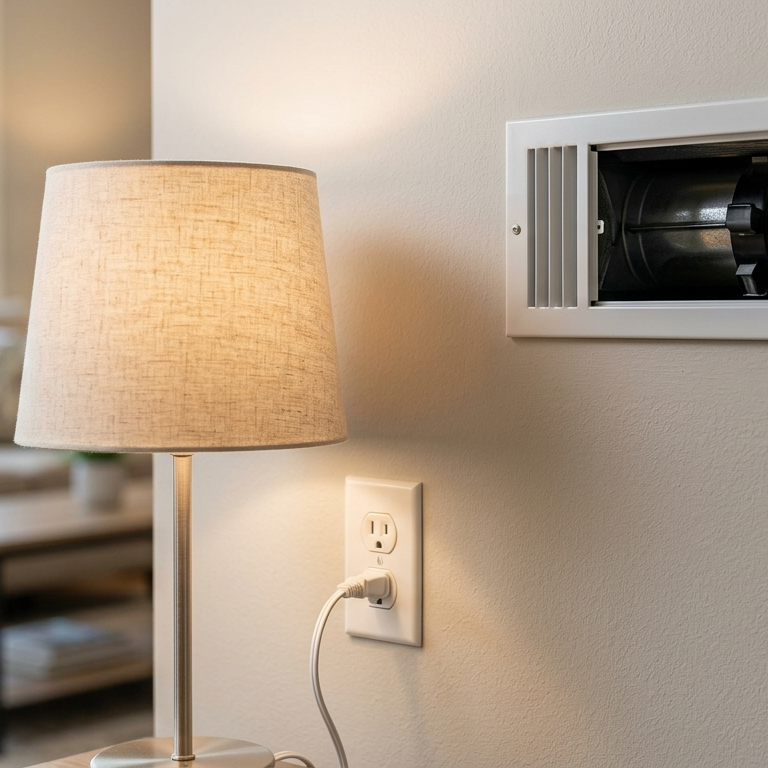
Quick Answer: A brief, slight dimming of the lights the moment a large appliance like an air conditioner starts is often normal — the compressor draws a big surge of current to start, which momentarily pulls voltage down. What's not normal is dramatic dimming, lights that stay dim, flickering throughout the house, or dimming that's getting worse over time. Those can point to an overloaded circuit, an undersized or aging panel, loose or corroded connections, or a problem at the service. A quick, faint flicker once is usually fine; deep or worsening dimming is a sign to have your electrical system checked, because some causes are safety concerns.
You've probably noticed it: the air conditioner clicks on, and for an instant the lights dip. A momentary flicker when a big appliance starts is one of the most common things homeowners ask about — and the answer is that a little of it is normal, but a lot of it is a signal worth paying attention to. Knowing the difference is what matters.
Why a Big Appliance Dims the Lights
An air conditioner's compressor, like other large motor-driven appliances, draws a substantial surge of electricity at the moment it starts — far more than it uses while running. This brief inrush of current causes a momentary drop in voltage on the circuit, and since lights are sensitive to voltage, you see them dip for a fraction of a second before they recover. It's the electrical equivalent of the strain you'd feel taking the first heavy pull on a load before it gets moving.
A small, brief dim that recovers immediately, only when a large appliance starts, is generally normal behavior. The question is whether what you're seeing stays within those bounds.
When Dimming Is Normal
A quick, subtle flicker — barely noticeable, lasting a split second, happening only at the instant the AC or another large appliance cycles on, and then steady again — is usually nothing to worry about. The system handled the startup surge and recovered. If that describes what you see, and it isn't changing over time, it's most likely just the normal startup draw of a big motor.
When Dimming Is a Warning Sign
The picture changes when the dimming is more than slight or brief. Several patterns suggest a problem rather than normal behavior:
| What you notice | Why it's a concern |
|---|---|
| Lights dim dramatically, not just slightly | Voltage drop larger than it should be |
| Lights stay dim rather than recovering | Circuit struggling to supply the load |
| Flickering spreads throughout the house | Possible service or panel issue |
| Dimming is getting worse over time | A developing fault |
| Burning smell, warm switches, buzzing | Potential loose connection or overload |
Deep dimming, lights that don't bounce back, whole-house flickering, or a worsening pattern can indicate an overloaded circuit, an undersized or aging panel, loose or corroded wiring connections, or an issue at the main service or even on the utility side. Some of these are safety concerns, especially anything paired with heat, burning smells, or buzzing.
What Could Be Behind the Bad Kind
When dimming crosses from normal to concerning, a few causes are common. The circuit feeding the area may be overloaded, sharing too much demand. The electrical panel may be undersized or outdated for the home's current loads, struggling to deliver enough current cleanly. Loose, worn, or corroded connections — at the panel, in junctions, or at the appliance circuit — create resistance that worsens voltage drop and generates heat, which is a genuine hazard. And sometimes the issue originates at the service connection or the utility supply. A major appliance like an AC may also benefit from a dedicated circuit so its startup surge isn't dragging down the lighting.
Why It's Worth Checking
The reason worsening or dramatic dimming shouldn't be ignored is that some of its causes — loose connections, especially — can lead to overheating and fire risk, and an overloaded or aging panel is a problem that grows as a home adds modern electrical loads. Catching it early is both a safety measure and a way to keep the electrical system working properly. A faint one-time flicker is reassurance that the system is handling the load; deep or worsening dimming is the system asking for a look. An electrician can measure the voltage drop, check the panel and connections, and determine whether what you're seeing is harmless or a fault that needs correcting.
If light dimming comes with a burning smell, warm or discolored switch plates or outlets, buzzing sounds, or scorch marks, treat it as urgent. These point to a possible loose connection or overload that can overheat. Stop using the affected circuit and have it checked promptly, rather than waiting to see if it gets worse.
What to Do About It
If your dimming is the faint, momentary kind and isn't changing, it's likely normal, though there's no harm in mentioning it at your next electrical service. If it's dramatic, persistent, spreading, worsening, or accompanied by any signs of heat or burning, have it evaluated. An electrician can determine whether the cause is an overloaded circuit, an aging panel, a loose connection, or a service issue, and address it — whether that means redistributing loads, tightening or repairing connections, adding a dedicated circuit for the AC, or upgrading a panel that's no longer keeping up. The goal is to separate the normal startup dip from the kind that signals a real problem.
Frequently Asked Questions
A slight, brief dim at the instant the AC starts is generally normal. The compressor draws a large surge of current to start, which momentarily lowers the voltage and dips the lights before they recover. As long as it's subtle, quick, only happens at startup, and isn't getting worse, it's usually just the normal startup draw of a large appliance.
Be concerned if the dimming is dramatic rather than slight, if the lights stay dim instead of recovering, if flickering spreads through the house, or if it's getting worse over time. Any dimming paired with a burning smell, warm switches, or buzzing is urgent. These patterns can indicate an overloaded circuit, an aging panel, or loose connections that need attention.
Common causes include an overloaded circuit, an undersized or outdated electrical panel that struggles to deliver current, and loose or corroded connections that create resistance and voltage drop. Sometimes the issue is at the service connection or utility supply. A large appliance without a dedicated circuit can also drag down the lighting. An electrician can identify which it is.
They can, when the cause is a loose or corroded connection. Such connections create resistance that generates heat, which is a fire risk, and the dimming or flickering can be a symptom. This is why dimming accompanied by a burning smell, warm outlets or switches, or buzzing should be treated as urgent and checked promptly rather than ignored.
It can help. A large appliance like an air conditioner draws a big startup surge, and if it shares a circuit with lighting, that surge dips the lights. Putting the appliance on its own dedicated circuit keeps its startup draw from affecting the lights. An electrician can assess whether a dedicated circuit, or a broader panel evaluation, is the right fix.
If the dimming is dramatic, worsening, spreading, or paired with any signs of heat, yes. An electrician can measure the voltage drop, inspect the panel and connections, and determine whether the panel is undersized or aging, a connection is loose, or the load needs redistributing. A faint, stable, one-time flicker is usually fine, but worsening dimming warrants a check.
Know the Normal Dip From the Warning Sign
A quick, faint dimming of the lights when the AC kicks on is usually just the normal startup surge of a big appliance. But dramatic dimming, lights that stay low, whole-house flickering, or a pattern that's worsening — especially with any heat or burning smell — is a different story, pointing to an overloaded circuit, aging panel, or loose connection. Knowing which you have tells you whether to relax or to have it checked.
Lights dimming more than they should when the AC starts — Get the voltage, panel, and connections checked to tell normal from a fault. RSB Electrical Inc. serves Mesa and the Phoenix Valley. ROC 167102. Call (480) 485-4284.