
Breaker Keeps Tripping in Summer? What It Means
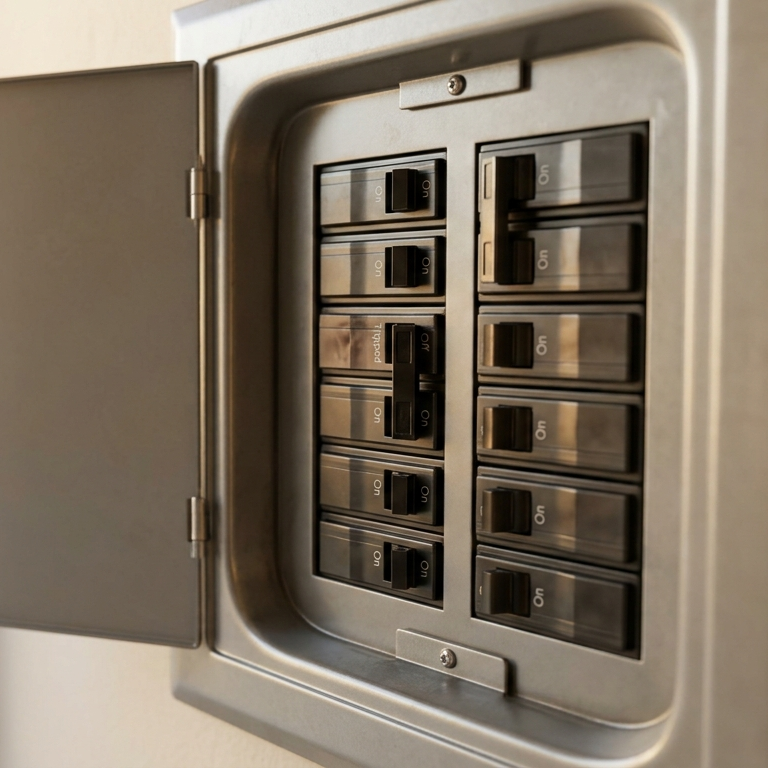
Quick Answer: A breaker that keeps tripping in summer is almost always reacting to too much current on that circuit — most often your air conditioner pulling hard in the heat, sometimes combined with other big appliances running at once. Heat itself also makes breakers trip a little sooner. But a breaker that trips repeatedly can also be warning you of a real problem: a struggling AC compressor, a failing capacitor, a worn breaker, or a wiring fault. Resetting it once is fine; if it keeps tripping, stop resetting and have it checked.
It's the hottest week of the year, the AC is running flat out, and the breaker snaps off — usually at the worst possible moment. A breaker doing that isn't being temperamental. It's doing its one job: cutting power before a circuit draws more current than its wiring can safely carry. The real question is why the demand is crossing that line, and in summer, there are a handful of usual reasons.
What a Tripping Breaker Is Actually Telling You
A circuit breaker is a safety device. It monitors how much current flows through its circuit, and when that current exceeds the breaker's rating for too long, it trips and shuts the circuit off. That protects the wiring in your walls from overheating and starting a fire. So a trip is never random — it means that circuit pulled more current than it's rated for, or something on it faulted. In summer, the load side of that equation is usually what's changed.
Why Summer Is When It Happens
Your Air Conditioner Is the Heavy Hitter
A central AC or a large window unit is one of the biggest electrical loads in a house, and it pulls the hardest on the hottest days, when it runs almost continuously, and the compressor works overtime. If that circuit is already close to its limit, a brutal afternoon can be enough to push it over and trip the breaker. This is the single most common summer cause.
Too Many Big Things at Once
Even apart from the AC, summer stacks up high-wattage loads — the AC, a fridge working harder, fans, a pool pump. Run several large draws on the same circuit at the same time, and the combined current can exceed the breaker's rating, which is a classic overload. The tell is that it trips when a specific extra appliance kicks on.
Heat Makes Breakers Trip Sooner
Breakers are thermal devices, so the surrounding temperature matters. A breaker sitting in a hot garage or a sun-baked panel is already warm before any extra current flows, so it reaches its trip threshold a little faster than it would in winter. The same load that was fine in spring can nudge a hot breaker over the edge — a real factor in a Phoenix-area summer.
When It's More Than a Simple Overload
If the breaker trips even when you're not running much, the heat isn't the whole story. A few faults show up as repeated tripping:
| What's happening | Likely cause | What it means |
|---|---|---|
| AC trips the breaker soon after starting | Failing capacitor or struggling compressor | The unit is drawing excess current; needs service |
| Breaker trips with little load on the circuit | Worn or weak breaker | The breaker itself may need replacing |
| Trips instantly and hard, every time | Short circuit | A wiring fault — stop and call an electrician |
| Trips with a burning smell or warm panel | Loose connection or damaged wiring | Shut it off and get it inspected immediately |
A dirty AC filter or a failing run capacitor makes the compressor work harder and pull more amps, which trips the breaker — and that's the AC asking for service, not an electrical problem to wire around. A breaker that's been tripping for years can also simply wear out and start tripping below its rating. And a short circuit or a loose, arcing connection trips hard and fast and is seriously dangerous; that's the one where you stop resetting and call a pro.
Never replace a tripping breaker with a higher-rated one to "stop it from tripping." The breaker is sized to protect the wire behind it. A bigger breaker lets the wire carry more current than it's rated for, which can overheat the wiring and cause a fire. If a breaker keeps tripping, the fix is to reduce the load or repair the fault — not to upsize the breaker.
What You Can Safely Do
You can reset a tripped breaker once: push it fully to OFF, then back to ON. You can move some loads off the overloaded circuit — plug that extra appliance into a different circuit, or avoid running several big things at once. You can change a dirty AC filter, which is a common reason a unit pulls too hard. And you can note the pattern: what's running when it trips, how often, and whether the panel feels warm or smells hot.
What you should not do is keep resetting a breaker that trips again and again. Repeated tripping is either a real overload that needs the load rebalanced or a fault that needs repair, and forcing it back on over and over defeats the protection. If it trips instantly, trips with almost nothing running, or comes with any heat or burning smell, leave it off and call an electrician.
Frequently Asked Questions
Because heat increases the load and reduces the margin simultaneously. Your AC runs hardest on hot days and pulls the most current, and the breaker itself trips a little sooner when it's hot because it's a thermal device. Together, a circuit that's fine in mild weather can cross its limit in a heat wave. Frequent hot-day tripping usually points to the AC circuit.
A breaker tripping is the safety system working, so a one-off trip isn't an emergency. But repeated tripping shouldn't be ignored — it's either a real overload or a fault like a short circuit, a loose connection, or a worn breaker. If it trips instantly, trips with little load, or comes with a burning smell or a warm panel, treat it as urgent and call an electrician.
Indirectly, yes. A clogged filter restricts airflow and makes the system work harder, which can raise the current the unit draws and trip the breaker. A failing capacitor or a struggling compressor does the same thing. So if your AC is tripping the breaker, start with the filter and then have the unit serviced — it's drawing more than it should.
Resetting once is fine. Resetting repeatedly is not. A breaker that keeps tripping is telling you something is wrong — too much load on the circuit or an actual fault — and forcing it back on each time bypasses the protection it's there to provide. If one reset doesn't hold, find the cause or have it diagnosed rather than cycling it over and over.
Yes. Breakers are mechanical and thermal devices, and after many years and many trips, they can weaken and start tripping below their rated current, or fail to trip when they should. If a breaker trips with very little load and the circuit checks out otherwise, a worn breaker is a real possibility — and replacing one is a job for a licensed electrician, not a DIY swap.
Listen to the Trip, Don't Fight It
A summer breaker trip is usually your AC and the heat pushing a circuit past its limit, and spreading the load, or servicing the AC often settles it. But the breaker is a safety device, and when it keeps tripping, it's giving you information — an overload to rebalance or a fault to fix. Reset it once, watch what's running when it goes, and if it won't stay on, get it diagnosed before you keep forcing it.
Breaker tripping every time the AC runs? — Get the circuit, panel, and load checked so it's fixed safely, not forced. RSB Electrical Inc. serves Mesa and the Phoenix Valley. ROC 167102. Call (480) 485-4284.