
Signs Your Electrical Panel Can’t Keep Up Anymore
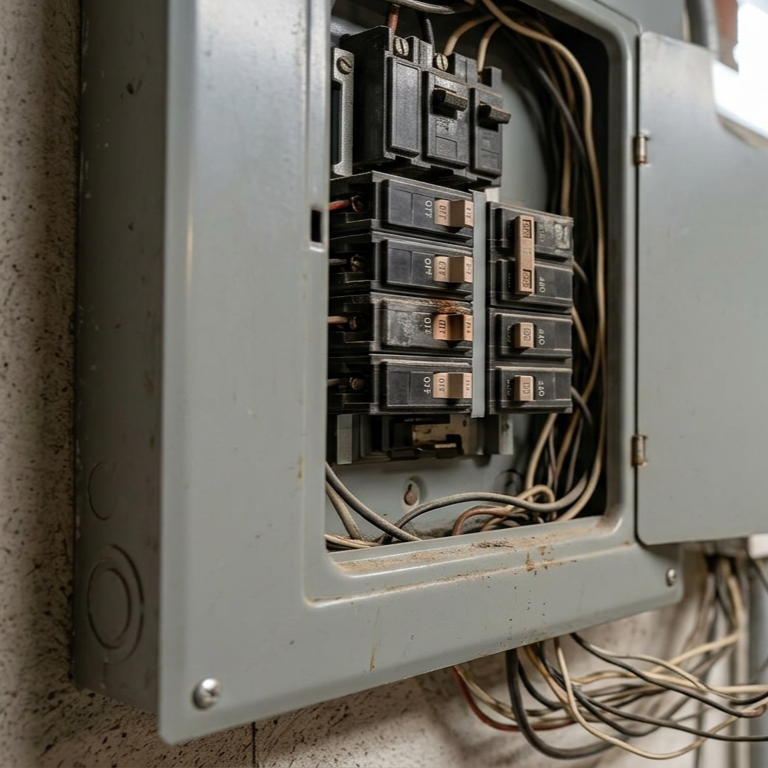
Quick Answer: Signs an electrical panel can't keep up with a home's demands include breakers that trip frequently, lights that dim or flicker when large appliances run, a panel that's full with no room for new circuits, reliance on power strips and extension cords because there aren't enough outlets, a warm or buzzing panel, and an old fuse box or outdated brand of panel. These point to a panel that's undersized, overloaded, or aging. An overtaxed or deteriorating panel isn't just inconvenient — it can be a safety hazard. If you notice several of these signs, it's worth having the panel evaluated by an electrician.
Your electrical panel is the heart of your home's power system, quietly distributing electricity to every circuit. When it can no longer keep up with your household’s demands, it starts sending signals. Recognizing those warning signs early lets you address an overloaded or aging panel before it becomes a safety problem rather than just an inconvenience.
Homes use far more electricity than they used to. A panel that was sized for the appliances and lifestyle of decades past can fall behind as a household adds central air, electric appliances, home electronics, a workshop, or an EV charger. The panel itself may also simply be old, with worn components or an outdated design. Either way, the result is a panel struggling to deliver enough clean, reliable power for everything the home now runs — and that struggle shows up in recognizable ways.
Why Panels Get Outpaced
Homes use far more electricity than they used to. A panel that was sized for the appliances and lifestyle of decades past can fall behind as a household adds central air, electric appliances, home electronics, a workshop, or an EV charger. The panel itself may also simply be old, with worn components or an outdated design. Either way, the result is a panel struggling to deliver enough clean, reliable power for everything the home now runs — and that struggle shows up in recognizable ways.
Sign One: Breakers That Trip Frequently
A breaker trips to protect the circuit from drawing more current than it safely should. An occasional trip is the system doing its job, but breakers that trip often — especially when you run certain appliances together — signal that the circuits or the panel are being overloaded. If you find yourself regularly walking to the panel to reset a breaker, the demand is exceeding what that part of the system can supply. Frequent tripping is one of the clearest signs a panel is being pushed beyond its capacity.
Sign Two: Dimming or Flickering Lights
When lights dim or flicker as large appliances cycle on, it can mean the panel is straining to supply the load. A faint, momentary dip at startup can be normal, but noticeable, frequent, or worsening dimming and flickering suggest the system is struggling to deliver enough current cleanly. This is especially telling when it happens across the house rather than on a single circuit.
Sign Three: A Full Panel and Too Few Outlets
Sometimes the limitation is physical space. A panel with no open slots for new breakers means you can't add circuits for new appliances or rooms without addressing the panel. Relatedly, if you depend on power strips and extension cords throughout the house because there aren't enough outlets, the electrical system isn't keeping up with how you use it — and overloaded power strips are their own hazard. Both point to a panel and wiring that have been outgrown.
| Warning sign | What it indicates |
|---|---|
| Breakers trip frequently | Circuits or panel overloaded |
| Lights dim/flicker with appliances | Panel straining to supply load |
| Panel is full, no room for circuits | Capacity outgrown |
| Reliance on power strips/extension cords | Too few circuits for the demand |
| Warm panel, buzzing, or burning smell | Possible serious fault — urgent |
| Old fuse box or outdated panel | Aging service, may need upgrade |
Sign Four: A Warm, Buzzing, or Smelly Panel
Some signs are urgent. A panel or breakers that feel warm to the touch, a buzzing or crackling sound, scorch marks, or any burning smell point to a serious problem — loose connections, overloading, or failing components that can overheat. These are not "watch and wait" signs; they warrant prompt professional attention because of the fire risk involved.
Sign Five: An Old Fuse Box or Outdated Panel
If your home still has a fuse box, or an old or outdated electrical panel, age alone is reason to have it evaluated. Older panels may lack the capacity modern homes need and can have worn or problematic components. Some older panel types have known reliability concerns. An aging panel that's also showing the other signs on this list is a strong candidate for an upgrade to safer, higher-capacity service.
A warm panel, buzzing or crackling sounds, scorch marks, or a burning smell from the panel are signs of a potentially serious fault. Don't ignore these or keep loading the panel. Stop adding to the affected circuits and have an electrician inspect it promptly, because these conditions carry a real fire risk.
Why It's Worth Acting On
An overtaxed or aging panel is more than a daily annoyance of resetting breakers. Overloaded circuits and loose or failing connections generate heat, which is a fire hazard, and an undersized panel only falls further behind as a home adds modern loads. Addressing it — whether by redistributing circuits, repairing faults, or upgrading to a larger, modern panel — restores reliable power and removes the safety risk. Catching the signs early means handling them on your terms rather than after a failure. An electrician can evaluate the panel, perform a load calculation, and recommend whether it needs repair, reorganization, or replacement.
Frequently Asked Questions
Frequent breaker trips, lights that dim or flicker when large appliances run, a panel that's full with no room for new circuits, and heavy reliance on power strips and extension cords are all signs that the panel or circuits are overloaded. A warm or buzzing panel or any burning smell are more urgent signs. Several of these together strongly suggest the panel can't keep up.
An occasional trip is normal — it means the breaker is protecting the circuit from excessive current. What's not normal is frequent tripping, especially when running certain appliances together. Regularly resetting breakers signals that the circuits or panel are being overloaded, and it's a sign the electrical system isn't keeping up with the home's demand.
Consider evaluation if you have an old fuse box or outdated panel, particularly alongside other signs like frequent trips, dimming lights, a full panel, or any warmth, buzzing, or burning smell. Age alone can mean insufficient capacity and worn components, and some older panel types have known concerns. An electrician can determine whether an upgrade is warranted.
They can be. A faint, momentary dip when a large appliance starts can be normal, but noticeable, frequent, or worsening dimming and flickering — especially across the whole house — can mean the panel is straining to supply the load. Combined with other signs like frequent trips, dimming points toward a panel that's overtaxed or aging.
Because it usually means your home doesn't have enough circuits or outlets for how you use electricity, the system has been outgrown. Beyond that, overloaded power strips and daisy-chained extension cords are fire hazards in themselves. Needing them throughout the house signals that the panel and wiring should be evaluated and likely expanded.
It can be. Overloaded circuits and loose or failing connections generate heat, which is a fire hazard, and signs like a warm panel, buzzing, or a burning smell indicate a potentially serious fault. This is why an overtaxed or aging panel showing these signs should be inspected promptly. Addressing it removes the risk and restores reliable power.
Don't Ignore What the Panel Is Telling You
When an electrical panel can't keep up, it shows you — frequent trips, dimming lights, a full box, a reliance on power strips, and, in serious cases, warmth, buzzing, or burning smells. These signs point to a panel that's overloaded, outgrown, or aging, and some carry real safety risk. Noticing several of them is your cue to have the panel evaluated, so a manageable upgrade replaces a potential hazard.
Seeing the signs your panel can't keep up? — Get it evaluated with a load calculation and find out whether it needs repair or an upgrade. RSB Electrical Inc. serves Mesa and the Phoenix Valley. ROC 167102. Call (480) 485-4284.