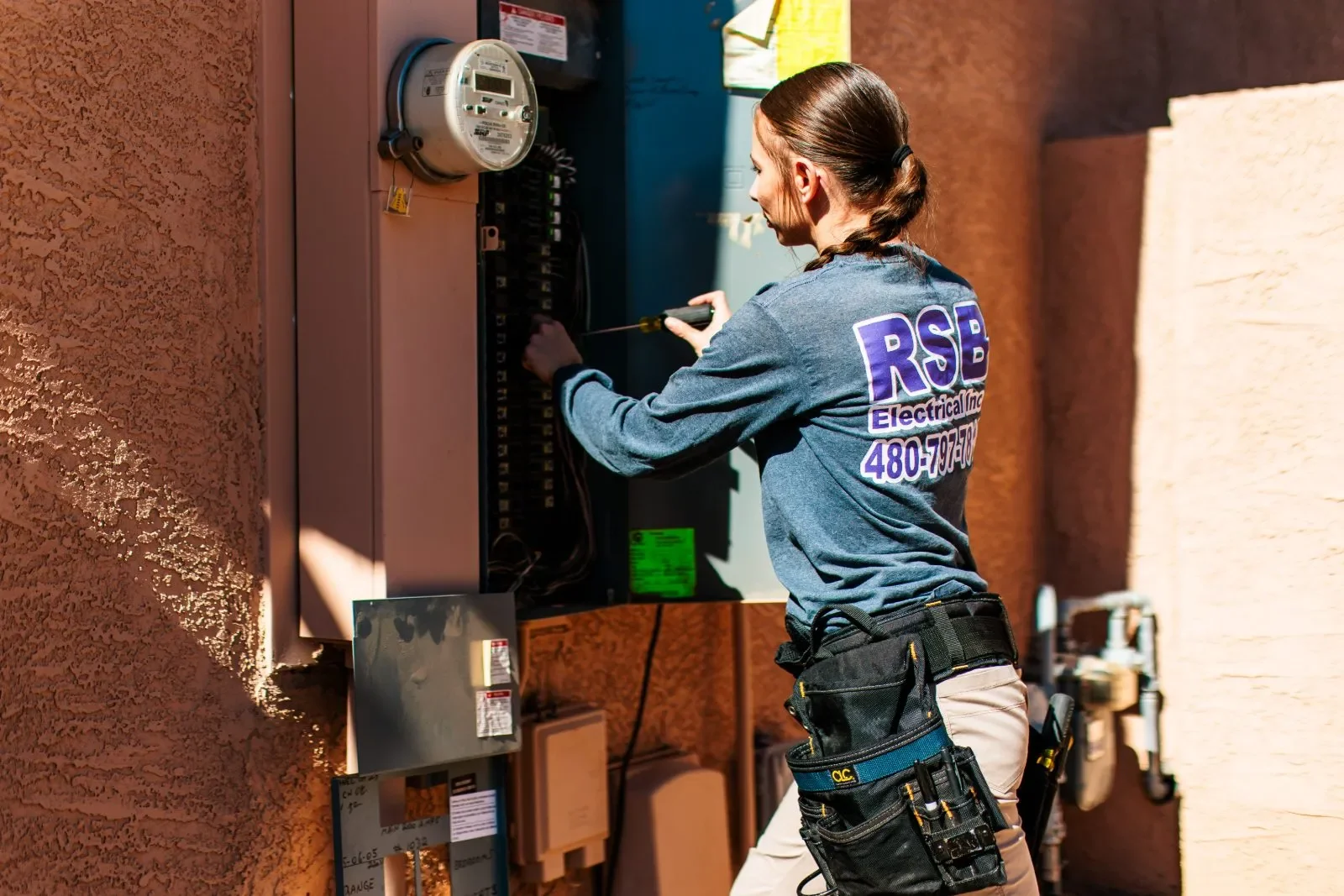
Treating it like a commodity part is how homes end up protected by hardware that quit guarding years ago. RSB Electrical has installed and replaced breakers across the Valley since 2001, and we treat every one like the safety device it is.
The calls tell the story: the breaker that will not reset no matter what, the one that trips every July afternoon, the mystery 30-amp someone installed to silence a 20-amp circuit complaints. Each one gets the same discipline here: find why before replacing what, match the new breaker to the panel it will live in, because breakers are listed for specific panels, and torque it to specification so the connection outlives the warranty.
And if the reset is all you need, call anyway: we walk breaker and GFCI resets over the phone free, and some of our favorite reviews are from callers who never paid us a dime.
Why Breaker Work Belongs to RSB

Breaker Work, In Customers’ Own Words
Public Google reviews from real RSB customers, quoted as written.
RSB vs. the hardware-aisle swap
Breaker Expertise: The Device, Understood
The device, understood: what decides whether a breaker guards for decades.
How a breaker actually works
Inside the housing live two guardians: a thermal element that heats and bends under sustained overload, and a magnetic element that snaps instantly on the violent current of a short circuit. Slow problems trip the first, dangerous ones trip the second, and a healthy breaker does both on specification for decades. Understanding which guardian acted is the first diagnostic clue in every trip story.
Why repeated resetting is the worst habit in the house
Every reset of a legitimately tripping breaker reheats a fault that was just interrupted, and every cycle wears the breaker own mechanism. The habit ends one of two ways: the fault matures, or the breaker wears out and starts nuisance-tripping forever, or worse, in the direction that no longer trips at all. Find out why; that call is free.
Listed for the panel is not a technicality
A breaker and its panel are a tested system: bus grip, heat behavior, and fault performance are certified together, and a foreign breaker that happens to snap on has none of that certification. Cross-brand breakers are among the most common corrections we make, and the fix costs little compared to what it quietly removes.
GFCI and AFCI breakers: protection for whole circuits
A GFCI breaker guards every outlet on its circuit against ground faults; an AFCI breaker listens for the arc signatures of damaged wiring; dual-function units do both. Breaker-level protection shines where many devices share a circuit or where outlets are hard to reach, and choosing between breaker-level and device-level protection is exactly the kind of judgment call the free estimate settles.
Torque, the two-second discipline
A breaker connections to bus and conductor carry everything the circuit ever does, and both loose and over-tightened lugs fail early, one by heat, one by damage. Manufacturer torque specifications exist for decades, and meeting them is the least glamorous, most valuable habit in panel work.
Heat, derating, and honest sizing
Breakers in hot environments trip earlier by design, and Valley panels are in hot environments for half the year. Honest breaker work accounts for it: continuous loads sized with margin, panel heat considered in nuisance-trip diagnosis, and never, ever solved by installing a bigger breaker on the same tired wire.
The counterfeit problem is real
Fake and gray-market breakers, convincing housings around unworthy internals, circulate through online marketplaces, and they fail exactly when a breaker must not. Genuine hardware from authorized channels is a non-negotiable here, and if a price online looks impossibly good for a legacy breaker, it is.
Circuit Breaker Questions, Answered Straight
1.My breaker tripped. How do I reset it properly?
Push the handle fully to OFF first, then firmly to ON; the halfway position fools most people. Call us and we will walk you through it for free. If it will not hold, stop resetting and let us find why.
2.It keeps tripping. What now?
Then it is protecting you from something: an overload, a fault, or its own worn mechanism. Repeated resetting re-heats the problem, so the honest move is diagnosis, and ours starts on the phone at no charge.
3.Why does it only trip on summer afternoons?
Heat and load together: breakers are thermal devices, Valley panels bake, and afternoon AC demand tops off circuits that idle fine in March. Real diagnosis sorts whether the answer is load management, a tired breaker, or the panel environment.
4.Can I put any brand of breaker in my panel?
No, and this one matters: breakers are listed for specific panels, and the cross-brand breaker that physically fits carries none of the tested certification. We match by listing, every time.
5.GFCI breaker or GFCI outlet: which should I choose?
Both work; placement decides. Breaker-level protects the entire circuit from the panel and suits hard-to-reach or many-outlet circuits; device-level puts the reset button where you use it. We will honestly recommend per circuit.
6.Do I need AFCI breakers?
Modern code expects arc-fault protection on most living-area circuits in new work, and older homes can retrofit it at the panel for real safety gain. Installed correctly it is quiet protection; installed carelessly it is a nuisance-trip story.
7.My panel is an old brand and the breaker costs a fortune. Why?
Scarcity: discontinued panels mean discontinued breakers, priced accordingly, and counterfeited enthusiastically online. Sometimes the correct legacy breaker is still the right buy; sometimes it is the nudge toward the panel conversation. We price both and tell you straight.
8.Can I swap a breaker myself?
The panel interior is live, unforgiving, licensed-electrician territory, and the matching, torque, and bus-inspection details are where DIY swaps go quietly wrong. This is one of the cheapest jobs we do; let it be ours.
9.A breaker looks melted. How bad is that?
Bad enough to call today: melting means a connection ran hot, and the story usually involves the bus or lug beneath. Do not reset it; do not touch it. We will find how far the heat traveled.
10.What is the warranty?
One-year labor and materials from completion; invoice as proof on every breaker we install.