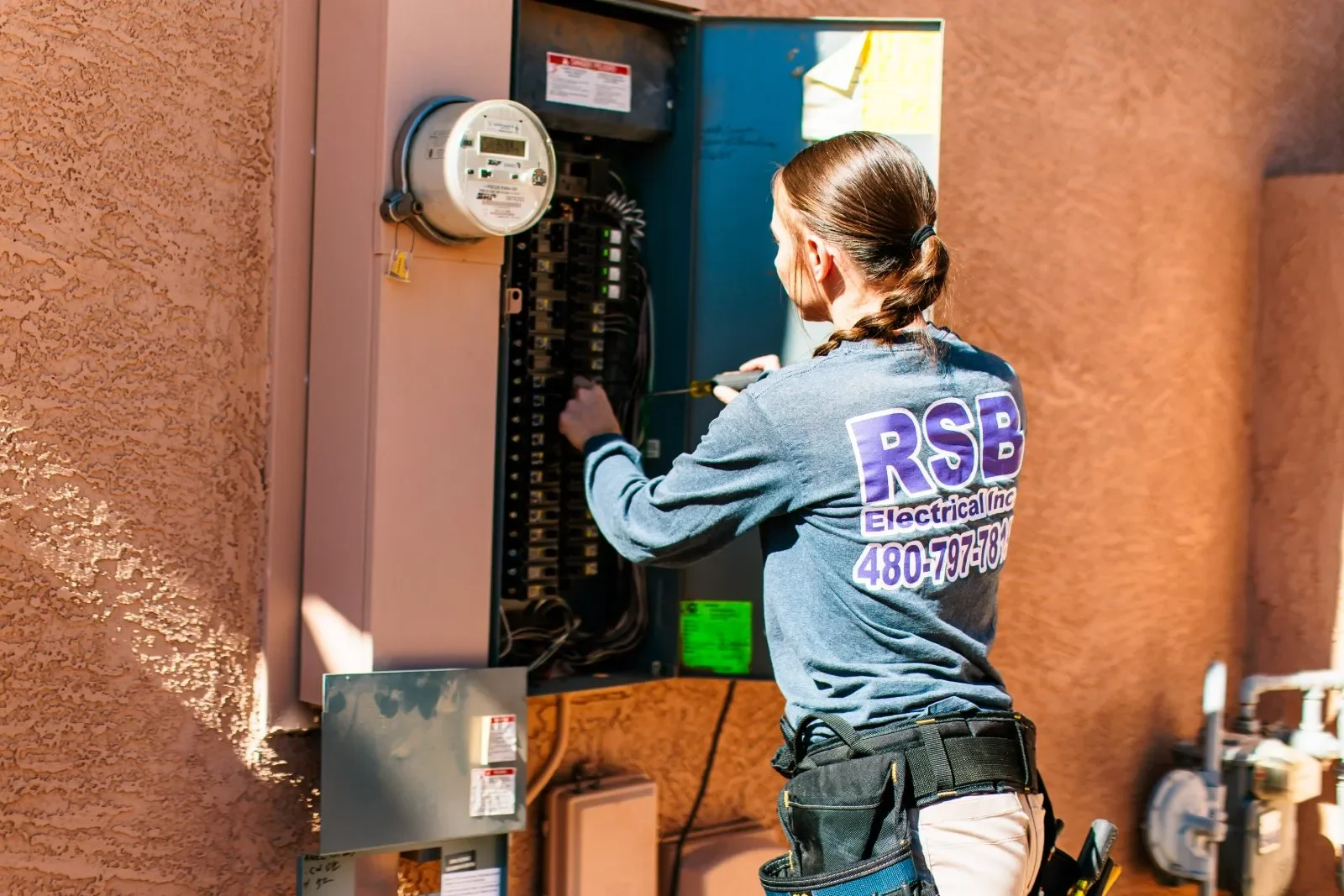
The biggest mistake we see in this trade is replacing parts without proving what is actually failing, and refusing to make that mistake is what RSB Electrical is known for.
Our approach has not changed since Reno started in this trade in 1983: we will figure out what is causing it before recommending any repairs. We slow down and gather facts. When does it happen? Which circuits are affected? What changed before it started? What was the weather doing? What time of day was it? What was running? Intermittent problems leave clues, and after four decades, you learn where they hide: loose connections, failing breakers, damaged underground wiring, hidden junction boxes, overloaded circuits, defective devices, and the cover-up wiring previous owners leave behind, finished walls.
After four decades in the field, we have learned that every electrical problem is findable. The challenge is having the patience, the process, and the experience to track it down. That is the job, and we love it.
Why Mystery Problems End at RSB


Mysteries Solved, In Customers’ Own Words
Public Google reviews from real RSB customers, quoted as written.
“I was having really strange issues with my air conditioning unit. As anyone would I called an HVAC company first. They came out and after an hour of stomping around making a bunch of noise they told me it was an issue with voltage. What?! I called and spoke to Reno. I have to say, this guy knows his stuff. I explained what the AC guy told me and he started asking questions to figure out more about the home. 10 minutes later he broke down 3 or 4 scenarios that could be the problem and a ballpark quote.”
“Reno was recommended to me by another tradesman in Gilbert and he was amazing! I had a few residential electrical issues that needed troubleshooting and he got them all taken care of the same day for a fair price. It is nice working with someone that is knowledgeable and a straight shooter instead of a salesman trying to upsell things I did not need.”
“Fantastic service. Reno was knowledgeable, prompt and a straight shooter. Saved me thousands in unnecessary repairs.”
RSB vs. the parts-swappers
Troubleshooting Expertise: How Root-Cause Diagnosis Actually Works
The method that finds what parts-swapping never will.
The interview is half the diagnosis
When does it happen, what circuits are affected, what changed before it started, what was the weather, what time of day, what was running, and who worked on the house recently? Those questions are not small talk. Each answer eliminates entire categories of causes before a single wire is touched, which is why our on-site time is spent confirming a theory rather than wandering.
Patterns are evidence
Fails on hot afternoons points to load- and heat-sensitive connections. Fails in rain points at moisture intrusion. Fails when two specific appliances run simultaneously indicates a shared, overloaded, or miswired circuit. Intermittent problems leave clues, and treating the pattern as evidence rather than coincidence is the difference between finding the cause and replacing parts nearby.
Circuit tracing: where the wires actually go
A tracer puts a signal on a conductor and follows it through walls, ceilings, and soil, revealing where a circuit actually runs, not where logic says it should. In previous-owner homes, the two rarely match. Tracing is how we find buried junctions and tied-together circuits without opening walls on a guess, and it is why our repairs come with minimal drywall damage.
The deep-strip arc fault, a case study in root cause
A newer East Valley home, arc-fault breakers tripping for no visible reason. The lazy fix is swapping breakers. The real cause, found by tracing and inspection: the installer stripping tool had cut too deep on the Romex, the damaged conductors were folded back into the box, and a neutral and ground were just barely touching, exactly the fault an AFCI exists to catch. We often encounter this specific installer error. The breaker was never the problem. It was the only thing doing its job.
Voltage and load testing under real conditions
A circuit that measures healthy at rest can collapse under load. Testing voltage at the far end of a run while the circuit works for a living reveals voltage drop, failing connections, and undersized wiring that a quick outlet test never shows. It is the electrical equivalent of a cardiac stress test, and it catches what standing-still measurements miss.
Why outlets lie: reversed polarity and open grounds
An outlet can power a lamp perfectly while being wired wrong: hot and neutral reversed, or the ground connected to nothing at all. Both conditions hide behind working appliances until the day they matter, which is usually the day someone gets a shock or sensitive electronics die. We check for both wherever we work, because they mark the trail of past unqualified hands.
Knowing when not to open the wall
Experience is knowing where the answer is likely to be. Process is proving it before cutting. The toughest concealed-wiring job we ever solved was restored without unnecessary wall damage precisely because tracing came before cutting, every time. Any electrician can find a fault by opening enough drywall. The craft is in how little drywall it takes.
Troubleshooting Questions, Answered Straight
1.Two electricians already looked at this. Why would you find it?
Because the calls where someone else gave up are a specialty here, and the method is different: history first, pattern second, tracing and load testing third, parts last. Many of the problems we solve were never going to be resolved by parts replacement, because the cause was a connection, a hidden junction, or an installer error that no new part could fix.
2.Why does my breaker trip only on summer afternoons?
Heat and load. Summer afternoons are when your circuits carry their heaviest demand and connections run hottest. A circuit that is marginal in March is over the line in July. The fix is to determine whether the cause is the load, a weakened breaker, or a failing connection, not to reset it until something burns.
3.My GFCI in the kitchen or bathroom will not work. Now what?
First, call us and let us walk you through the resets for free; kitchens and bathrooms often have a GFCI in a different room, and the fix takes two minutes. If resets do not hold, the cause is real: a failed device, moisture, or a downstream wiring fault, and we trace it.
4.Is it dangerous to just keep resetting the breaker?
Yes. A breaker that keeps tripping is protecting you from something. Resetting it repeatedly, or swapping in a bigger breaker, removes the protection while the cause keeps cooking. Find out why it trips. That conversation is free; the alternative is not.
5.What does flickering actually mean?
One flickering fixture points at the bulb or the fixture. One room points to a circuit connection. The whole house points at the panel or the utility service, and that one goes on the call-today list. Where the flicker lives is the first clue we ask about on the phone.
6.The previous owner clearly did his own wiring. Should I worry?
Worth a look, honestly. Reversed polarity, open grounds, buried junctions, and tied-together circuits are what we find behind previous-owner work, and none of them announce themselves until they fail. A troubleshooting visit that maps out and corrects the surprises now is far cheaper than a mystery failure later, and insurance companies can deny coverage for damage from unpermitted work.
7.Do you charge just to come look?
Estimates are free, and simple problems often end on the phone at no charge. When a mystery takes real tracing time, we tell you how the work is priced before we start, and the repair quote is written and honored for 30 days. Never hidden fees.
8.Can you troubleshoot my business, or our parking lot lights?
Yes, under the same CR-11 commercial license: building lighting, pole lights with underground feeds, signage, kitchens, and tenant spaces. Dark pole lights are one of our most requested commercial repairs, and we locate underground breaks rather than trenching on a guess.
9.How long does troubleshooting take?
Phone fixes take minutes. Most single-symptom visits resolve the same day. The buried, intermittent, previous-owner specials can take longer, and we tell you honestly when we are in one of those, with the pattern evidence to show why.
10.Is the repair warrantied?
Yes. One year on labor and materials from completion, and your invoice is your warranty proof. If we fixed the cause, it stays fixed; that is the point.