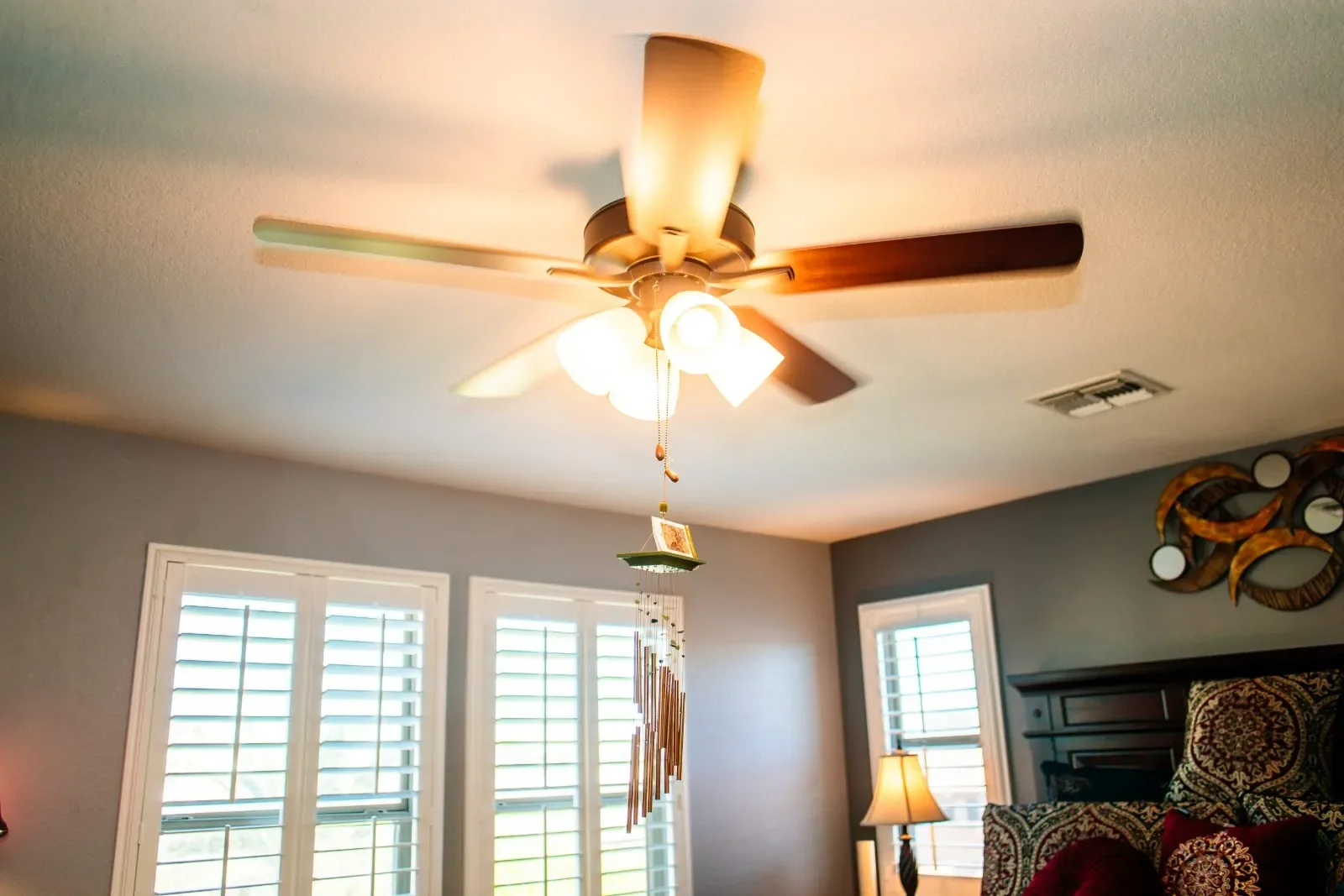
Here is the whole difference between our install and the handyman version, in the owner’s own words: box rating and circuit loads. A spinning fan is a machine hanging over your bed, and it belongs on a fan-rated box fastened to a real structure, on a circuit verified to carry it and its lights. That is what a handyman skips; it is invisible on day one, and it is everything on the day it matters.
New installs, replacements, wobble rescues, patio fans with honest expectations, and heights up to the two-story great room: bring us the fan, or let us help you pick one that will still be spinning in fifteen years. We like Hunter, and we install the best brand for the job.
Why Valley Fans Get Hung by RSB


Fast, Friendly Work, In Customers’ Own Words
Public Google reviews from real RSB customers, quoted as written.
RSB vs. the bargain fan install
Fan Expertise: What a Proper Install Actually Involves
The details that separate an install from a liability hanging over your bed.
Fan-rated boxes, and why the rating exists
A fan-rated box is tested for dynamic load, the constant tug and torque of a spinning machine, and it mounts to the structure with fasteners meant for it. A standard fixture box handles a chandelier stillness, not a fan motion, and the difference is written in every ceiling patch we have ever been called to repair. Verifying and upgrading the box is step one of every RSB fan install, no exceptions.
Circuit loads: the other half of the rule
Box rating, load circuits: the owner shorthand covers both halves. A fan with a light kit joins everything already on its circuit, and older Valley bedrooms often share one circuit across rooms. We count before we hang, and when a circuit is already full, you hear it as a quote line, not as a nuisance trip next July.
Downrods, slopes, and blade clearance
Fan performance lives in placement: blades want proper clearance from the ceiling to pull air, a safe height above heads, and a downrod matched to vaulted slopes. The flush-mount fan on a ten-foot ceiling and the stubby rod under a vault both move a fraction of their rated air, and both are one correct downrod from fixed.
Balance is diagnosis, not accessories
Wobble comes from somewhere: blades out of square, warped from heat, a motor housing loose, or the box moving where it should not. The clip-on balancing kit treats the symptom; we find the source, correct it, and the fan runs straight at every speed, which is also the quiet everyone actually wanted.
Damp, wet, and the outdoor ratings that matter
Covered patios want damp-rated fans at a minimum; anywhere the weather can reach, wet-rated are required. The ratings govern windings, hardware, and blade materials, and they are the difference between a patio fan that survives Arizona and one that seizes by its second June. We speak to the exposure, not to the showroom.
Controls, kept deliberately simple
Fan motors want fan-rated controls: proper speed switches, canopy modules, or the manufacturer remote, never a lighting dimmer, improvising as one. Smart fan controls exist and occasionally earn their place; our standing advice remains the owner: keep it simple, because the control nobody thinks about is the one that never gets troubleshot.
The Hunter lean, explained
We like Hunter fans for the reasons that survive spec sheets: motors that last, parts that exist years later, and balance out of the box more often than not. We install every brand, and the best brand for the job is the real policy, but when a customer asks what we would hang in our own bedrooms, that is the honest answer.
Ceiling Fan Questions, Answered Straight
1.How much does a fan installation cost?
We do not publish prices, but fan installs sit in our most affordable tier, and multiple rooms in one visit drop the per-fan cost sharply. Free estimate, written quote, honored 30 days.
2.Can a handyman hang my ceiling fan?
The two checks that make a fan safe, box rating and circuit loads, are exactly what the bargain install skips, and a fan is a machine spinning over people you love. The licensed version costs modestly more and removes the story where the ceiling patch costs more than the fan.
3.There is no light fixture where I want the fan. Can you still do it?
Yes, constantly: new fan-rated box, wiring, and switch, fished cleanly through Valley ceilings and block walls. It is honest new work, quoted plainly, and it is how bedrooms without fans become bedrooms with them.
4.How high can you install?
Great rooms and two-story spaces are routine; above twenty feet becomes a two-man scaffolding job by our own rule, the same practice as our high chandelier work. Height changes the plan, never the answer.
5.Why does my fan wobble, and can it be fixed?
Almost always, once the source is found: blades, balance, mounting, or a box that was never rated for the job. The clip-on kit is a bandage; the diagnosis is the fix, and it usually takes one visit.
6.Which direction should my fan spin?
Counterclockwise for a summer breeze you can feel, clockwise on low for winter to drift warm air down without a draft. Every install ends with the direction set and the switch demonstrated.
7.How long will a patio fan really last?
Honestly, outdoor fans do not last long here, and anyone promising otherwise is selling. Wet-rated hardware, occasional cleaning, and weather-aware installation buy the longest realistic service, and the comfort per summer evening still makes it one of the best purchases on the patio.
8.Can I supply my own fan?
Absolutely, and most customers do. If you want guidance first, we like Hunter, and we will point you to the best brand for the job. Your fan keeps its manufacturer warranty; our labor carries the RSB year warranty.
9.Can you put the fan light on a dimmer?
The light, often yes, with a control matched to the kit; the motor, never on a standard dimmer, which is where the infamous hum is born. We wire fan and light controls the way the hardware wants, and the room stays quiet.
10.What is the warranty?
One year on labor and materials from completion, invoice as proof, on every fan we hang.