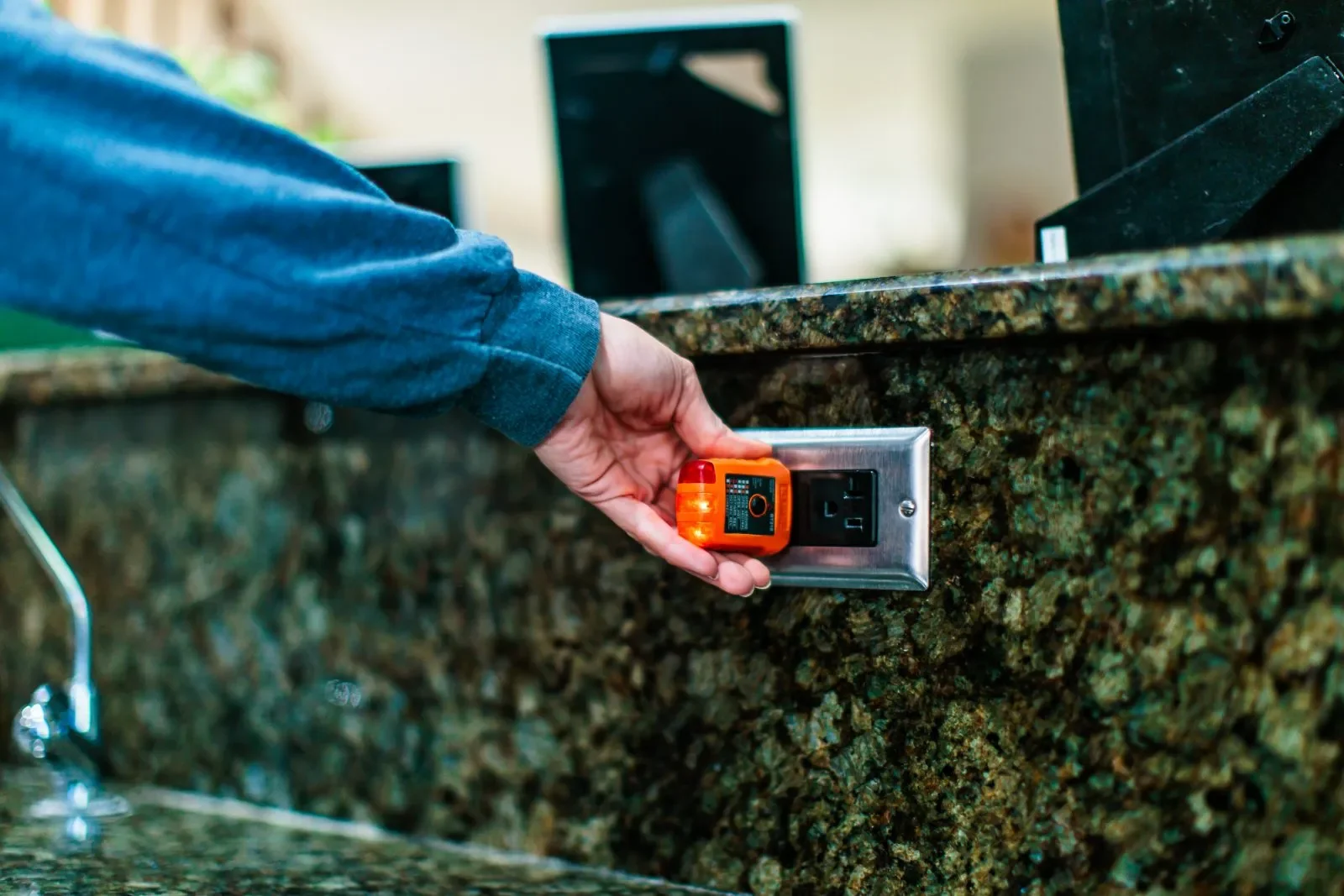
GFCI outlets are the quiet heroes of wet rooms: they watch the current going out and coming back, and the instant even a few thousandths of an amp go missing, the path that might include a person, they cut power faster than a heartbeat. Their arc-listening siblings, AFCI devices, guard against the spark signatures of damaged wiring. We install both where code and common sense want them, replace the worn ones that reset but no longer protect, and map every hidden chain so your household finally knows which button rules which outlets.
Freezer full of meat and a dead garage outlet? Call before you panic. That exact story is in our reviews, and it ended on the phone, free.
Why GFCI Calls Come to RSB


The Free Phone Fix, In Customers’ Own Words
Public Google reviews from real RSB customers, quoted as written. Notice the theme: these calls cost nothing.
RSB vs. the dispatch-first alternative
GFCI Expertise: The Device, Understood
The test button proves the mechanism can click; it cannot prove the electronics still trip at the right threshold at the right time.
How a GFCI actually works
The device compares the current flowing out on the hot wire with the current returning on the neutral, and they should match to the milliamp. When a few thousandths of an amp go missing, leaking somewhere they should not, possibly through a person, the GFCI opens the circuit in a fraction of a heartbeat. It is not overload protection and not a breaker; it is a leak detector for electricity, tuned to the threshold where harm begins.
Line, load, and the chain of protection
A GFCI wired at the head of a circuit protects every ordinary outlet downstream of its load terminals, which is why one device in the garage can rule the bathrooms and the patio. It is elegant, economical, and utterly confusing to homeowners, and the line/load distinction is also where DIY installs go silently wrong: reversed, the outlet works and protects nothing. We wire it right and label what it rules.
The test button is not a test
The button proves the mechanism can click; it cannot prove the electronics still trip at the right threshold at the right time. Instrument testing does, and it is how worn devices get caught while they still look respectable. Monthly button presses remain a good habit; our visits add the test that counts.
GFCIs age, and self-test models admit it
Years of Valley heat, moisture, and duty wear the electronics, and an old GFCI can fail in the dangerous direction. Modern self-test devices continuously monitor their own protection and flag or disable themselves when they degrade; in hardworking locations, we recommend them for exactly that honesty.
AFCI: the sibling with a different enemy
Where GFCIs guard people from leaking current, AFCIs listen for the electrical signature of arcing, the spark chatter of damaged cords and loose connections that start fires. Living areas want arc protection under modern code, delivered at the breaker or the device, and choosing the right delivery point per circuit is the judgment our free estimate provides. The famous nuisance-trip stories almost always trace to installation errors, the pattern our troubleshooting page tells.
Weather-rated is a specification, not a suggestion
Outdoor GFCIs in this climate need WR-rated devices built for UV and temperature swings, and in-use covers that seal around plugs mid-monsoon. The indoor device in an outdoor box is a one-season installation here, and upgrading it properly is cheap compared to the annual trip-wave subscription.
Where protection placement takes judgment
Modern code wants protection nearly everywhere water lives, and the craft is in the details: which chains to build, where the resets should sit so humans can find them, dedicated circuits for the freezer question, and self-test hardware where duty is hardest. Compliance is the floor; a household that understands its own protection is the finished product.
GFCI Questions, Answered Straight
1.My kitchen outlets are dead, but no breaker is tripped. What do I do?
Call us and hunt resets together, free: kitchen, bathrooms, garage, and outdoor covers, in that order. The hidden tripped GFCI is our single most common repair call, and half of them end on the phone.
2.Why does a garage outlet control my bathroom?
Because one GFCI protects everything wired downstream of it, and builders chained rooms in whatever order the wiring ran. It made construction economical, and homeowners have been confused ever since; our map-and-label visit ends the confusion for good.
3.The GFCI will not reset, no matter what. Now what?
Then it is telling the truth about something: a genuine fault downstream, moisture in a box, or its own worn internals. Stop forcing it and let us find which, because each has a different fix, and one of them matters a lot.
4.My outdoor outlets trip every time it rains.
Water is reaching something that the installation should be keeping dry. The GFCI is passing its annual monsoon audit; the weather path is failing it. WR devices, in-use covers, and rebuilt connections make rain boring again.
5.The freezer in the garage keeps tripping the GFCI. Can I just bypass it?
Please do not; the protection guards’ people in the most grounded room of the house. The honest fixes are a healthy appliance, a quality device, and often a dedicated circuit arranged so the brisket and the code both win. We solve this one weekly.
6.How often should I test my GFCIs?
Press the test buttons monthly; it is a good habit that catches the obvious failures. Have them instrument-tested when we are on site for anything, because the button cannot catch the dangerous quiet ones.
7.What is the difference between GFCI and AFCI?
GFCI protects people from current leaking through them; AFCI protects homes from the arcing of damaged wiring. Different enemies, different electronics, and modern homes want both, each where its enemy lives.
8.Our home is older and has no GFCIs at all. Is retrofitting worth it?
Emphatically: a whole-home GFCI retrofit is one of the cheapest meaningful safety upgrades in the trade, usually one visit, and it brings a pre-1980 house to modern wet-room protection without opening a wall.
9.Are the self-test GFCIs worth the extra cost?
In hardworking locations, yes: they continuously verify their own protection and tell you when they have worn out, which ordinary devices never admit. We spec them where duty and moisture are hardest.
10.What is the warranty?
One year on labor and materials from completion, invoice as proof, and the phone resets stay free forever.