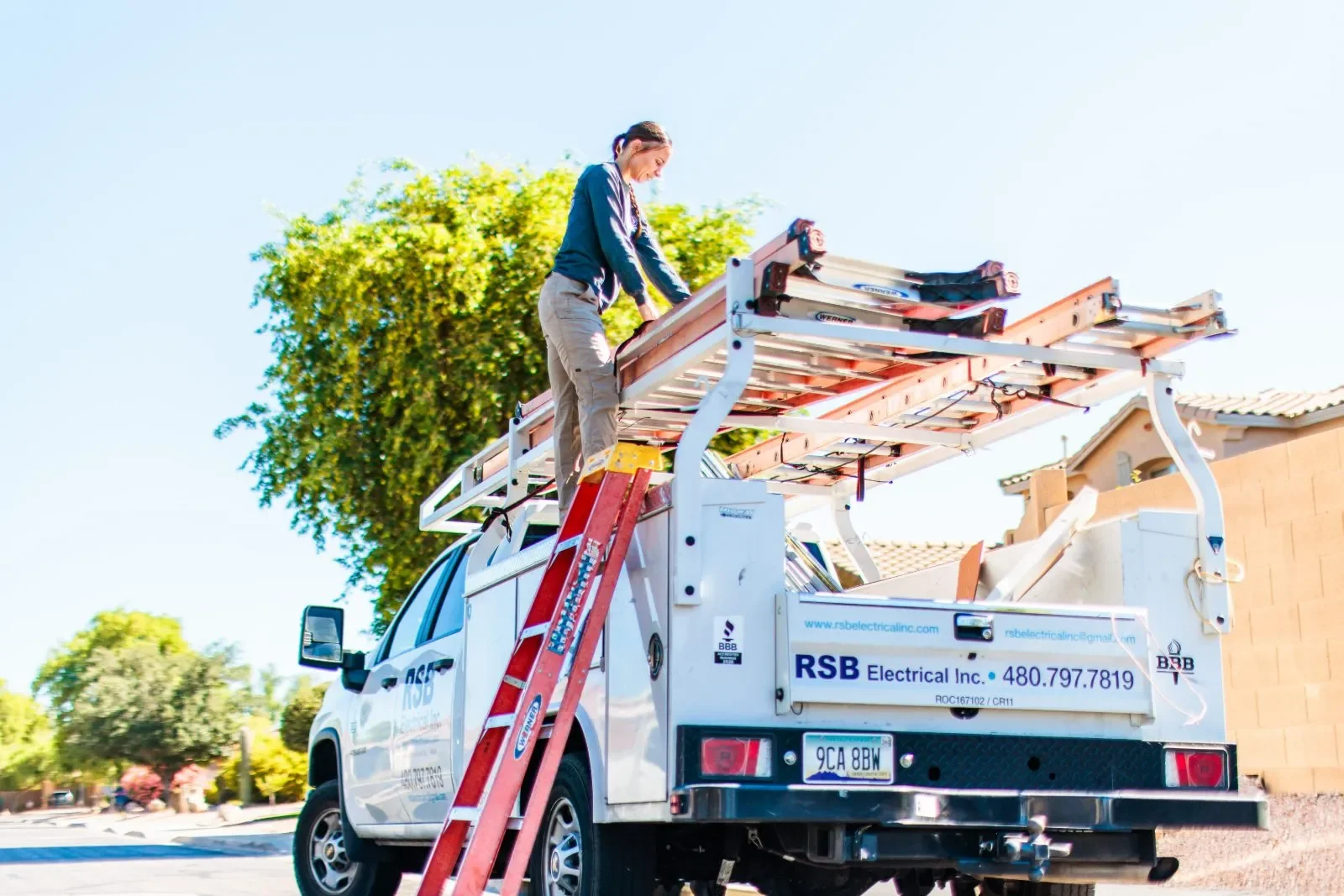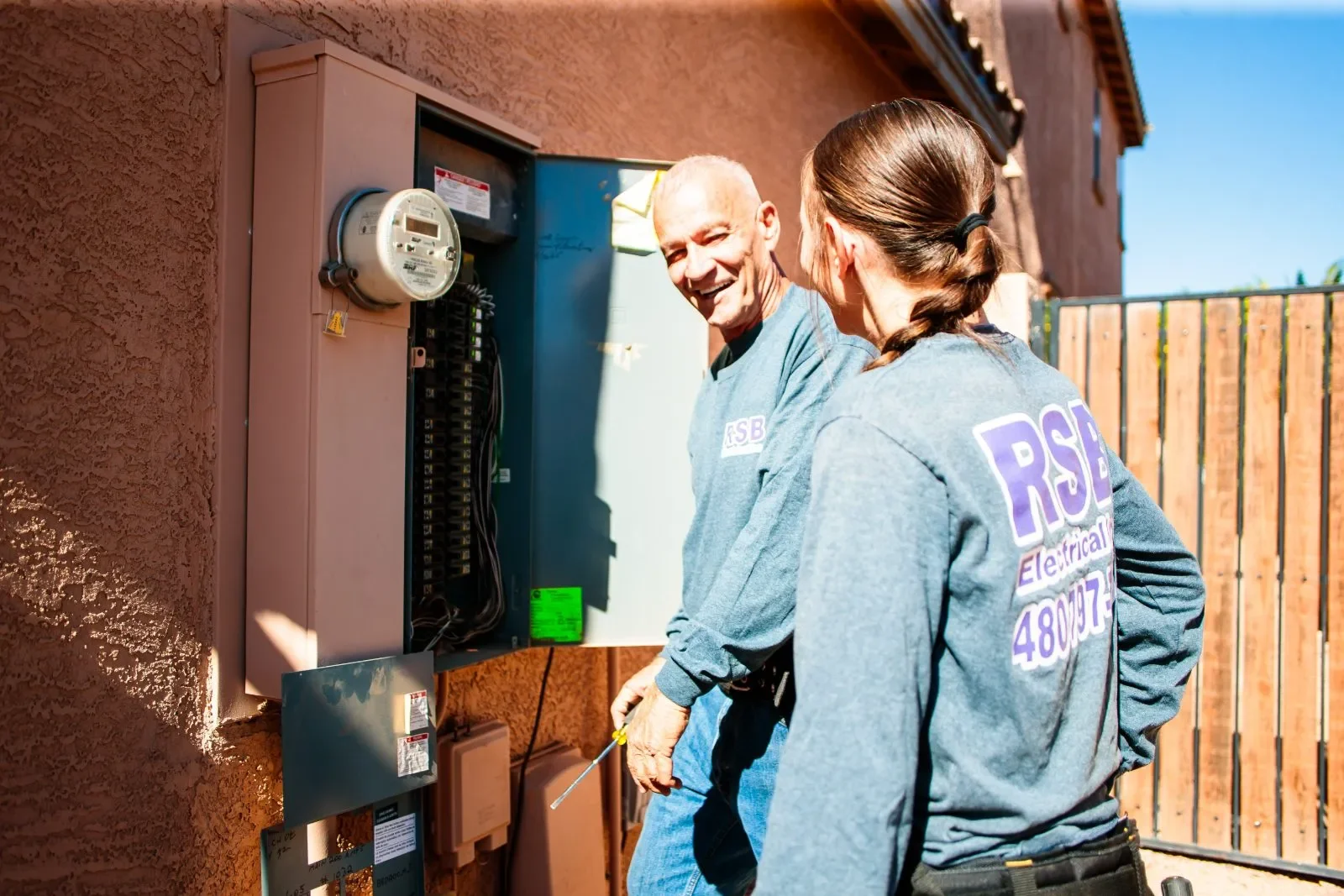
Here is how we are different from the app-quote crowd: no blind prices, ever. A charger circuit is a large permanent load, and quoting one without seeing your panel is guessing with your safety. We visit free, check your panel real capacity, run the load calculation, measure the actual wire run, and put a number in writing, typically the next day, honored for 30 days.
And our standing recommendation, learned from years of Valley homeowners moving houses: we like the NEMA 14-50 outlet. Plug your charger in, and when you move, it goes with you. A hardwired connector stays with the house and cannot be removed safely. We will walk you through which fits your situation.
We have wired the Valley since 2001, and an EV circuit is exactly the kind of high-demand, always-on load where licensed work earns its keep. Once you approve, the install follows within 48 hours on the standard job.
Why EV Owners Call RSB
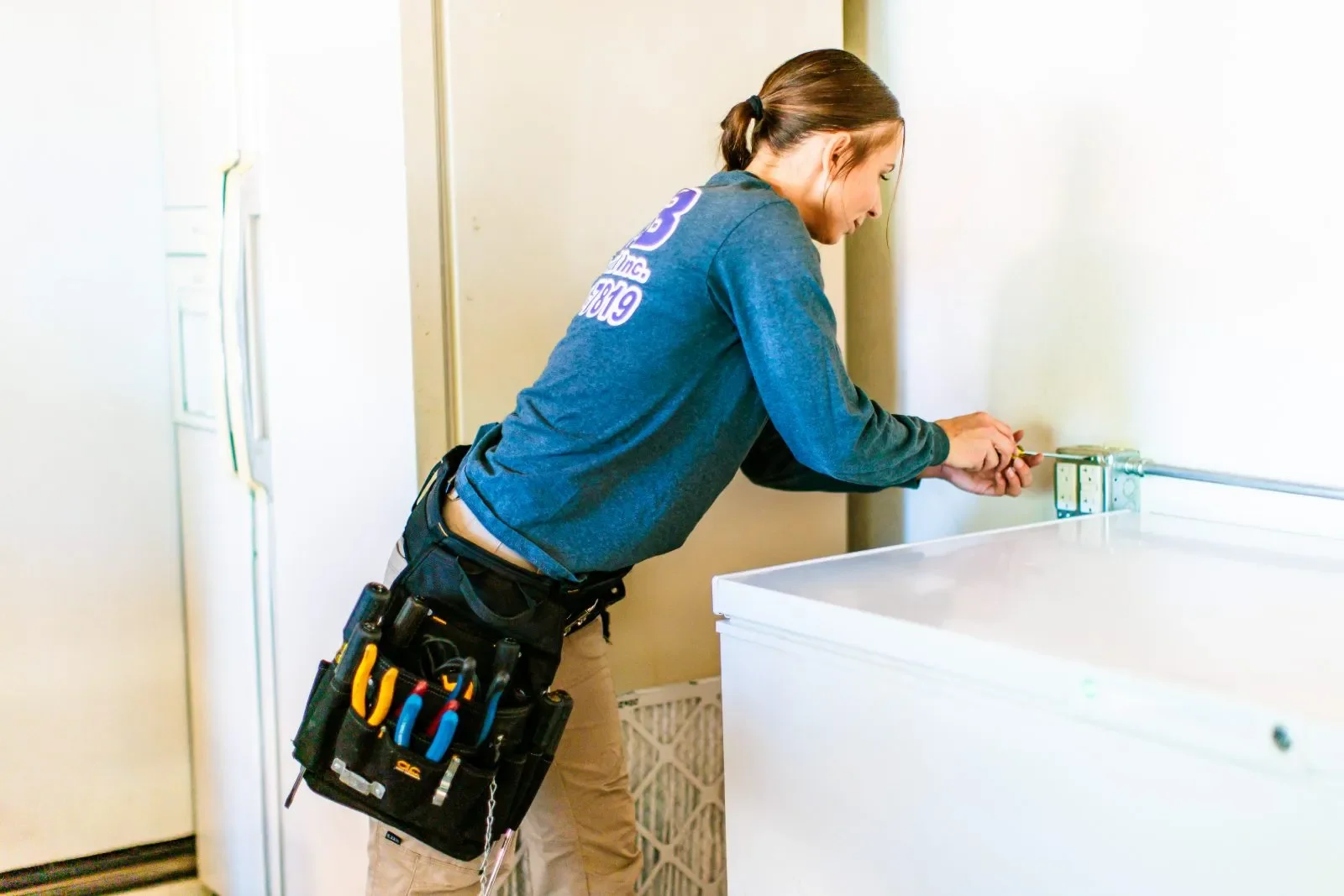


The Install Experience, In Customers’ Own Words
Public Google reviews from real RSB customers, quoted as written.
RSB vs. the app-quote installers
EV Charging Expertise: The Details Behind a Safe Install
The technical details behind an install that stays safe for years.
The load calculation, demystified
Your electrical service has a rated capacity, your home has an existing demand, and a Level 2 charger adds a large continuous load on top. The load calculation reconciles the three using the code demand factors, and it produces a real answer: this panel can take a 40-amp charger circuit, or it cannot. Every RSB install starts with that math, because the alternative is finding out empirically, in July.
Continuous load and the 80 percent rule
EV charging is a continuous load, hours at full draw, so code sizes the circuit at 125 percent of the charger output: a 40-amp charging rate wants a 50-amp circuit, not a 40-amp one. This is the specific corner the shortcut installs cut, and it is why undersized EV circuits run warm for months before they fail. Ours are sized for the load they will actually carry, all night, every night.
NEMA 14-50 versus hardwired, technically
The 14-50 outlet gives you portability and simple charger swaps, and current code generally wants GFCI protection on that receptacle, which we install properly rather than treat as optional. Hardwiring eliminates the plug connection and lets some chargers run at their maximum settings, but it marries the equipment to the house. We explain both honestly; the 14-50 is the popular pick for the moving-day freedom.
Wire sizing, run length, and voltage drop
A long run from panel to garage does not just cost more copper; it loses voltage along the way, and a circuit sized to the minimum on paper can charge noticeably slower at the far end. We measure the real route, size conductors for the distance and the Valley heat, and land them on properly torqued terminations, because a loose lug under continuous load is a slow-motion failure.
What a charger actually does to your charging times
A standard wall outlet, Level 1, adds roughly a few miles of range per hour: fine for a short commute, hopeless for a real one. A Level 2 circuit at typical residential settings adds on the order of 20 to 40 miles of range per hour, which turns every night into a full tank. Matching the circuit amperage to your vehicle onboard charger, rather than overbuying or underbuying, is part of the estimate conversation.
When a subpanel beats a service upgrade
If the math says your service can carry the charger but the panel has no physical space, a garage subpanel is often the cleaner, cheaper fix: fresh breaker spaces exactly where the load lives, with room for the second EV later. When the service itself lacks capacity, a 200-amp upgrade is the honest answer, and we quote it as its own decision, never buried in a charger price.
The install failures we get called to fix
Chargers on undersized wire. A 14-50 outlet on a breaker that does not match. Charger circuits tapped off existing garage circuits because it was easier. Outdoor connections without weather protection in monsoon country. Each one worked on day one, and each one was a countdown. Fixing other installers EV work has taught us exactly where the corners get cut, and our installs are built so nobody ever gets called to fix ours.
EV Charger Questions, Answered Straight
1.How much does an EV charger installation cost?
It depends on your panel and your wire run, and we will not insult you with a blind number. The estimate is free, the written quote typically arrives the next day, and it is honored for 30 days. Approved installs are scheduled immediately, with 48 hours as the working standard.
2.Do you install chargers for my car brand?
Yes. Tesla, Nissan, Chevy, Ford, Rivian, Hyundai, Kia, BMW, and everything else on the road. We install every charger brand, too, including the one that came with your vehicle.
3.Should I get the NEMA 14-50 outlet or hardwire the charger?
Our usual recommendation is the 14-50 outlet: when you move, your charger goes with you. A hardwired connector stays with the home and cannot be removed safely. If your charger top settings need hardwiring or your situation calls for it, we will say so plainly.
4.Will my panel need an upgrade first?
Sometimes. Older panels with no circuit space, already full of tandem breakers, are the most common trigger. The free estimate answers it definitively: we run the load calculation and show you the math, and any panel work is quoted separately so you see each decision real cost.
5.How fast will my car charge on a Level 2 circuit?
Roughly 20 to 40 miles of range per hour at typical residential settings, depending on your vehicle onboard charger and the circuit we install. In practice: plug in at night, wake up full.
6.Do I need a permit?
Yes, a new 240-volt circuit is permitted, inspected work in Valley cities, and that protects you. We pull the permit online and handle the inspection. You do nothing.
7.Can you help me claim utility rebates or set up an EV rate plan?
We keep our lane honest: we do the electrical work, and rate plans or rebates are between you and SRP or APS. What we make sure of is that the install itself never holds you back from any program that asks for licensed, permitted work, because ours always is.
8.Can I supply my own charger?
Absolutely, and most customers do. Customer-supplied equipment carries its manufacturer warranty; our one-year warranty covers the installation labor, and the materials we supply are covered in full.
9.I have solar. Can you tie the charger into it?
We install the charger circuit, but we do not do solar or battery-storage panel work, honestly stated. If your project needs the solar side modified, we will tell you to bring in your solar contractor for that piece, and we will coordinate cleanly with them.
10.Do you install commercial or workplace charging stations?
No, honestly. Commercial EV charging stations for workplaces, multi-family properties, and fleets are outside our scope, and we would rather tell you that now than learn it together mid-project. Home charging across the Valley is where we excel, and for commercial stations we will point you toward a specialist.
11.What is the warranty on the installation?
One year on labor and materials from completion, with your invoice as proof. Charger hardware itself carries the manufacturer warranty.
EV Charger Installation by City
An EV charger install turns on three things: what spare capacity the panel has, which utility serves the address, and which office issues the permit. All three change across the Valley.