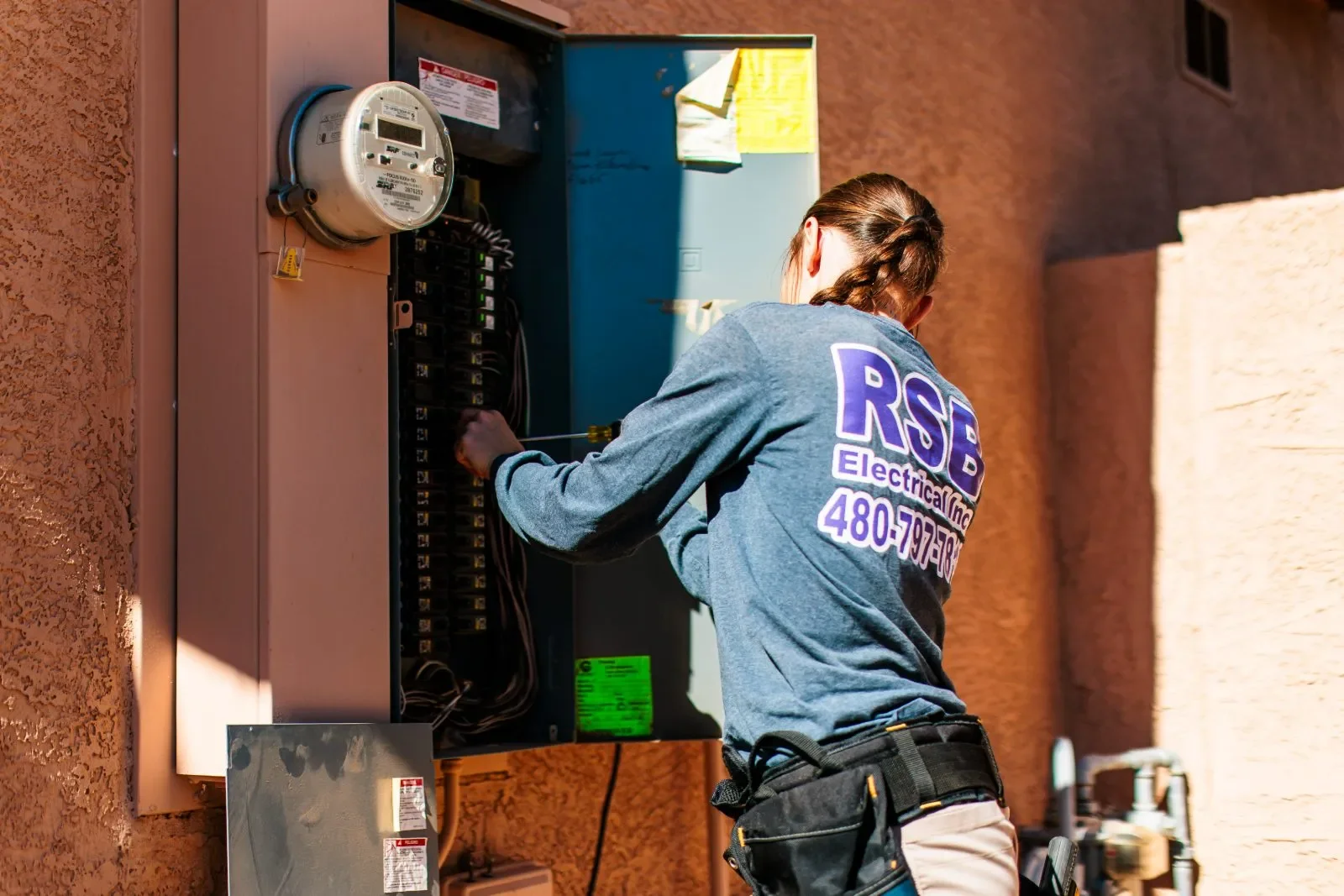
We have repaired, upgraded, and replaced panels across the Valley since 2001, and finding the cause before recommending the fix is how we have always worked.
Reno Blomquist has been doing electrical work since 1983, and panels are where that experience shows most. We diagnose the actual cause before recommending any repair, we pull the permits and coordinate with the city and SRP or APS, and we back the work with a one-year warranty on labor and materials.
Call day or night. A real person answers, and if your panel problem is actually an emergency, an electrician is typically on the way within two hours.
Why Valley Homeowners Trust RSB With Their Panels
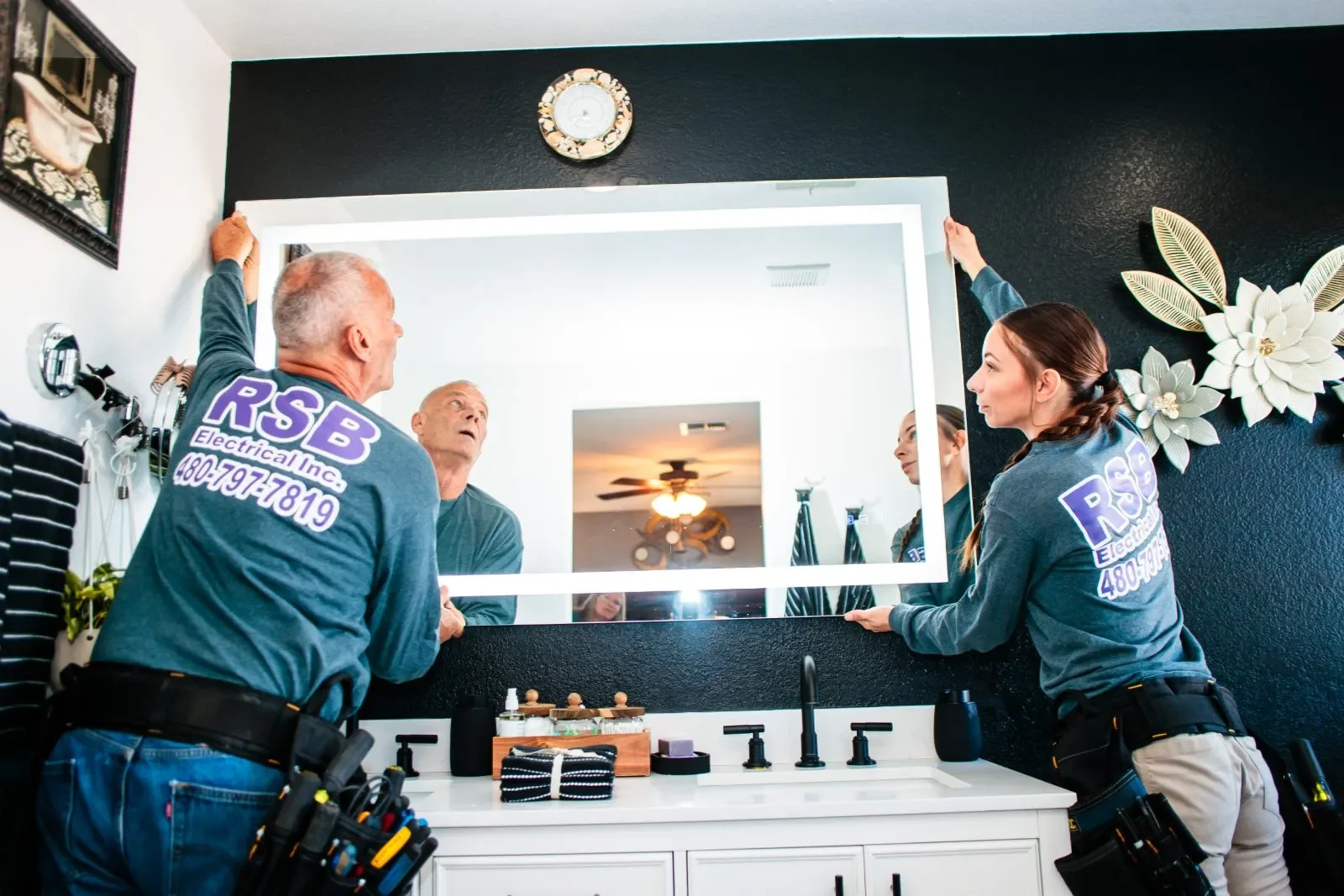
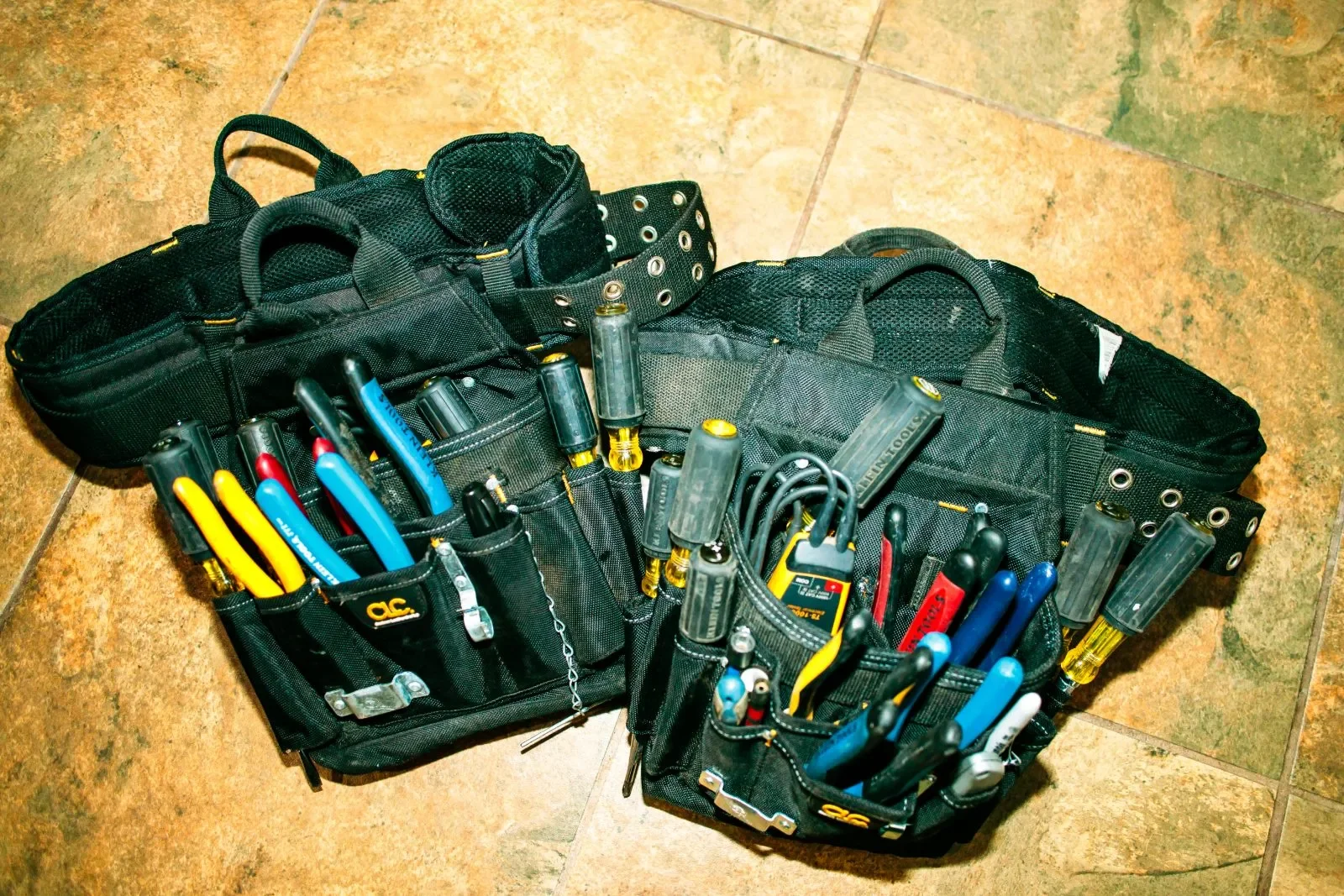
Real Panel Work, In Customers’ Own Words
These are public Google reviews from real RSB customers, quoted as written.
RSB vs. the mega-chains, at the panel
Panel Expertise: What Four Decades at the Box Teaches You
The difference between a panel swap and a panel job done right lies in the details most customers never see.
Bus bars decide repair versus replace
The bus bars are the copper or aluminum spine that every breaker snaps onto. When we find fatigued, pitted, or heat-discolored main bus bars, repair stops being honest: new breakers on a failing spine just relocate the problem. Clean bars with a failed breaker or lug often mean a modest repair is right. This distinction is the heart of our repair-versus-replace framework.
Why Federal Pacific and Zinsco earn automatic replacement
A breaker has one safety job: to trip when the circuit is overloaded or shorted. Many Federal Pacific Stab-Lok breakers have been found to fail that test. Zinsco designs introduce a second failure mode: breakers that overheat, corrode, and sometimes melt onto the bus bar. These are not cosmetic upgrades — they are the removal of a known failure point.
Double-tapped and oversized breakers
A double-tap is two conductors landed under one breaker terminal rated for one. An oversized breaker is a 30-amp device protecting a wire rated at 20 amps. Both are shortcuts we constantly find, installed to make a symptom go away. Both defeat the protection the panel exists to provide, and both are on our must-fix list.
Load calculation before anything gets added
Before an EV charger, a spa circuit, or a casita subpanel, we run the load numbers: service size, existing demand, and what the addition really draws. Chargers installed without load calculations are among the dangerous conditions we repeatedly correct. The math takes minutes and prevents years of nuisance trips, or worse.
What a 200-amp service upgrade actually involves
A true service upgrade is more than a bigger box. The service entrance conductors, the riser or mast, the meter-main, the grounding electrode system, and the utility connection all have to be rated for the new capacity, coordinated with SRP or APS so your power is off for hours, not days.
Subpanels: capacity where you actually use it
Garages becoming workshops, casitas becoming rentals, and pool equipment pads all want their own subpanel: local breakers, shorter wire runs, and room to grow. A properly fed and bonded subpanel is often smarter than forcing every new circuit across the property.
Reading the warning signs in the right order
Whole-house flickering and random outages point to the service and panel. Single-room problems point to a circuit. Warmth, buzzing, or scorching at the panel face means stop and call now. Knowing which symptom belongs to which layer is why our calls end with a fixed cause instead of a stack of replaced parts.
Electrical Panel Questions, Answered Straight
1.How do I know if my panel needs repair or full replacement?
The honest answer lives inside the box: bus bar condition, equipment brand and era, and how much capacity your household actually needs. Fatigued main bus bars or a dangerous brand mean replacement. A failed breaker or lug on healthy bars often means a repair. We tell you which, with photos, and quote it in writing.
2.Do you replace Federal Pacific, Zinsco, and Challenger panels?
Yes, regularly, across the whole Valley. These brands have documented histories of failure, and we replace them with modern equipment from manufacturers such as Square D, Eaton, Siemens, and GE. We also document the replacement for your insurance company.
3.Will my insurance company really make me replace my panel?
We see it regularly: carriers requiring panel replacement, aluminum wiring remediation, or an inspection before they will write or renew a policy on an older Valley home. We provide the inspection, the photos, the fix, and the paper trail.
4.How long does a panel replacement take, and will I lose power?
A residential panel replacement is a one-day job in the standard case. Power is off during the work itself, and when SRP or APS must disconnect service, we schedule utility windows to keep the outage as short as possible.
5.Do I need a permit for a panel upgrade in Mesa or the East Valley?
Yes, panel replacements and service upgrades are permitted and inspected in every Valley city, and that is a good thing. We pull the permit online, coordinate with city staff, and walk the inspection through to a pass. You do nothing.
6.My lights flicker all over the house. Is that the panel?
Whole-house flickering and random outages are the two panel warning signs we tell homeowners never to ignore. It can also be a utility-side or service-entrance problem, which is why we diagnose before we quote. Either way, do not wait on that one.
7.My breaker keeps tripping. Can I just put in a bigger breaker?
Please do not, and do not let anyone else do it either. A breaker that trips is protecting a wire rated for exactly that breaker size. Oversizing it removes the protection and turns the wiring into the weak point. Find the cause; that is what we are for.
8.Can my panel handle an EV charger or a hot tub?
Maybe, and the load calculation answers it in minutes. Many older panels are already full, packed with tandem breakers. Sometimes a subpanel solves it, sometimes a 200-amp upgrade is the honest path. We will tell you which before you buy anything.
9.How much does a panel upgrade cost?
We do not publish prices because equipment and copper costs change constantly, and a stale number would mislead you. Estimates are free, the written quote typically comes the next day, and it is honored for 30 days. Affirm financing is available for larger jobs, subject to credit approval.
10.What is your warranty on panel work?
One year on labor and materials from completion. If you supply your own materials, the warranty covers only our labor. Your invoice is your warranty proof.
Electrical Panel Upgrades by City
Panel work turns on three local things: which utility serves the address, which office signs off on the permit, and how old the housing stock is. All three change across the Valley, so the details differ by city.