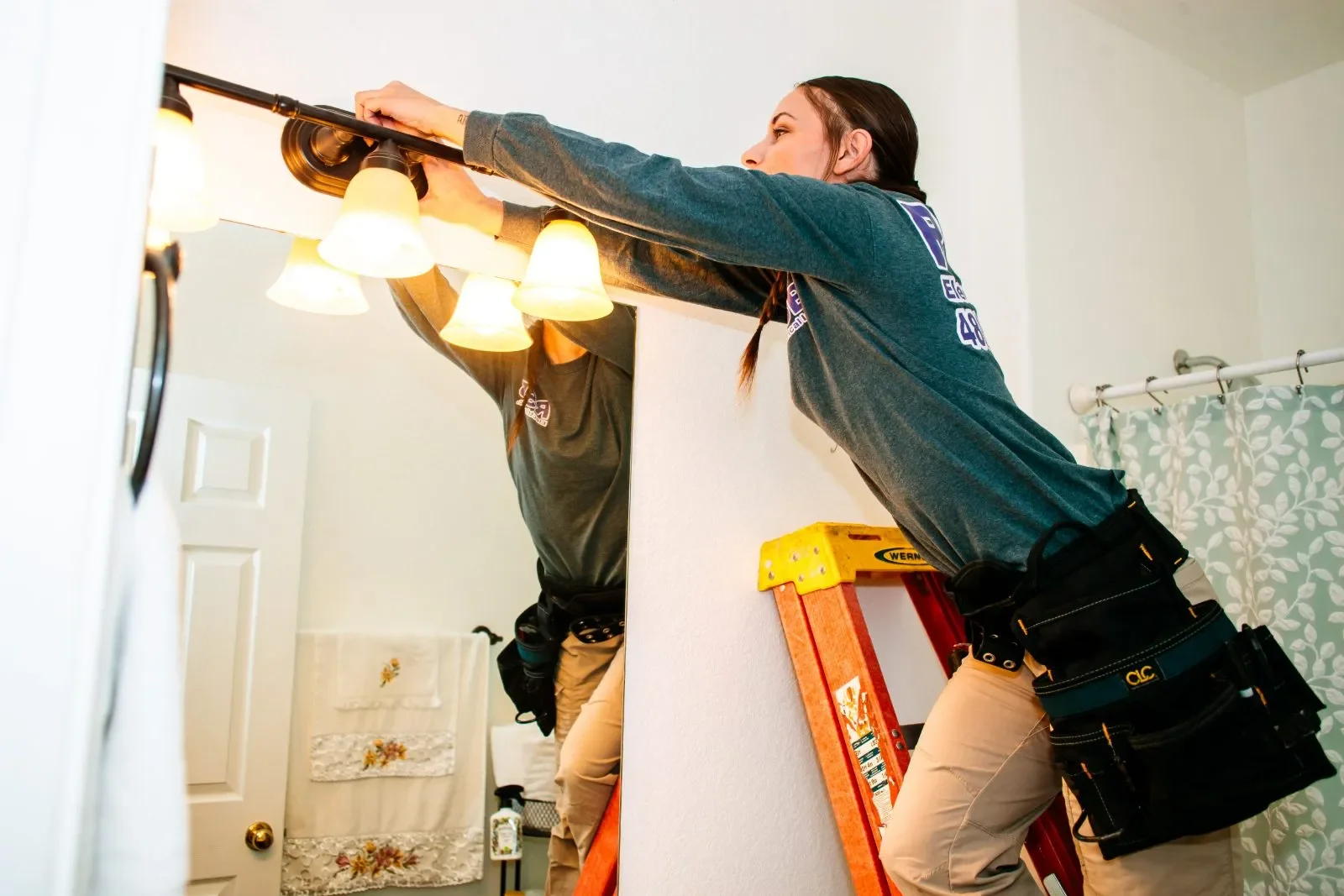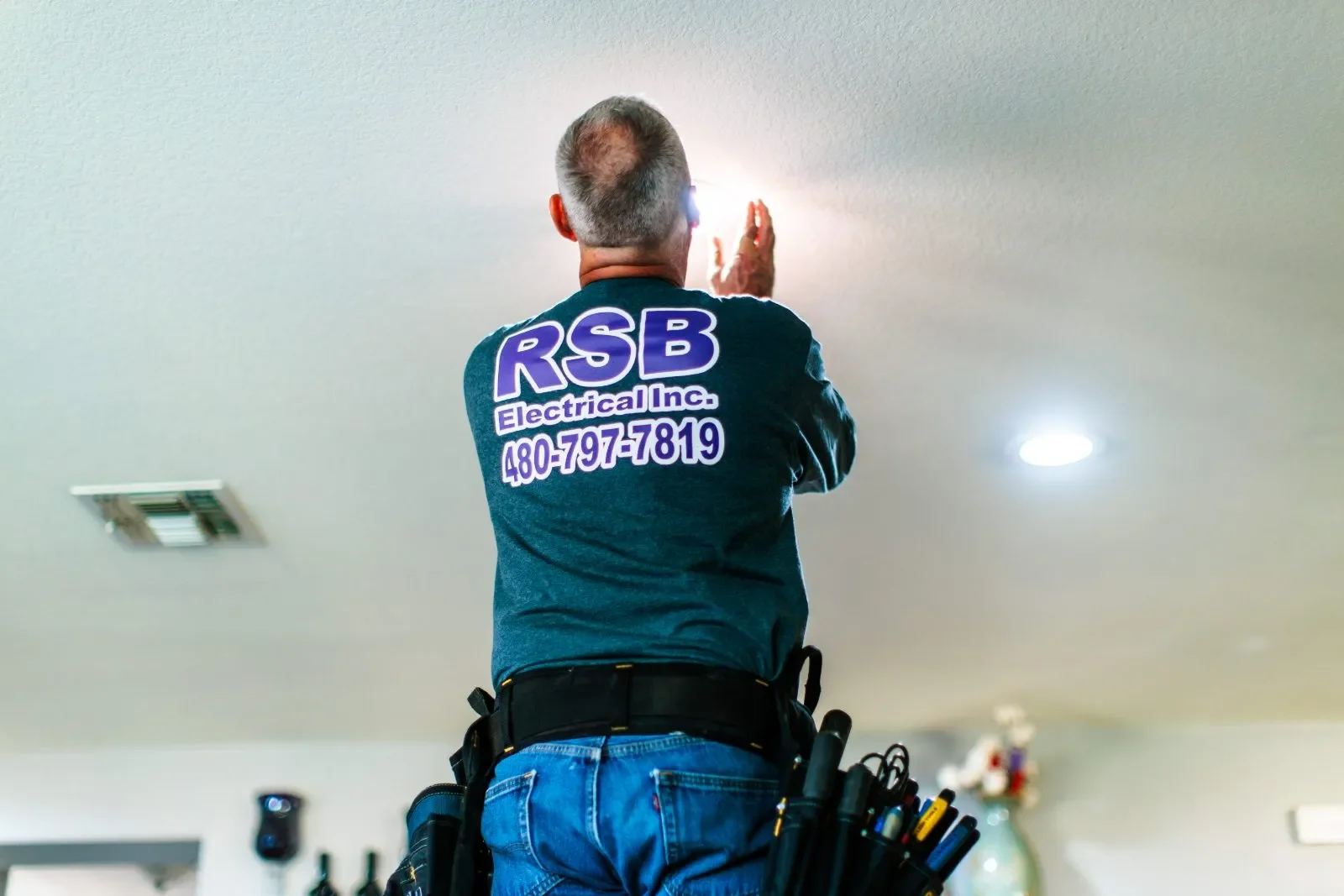
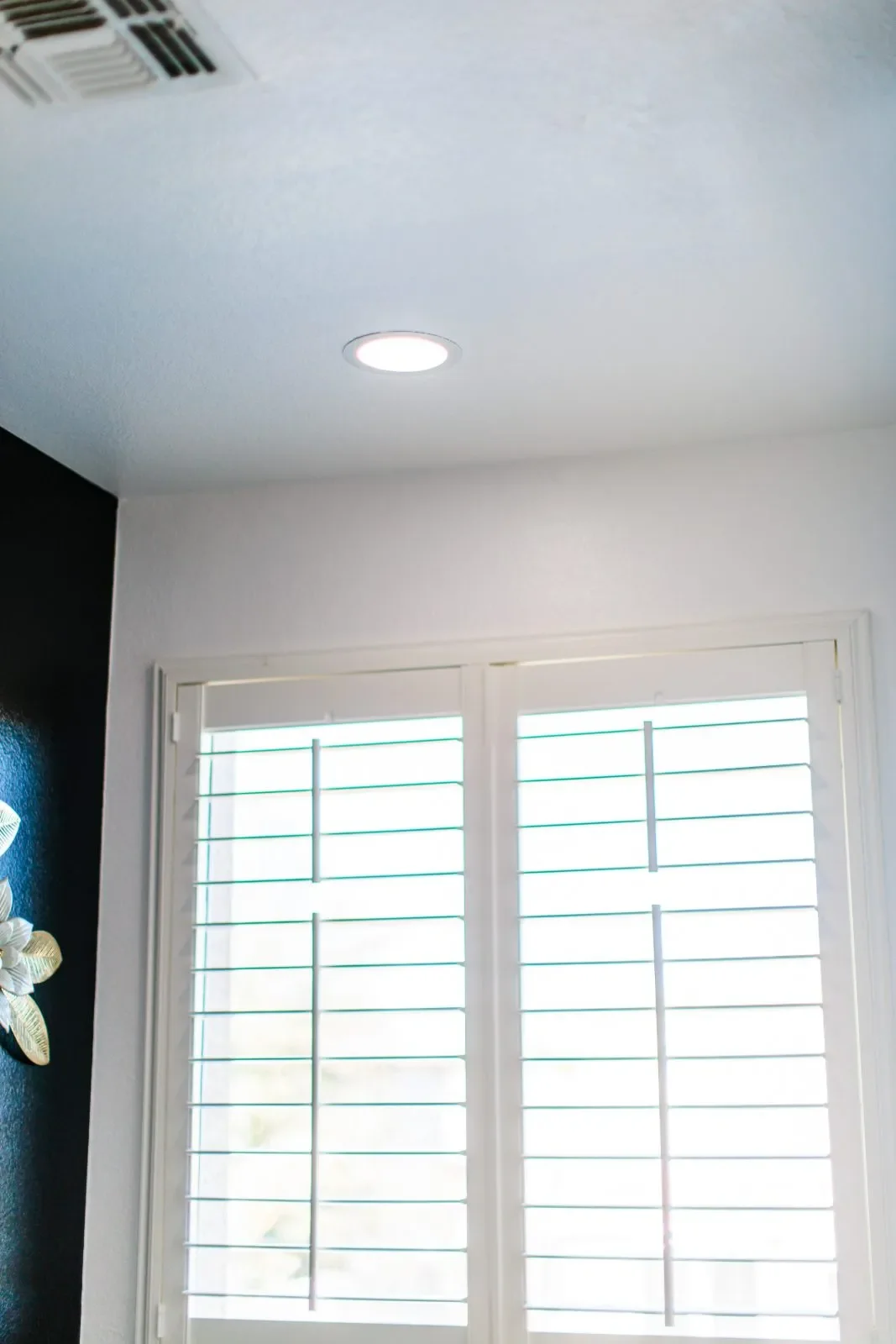
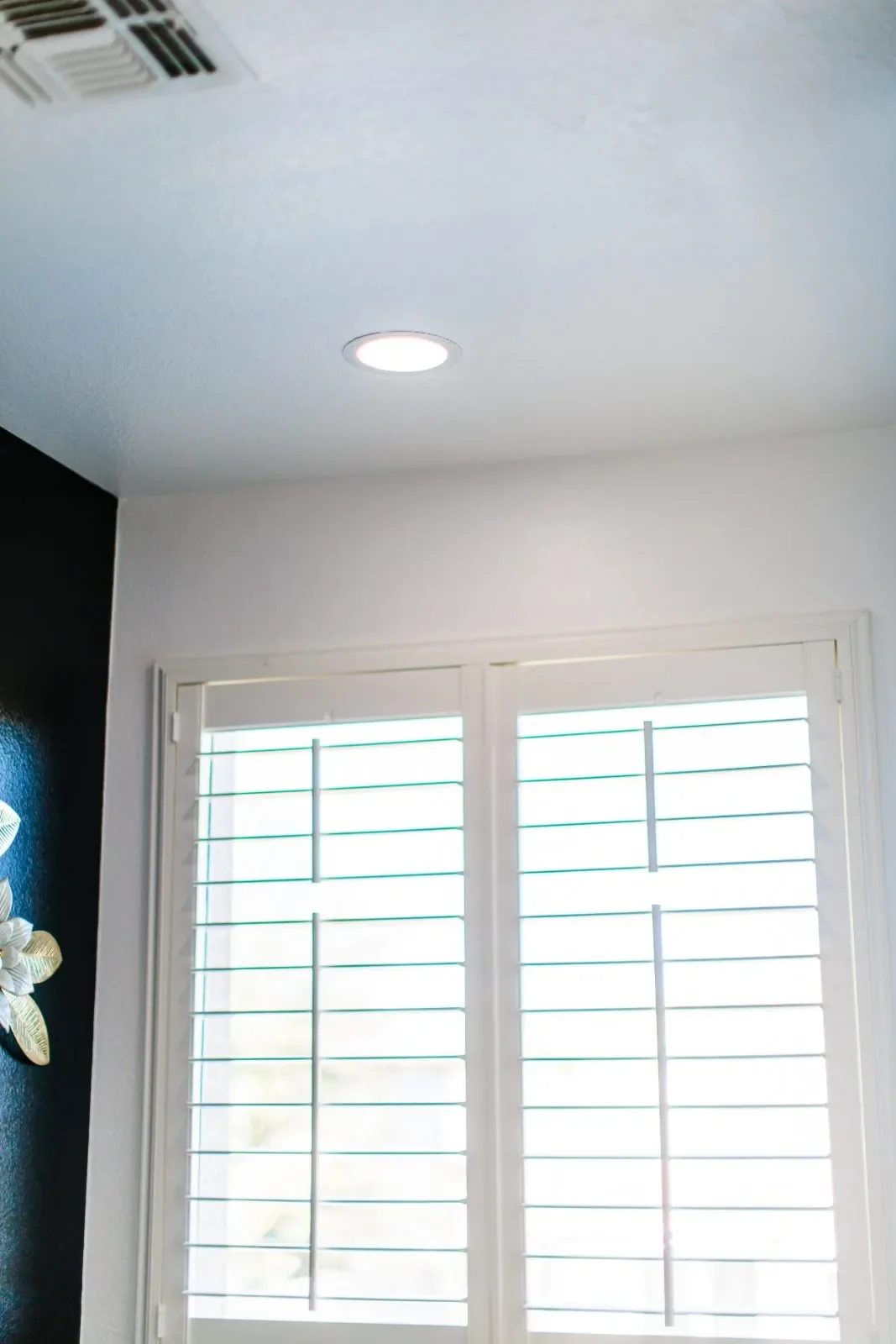
The finished product photographs like it was always there, which is the entire point of recessed light: you notice the room, never the fixtures.
RSB Electrical installs recessed lighting across the East Valley daily: kitchen conversions that retire the old fluorescent box, living rooms lit evenly without glare on the TV, hallways and bedrooms brought out of the single-fixture era, and LED retrofits into the cans a previous decade left behind. Modern wafer fixtures let us light rooms that framing once made impossible, and IC-rated housings keep everything safe under the Valley’s hot, insulated attics.
Why Valley Ceilings Get Their Cans From RSB


Quality Work, In Customers’ Own Words
Public Google reviews from real RSB customers, quoted as written.
RSB vs. the grid-pattern guess
Recessed Expertise: Why Our Ceilings Look Designed
The craft behind a ceiling that looks like it was always meant to be there.
The dimension-first method
Lay out according to the dimensions of the room: the owner’s rule, and the whole craft in one line. Room proportions set the grid, use points, counters, seating, art, bend it, and framing reality finalizes it. Fixtures come last, which is exactly backward from how the guess-and-cut crowd works, and exactly why the results differ.
Spacing follows ceiling height
The working principle: the taller the ceiling, the farther apart fixtures can sit while still blending their light. Spacing that ignores height produces scallops and shadows on eight-foot ceilings or cave-dim vaults, and reading the relationship correctly is why a layout works in rooms the formula sheet never met.
IC-rated and airtight, explained
IC means the housing may safely touch insulation; airtight means it does not leak your conditioned air into the attic. Under a blown-in Valley attic, both matter every day, and the bargain housing with neither rating is how recessed lighting earns its old bad reputation. Ours carry both as the default.
Wafer or can: the honest trade
Traditional housings offer trim depth, serviceability, and premium optics; wafer fixtures offer installation almost anywhere drywall exists and tidy integrated LEDs. Joists, ducts, attic depth, and the room’s ambitions pick the winner, and we explain the pick rather than defaulting to whichever fills the truck.
Beam, trim, and what the light lands on
A can is a container; the trim and beam decide the light. Wide floods for ambient fill, narrower beams for task and art, wall-wash trims that make hallways gallery-clean, eyeballs that aim where flat trims cannot: choosing them per position is the difference between illumination and design.
One ceiling, one color story
Recessed retrofits accumulated over the years drift into mismatched whites, and nothing says unplanned like three color temperatures in one ceiling. We specify one temperature per room, selectable CCT hardware where futures are uncertain, and the ceiling reads as one intentional system again.
Dimming is part of the fixture decision
Recessed LEDs and their dimmers succeed as pairs, chosen together: smooth low ends, no flicker, no buzz. We pair Lutron and Leviton controls to the actual fixtures and set the trim points, because a designed layout deserves a designed dim.
Recessed Lighting Questions, Answered Straight
1.How many recessed lights does my room actually need?
The room decides: dimensions, ceiling height, and how you use the space. The free layout visit answers it precisely, and the honest range for most rooms surprises people in both directions.
2.Wafer lights or traditional cans: which should I get?
Whichever the room and framing favor, wafers go nearly anywhere and look tidy; cans offer deeper trims and premium optics. We recommend per room and tell you why, not per whatever is on the truck.
3.Will my ceiling get torn up?
No: holes are cut once, where the plan says, with dust management, and only the kitchen box conversion involves real patching, which is included and quoted up front. Recessed is among the gentlest lighting projects a finished home can host.
4.Can you convert my existing old cans to LED?
Yes, and it is quick: retrofit modules seat into most existing housings, end the bulb ritual, cut the heat, and dim properly with paired controls. It is the best value in the recessed world.
5.Can recessed lights go in a vaulted ceiling?
Beautifully, with sloped-ceiling trim that directs light down rather than across. The hardware is designed precisely for Valley great rooms; the mistake is using flat trim and lighting the opposite wall.
6.Can you replace my kitchen’s big fluorescent box?
It is our most-ordered recessed project: box out, ceiling patched, designed layout in, dimmable. One visit changes the kitchen’s decade.
7.How do you keep glare off the TV?
By designing for the screen wall: fixture positions that wash walls and fill seating without reflecting in the display. It is a layout decision, which is why it has to happen before the holes.
8.Is recessed lighting safe under attic insulation?
With IC-rated airtight housings, completely, and that is our default specification. The old horror stories come from non-IC cans buried in insulation, a combination we replace rather than repeat.
9.Will they dim without flickering?
Paired with the right control, smoothly to the bottom: fixture and dimmer are chosen together here. Flicker and buzz are compatibility symptoms, and we cure them by design.
10.What is the warranty?
One year on labor and materials from completion, invoice as proof, with fixture hardware carrying its manufacturer’s warranty.