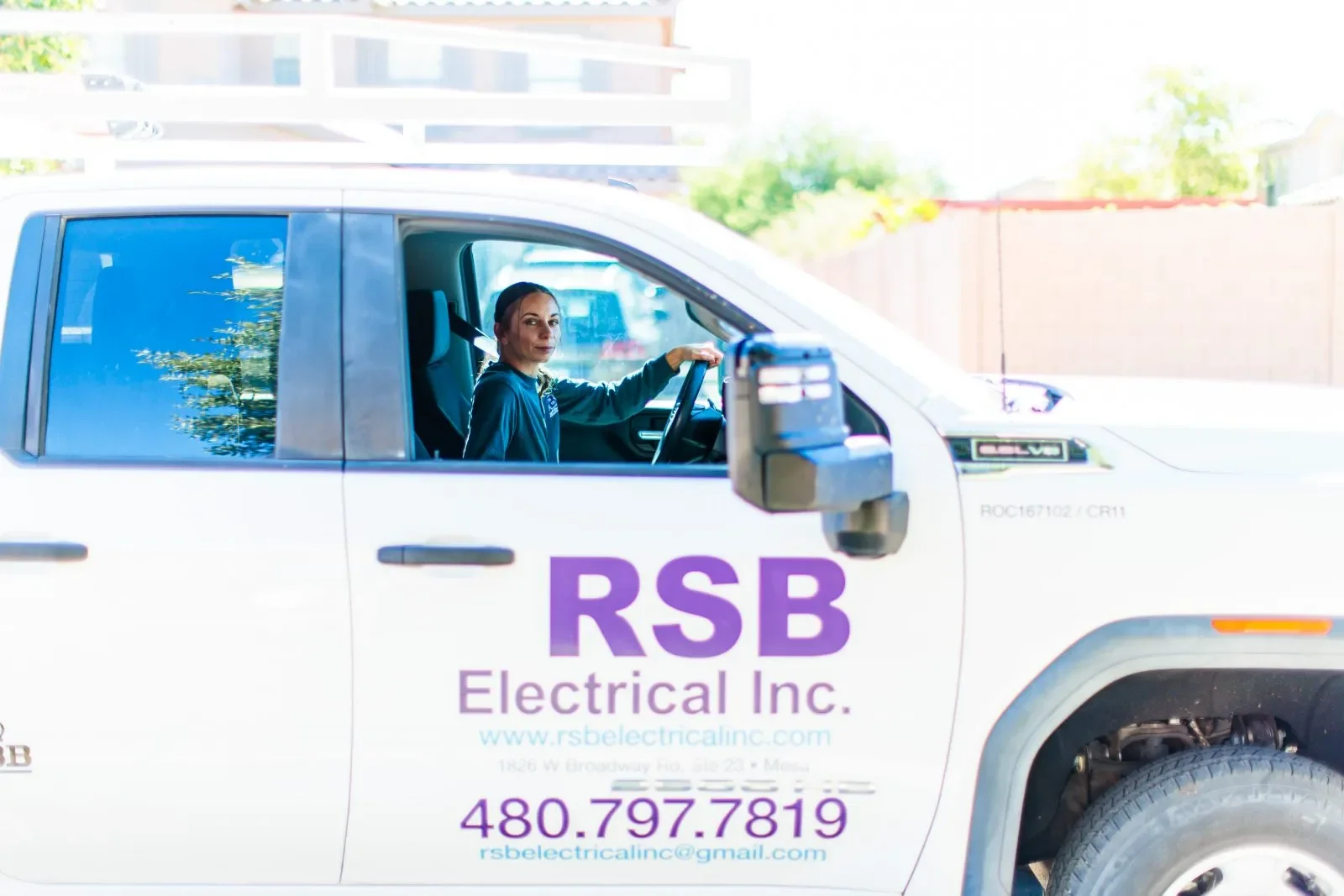
We have serviced commercial lighting across the East Valley since 2001, including a long-running lighting contract for a major fast-food restaurant operation and ongoing maintenance relationships with commercial properties and property management companies. Businesses keep us because of how we run: the phone gets answered, the owner stays close to the work, and lighting problems do not wait for business hours, so neither do we.
One call fixes tonight’s outage. One conversation about a maintenance program means you stop thinking about lighting altogether, because preventive maintenance costs less than emergency repairs, every single time.
Why Valley Businesses Keep RSB on Speed Dial
Commercial Work, In Customers’ Own Words
These are public Google reviews from real RSB customers, quoted as written.
RSB vs. the big commercial shops
Commercial Lighting Expertise: What the Work Actually Involves
What the work actually involves, beyond swapping lamps.
The pole light diagnostic chain
A dark pole has five suspects: the lamp or driver in the head, the photocell or timer controlling it, the contactor switching the circuit, the breaker feeding it, and the underground conductor between them. Each has a different fix and wildly different costs, and the craft is to isolate the guilty party before buying parts. We run that chain in order, every time, which is why our pole repairs end with working lights instead of upgraded guesses.
Underground faults without archaeology
When the feed itself has failed, blind trenching is the budget-killer. Fault location narrows the dig to feet: testing from both ends, isolating the segment, and putting the shovel only where the problem lives. Parking lot conduit runs are long, and the difference between locating and guessing is often the difference between an afternoon and a week of torn-up asphalt.
The honest LED conversation
Here is our unfashionable truth, straight from the owner: on many commercial retrofits, the energy savings are about the same as the brochures overpromise, and the real, bankable win is that LED lasts years longer. Fewer lift trips, fewer outage calls, fewer dark stretches between visits: for a property owner, longevity is the payback. We will still show you the energy math, but we will not insult you with fantasy paybacks to close a retrofit.
Ballast bypass versus ballast replacement
Fluorescent fixtures at the end of life offer two honest paths: replace the ballast and stay fluorescent, cheap today, same failure again in a few years, or convert the fixture to LED and remove the ballast from the story permanently. Fixture condition, lamp count, and how long you intend to hold the property decide it, and we quote both when both are reasonable.
Exit and emergency lighting is compliance, not decor
Exit signs and egress lighting are life-safety equipment with testing duties attached, and the failure mode is a fire marshal’s citation or worse. We repair and replace units, test battery function properly, and run pre-inspection walkthroughs so the inspection is a formality. If your last exit-sign check was the day it was installed, that is the first thing we will say out loud.
Color consistency is maintenance, too
A property relamped piecemeal drifts into a patchwork of color temperatures, and the patchwork reads as neglect from fifty feet away. Program properties get standardized lamps and colors documented per fixture type, so every replacement matches and the site always photographs like it was finished yesterday.
The fixture inventory that makes every visit faster
The first walkthrough builds the map: every fixture, lamp, driver, and control on the property is documented. From then on, trucks arrive stocked specifically for your site, visits run shorter, and multi-location operators get the same standard at every address. It is unglamorous, and it is why program customers stop thinking about lighting at all.
Commercial Lighting Questions, Answered Straight
1.Half of our parking lot is dark. How fast can you get here?
Lighting emergencies get a 24/7 response, and a genuinely dark lot at closing time qualifies. Non-urgent outages get scheduled promptly, usually around your business hours rather than during them.
2.Do we need a maintenance contract to call you?
No. Plenty of businesses have used us call by call for years. Programs exist because they catch failures before your customers do and cost less than emergency repairs over any 12-month stretch. Every situation is different, so everything about them is negotiable.
3.Can you handle multiple locations?
Yes, that is exactly the customer our maintenance programs were built for: multi-location restaurants, retail operators, and property management portfolios, with one standard and documented visit at every address.
4.What does a maintenance program actually include?
Shaped to the property, but the spine is consistent: a documented fixture inventory; scheduled visits that inspect, relamp, and clean; photocell and control check each season; exit and emergency unit testing; per-visit documentation; and priority response between visits. Every situation is different, and everything is negotiable.
5.What happens during the free lighting walkthrough?
We walk the property, at dusk when the problem calls for it, and inventory what is actually installed: fixture and lamp types, controls, and the failures already in progress that nobody has noticed. You get an honest read in writing on what needs repair now, what a retrofit would change, and what a program would cost.
6.Is an LED retrofit actually worth it?
Usually, but for the honest reason: LED lamps and drivers last years longer, which for a commercial property means fewer outages, fewer lift trips, and fewer calls. Energy savings are real but frequently oversold. We will show you both numbers and let the true one decide.
7.Our exit signs failed inspection. Can you fix that?
Yes: repair or replacement of exit and emergency egress units, battery testing, and pre-inspection walkthroughs so the re-inspection passes without drama.
8.The streetlight by our entrance is out. Yours or the city’s?
Honest answer: poles on your property are yours, and we service them. Streetlights on utility poles or in the public right of way belong to SRP, APS, or the city, and we will tell you which and point you to the right reporting line rather than bill you for their fixture.
9.Do you do three-phase industrial equipment work?
No, honestly. Heavy three-phase and 480-volt industrial equipment circuits are outside our lane, and we say so up front. Commercial lighting, tenant spaces, and standard commercial services are exactly our lane, and we are excellent in it.
10.Can you work without disrupting our business?
That is standard practice, not a special request: dining rooms between rushes, retail floors before open, lots after close. We have scheduled around Valley businesses since 2001.
11.Do you also handle our building’s other electrical needs?
Yes, under the same CR-11 license: panels, circuits, repairs, and troubleshooting for commercial properties. Many lighting relationships grow into exactly that.
12.What is the warranty?
One year on labor and materials from completion, invoice as proof, and program customers get per-visit documentation on top of it.