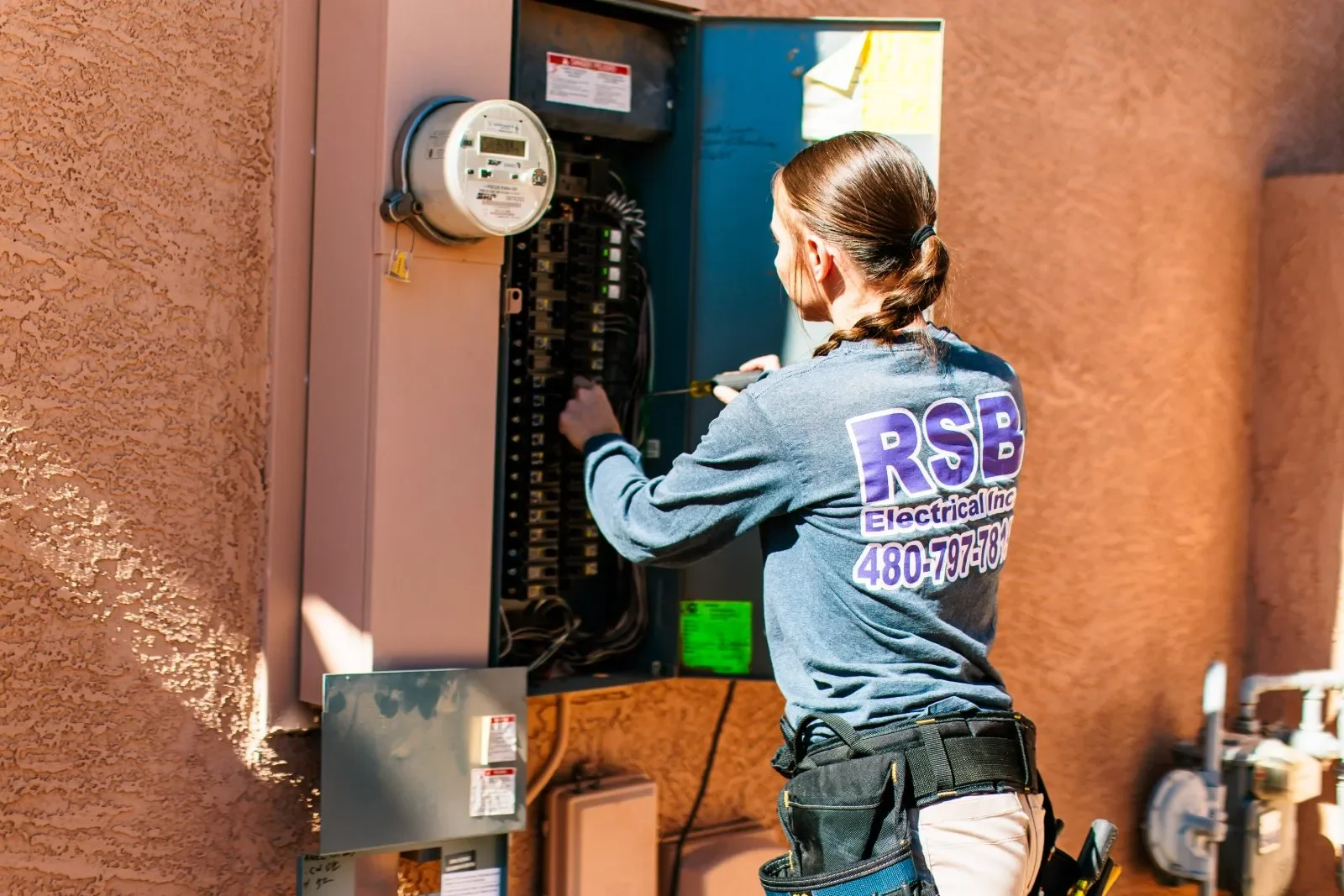
RSB Electrical wires hot tubs and swim spas across the Valley the way the code and the manufacturer both demand: a dedicated 240-volt circuit sized to the spa’s real load, GFCI protection guarding every wet moment, a disconnect within sight of the water, and conduit that will outlast the tub itself. New deliveries powered before the water truck leaves, used spas given honest electrical physicals, and mystery trips diagnosed to their actual cause.
Twenty-five years of Valley backyards, zero shortcuts where people soak. That is the whole pitch.
Why Valley Spas Get Wired by RSB
Customers, In Their Own Words
Public Google reviews from real RSB customers, quoted as written, with the full live feed below.
RSB vs. the brother-in-law hookup
Spa Wiring Expertise: The Rules That Keep Soaking Boring
Remove any leg of the triad, and the other two are carrying risk they were never designed to carry alone.
The triad, and why each leg exists
The dedicated circuit guarantees the spa never shares protection with anything that could mask a fault. The GFCI watches for current leaking where it should not, the milliamps that matter when skin and water are involved, and cuts power faster than a nerve can object. The disconnect puts the shutdown within sight of the water for service and for emergencies. Remove any leg, and the other two are carrying risk they were never designed to carry alone.
Why the dryer outlet story ends badly
The dryer outlet is 240 volts, and that is where its qualifications end: wrong protection, wrong wire sizing for the run, no disconnect, and a cord never rated to live outdoors under a spa cabinet. It is the most common shortcut we correct, and correcting it is always cheaper than flirting with it.
Equipotential thinking around a spa
Water, wet concrete, metal rails, and human bodies all need to sit at the same electrical potential around a spa, so that touching two things at once can never complete a circuit through a person. Achieving that around a self-contained spa differs from an in-ground pool, and knowing that difference is exactly the kind of detail that separates spa wiring from generic outdoor wiring.
Plug-and-play spas, told straight
The 120-volt plug-and-play spa is a real product with real trade-offs: it heats slowly, the heater usually rests while the jets run, and it still deserves a dedicated outdoor GFCI-protected outlet rather than a shared garage cord. For a small tub and patient owners, it can be right, and we will say so; for most Valley spas, 240 volts is the honest recommendation.
Sizing from documentation, not folklore
Spa electrical requirements vary by heater, pump count, and control system, and the manufacturer documented them. We read the actual manual, size conductor, and protection to the stated load over the real route distance, and skip the folklore that all tubs take the same breaker, because they do not.
The GFCI trip decision tree
When a spa trips its protection, the fault is in one of three places: the supply side, the connections, or the spa’s own internals, most famously a heater element leaking current through a hairline crack. We isolate which leg is guilty with a meter and method, fix what is ours to fix, and hand you a straight answer when the repair belongs to a spa technician instead.
Disconnection and moving day, done right
Spas outlive addresses, and moving one starts with de-energizing and disconnecting it properly, not with wire cutters and hope. We close down the old hookup safely, cap and label what stays, and build the new home’s hookup to the same triad, so the spa’s second life starts the way its first should have.
Hot Tub Wiring Questions, Answered Straight
1.How much does hot tub wiring cost?
We do not publish prices; the distance from panel to spa and the route through your yard write most of the quote. Free estimate from the spa’s manual and a yard photo, written quote honored 30 days.
2.Can I just plug my spa into the dryer outlet?
No, and this one is not a maybe: wrong protection, wrong wire for the distance, no disconnect, and a cord that was never meant to live outside. It is the single most dangerous shortcut in backyard electrical, and undoing it is quick, honest work.
3.What does a hot tub actually need electrically?
Three things, together: a dedicated 240-volt circuit sized to the spa’s documentation, GFCI protection, and a shutdown switch you can see from the tub. That triad is the code, the manufacturer’s requirement, and our minimum, all at once.
4.What about plug-and-play 120-volt spas?
Legitimate, with trade-offs: slower heating and jets that borrow from the heater. They still deserve a dedicated GFCI-protected outdoor outlet. For small tubs, they can be right; for most spas here, 240 volts is the honest answer.
5.I bought a used hot tub. What should I do before filling it?
Have the electrical and physical done first: hookup wiring, connections, and protection checked before power and water meet. It is a small visit that has saved Valley buyers from some remarkable previous-owner creativity.
6.My spa keeps tripping the GFCI. Is that the wiring or the tub?
It is one of three things: supply wiring, weathered connections, or the spa’s internals, often a leaking heater element. We isolate, which in one visit, fix what is electrical, and tell you plainly when the repair belongs to a spa technician.
7.How far from the house can the spa be?
Nearly anywhere the yard allows, distance mostly affects wire size and cost rather than possibility. Placement near water has its own clearance rules, and we walk through those with you at the estimate.
8.Can you disconnect my spa for a move and hook it up at the new house?
Yes, both ends: safe shutdown and capping at the old address, full triad hookup at the new one. The spa’s second life starts properly.
9.Do you repair the hot tub itself?
The spa’s internals, pumps, boards, and heaters belong to spa technicians, and we stay honest about that line. Everything from your panel to the spa’s terminals is ours, and our diagnosis will tell you which side of the line your problem lives on.
10.What is the warranty?
One year on labor and materials from completion, invoice as proof.