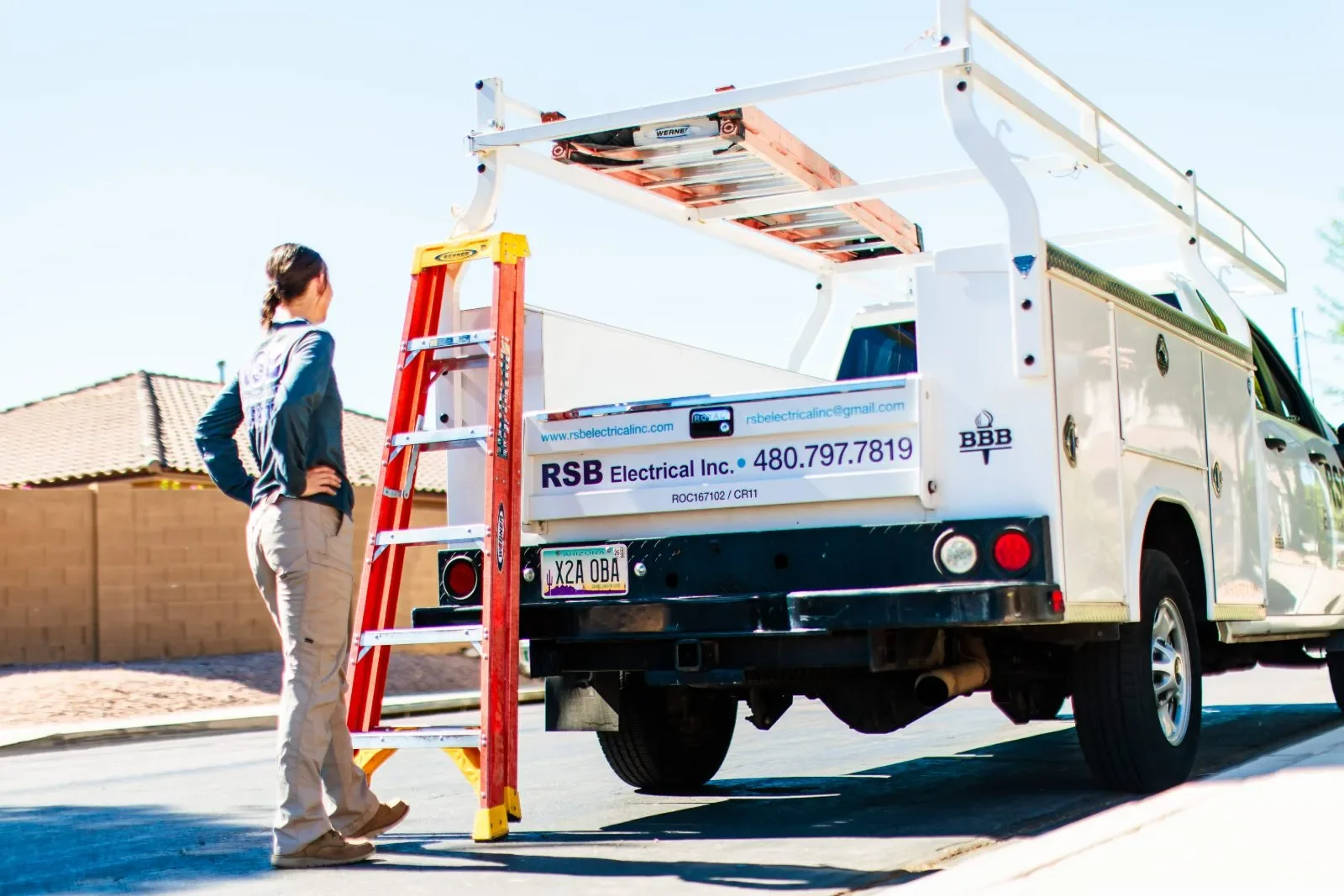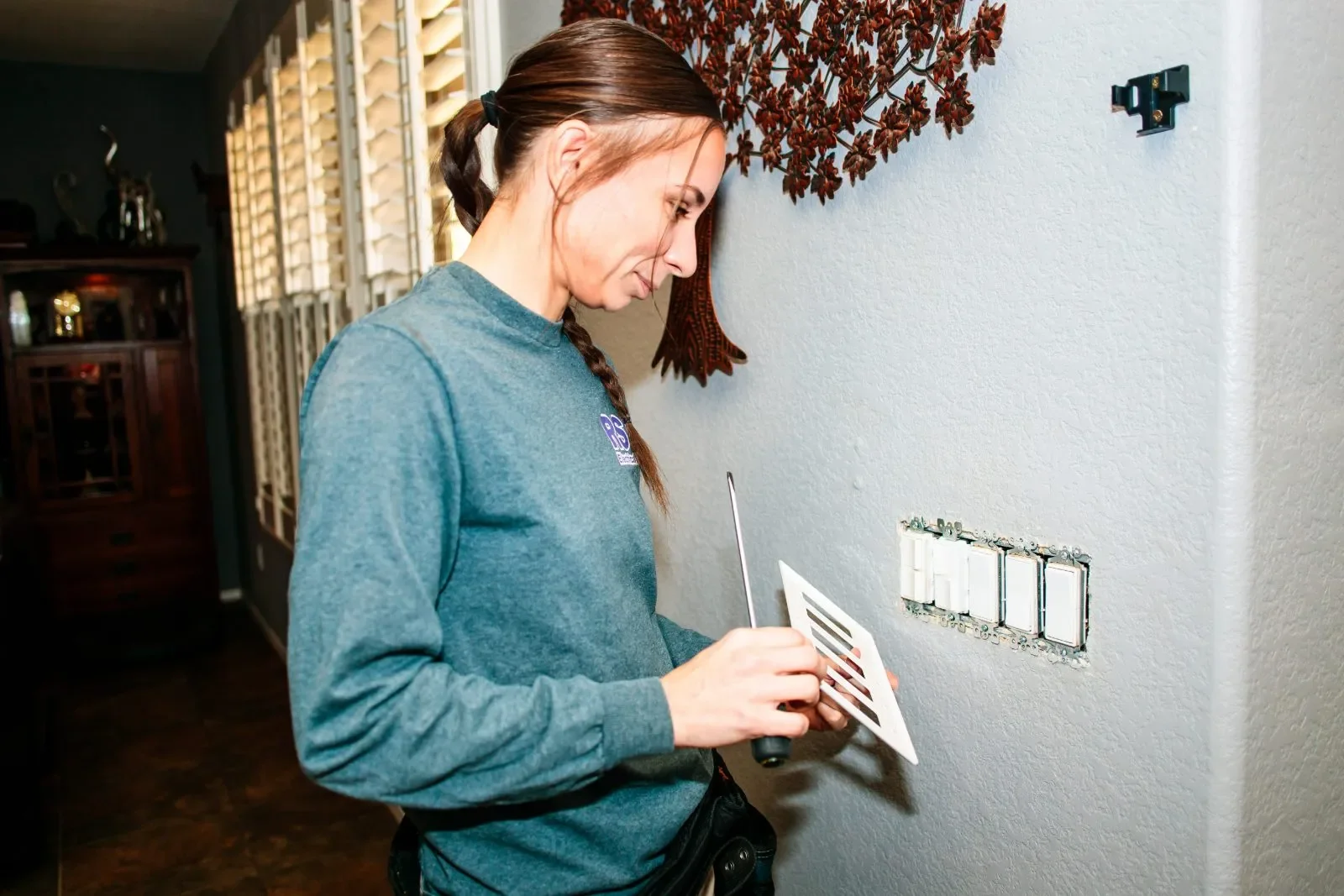
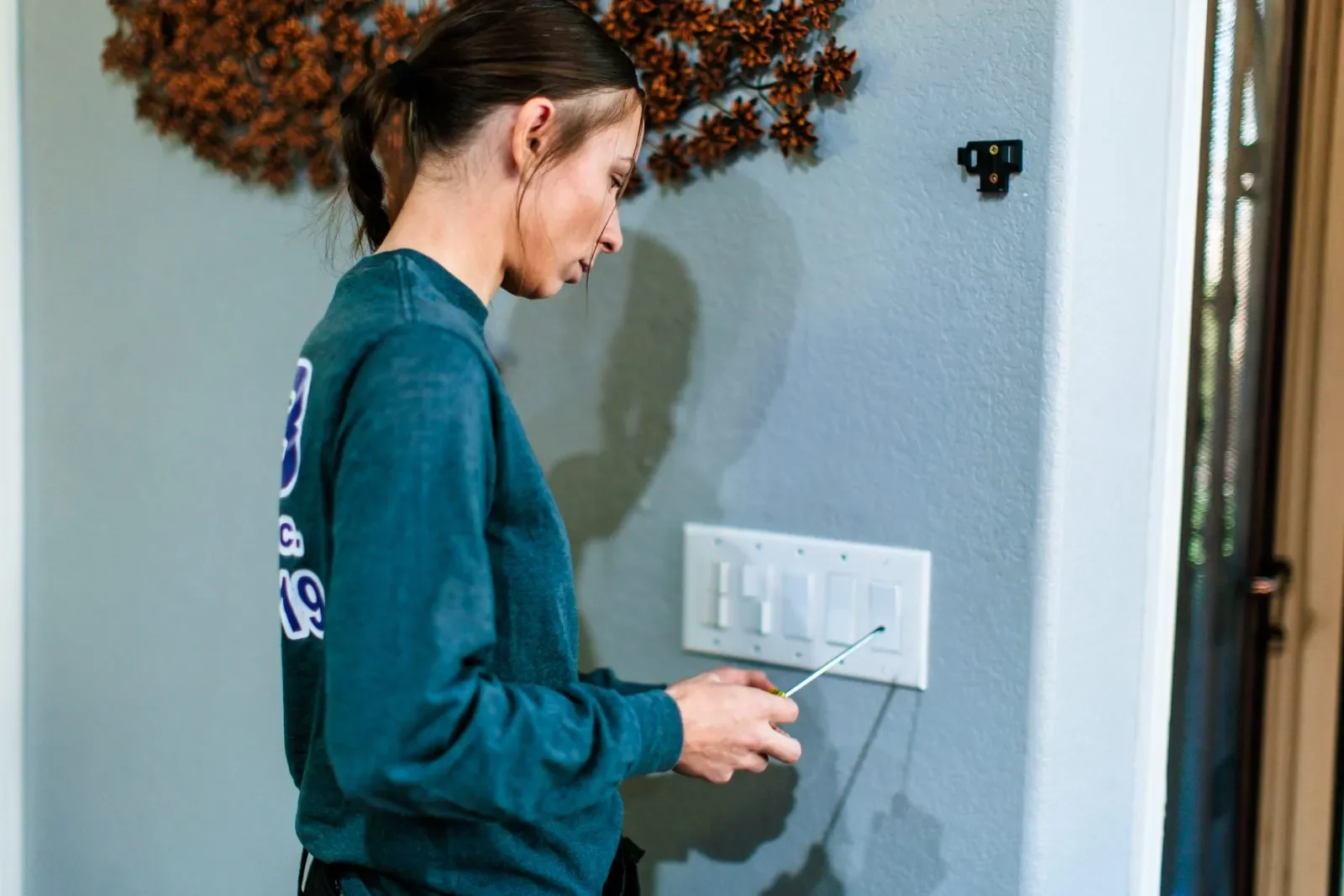
The work splits into three happy categories: outlets where you never had them, modern devices where the 1985 originals still linger, and controls that finally match the way you live, quality Lutron and Leviton dimmers, three-way switches that agree with each other, and smart switches installed where they genuinely help. Behind every plate, the same discipline: the box, wiring, and connections checked and corrected while we are in there, with spec-grade Eaton and Leviton devices that will outlast the fashion.
Bring us one outlet or a whole-house list. Batching is the best value in the trade, and the truck is stocked for it.
Why Valley Homes Upgrade With RSB

Upgrades, In Customers’ Own Words
These are public Google reviews from real RSB customers, quoted as written.
RSB vs. the handyman swap
Device Expertise: What Right Looks Like Behind a Wall Plate
What right looks like behind a wall plate.
Box fill is a real limit, not a suggestion
Every box has a calculated capacity for conductors, devices, and clamps, and stuffed boxes are among the commonest shortcuts we correct. Modern devices, especially smart switches, are deeper than their ancestors, which makes the box-fill check the first move of every upgrade, not an afterthought when the plate will not sit flush.
The back-stab problem
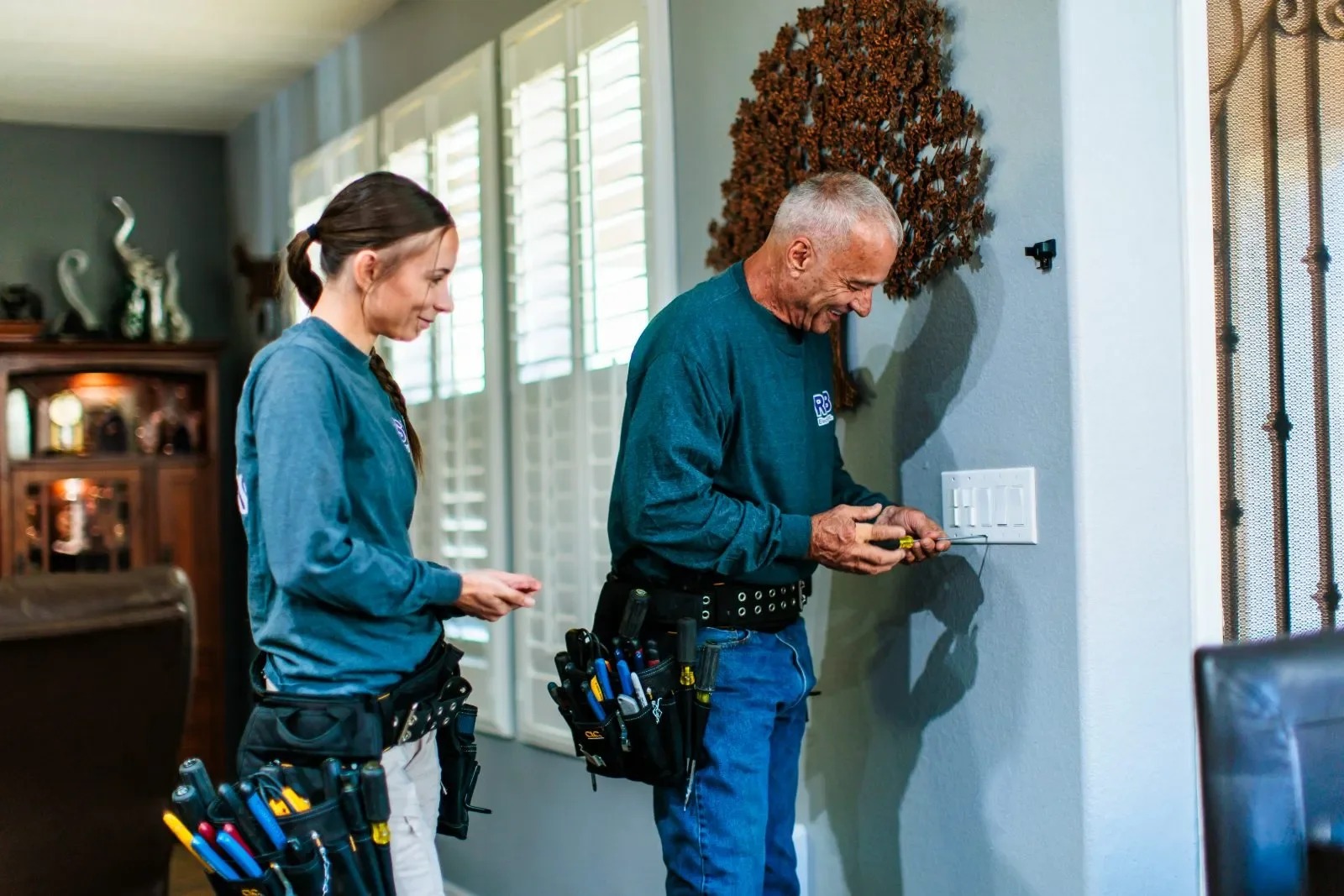
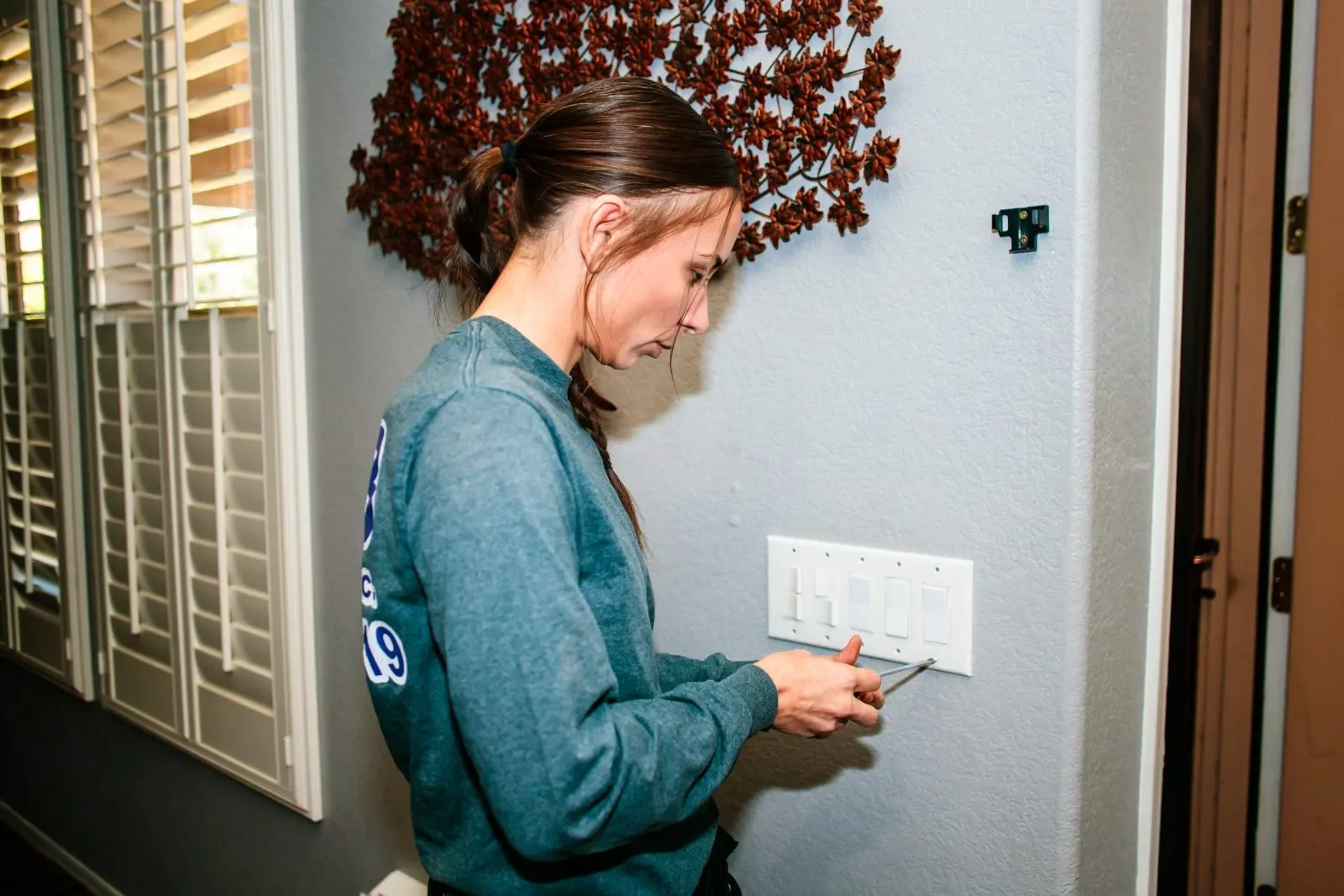
Millions of devices were installed by pushing a wire into spring-grip holes in the back, fast for the builder, loose for the decades. Back-stabbed connections are a leading source of the warm plates and flickers we chase, so our standard is simple: while we are in the box, conductors move to screw terminals, torqued every time.
Why spec-grade devices are the honest default
The difference between a builder-grade and spec-grade outlet is invisible in the aisle and decisive in year fifteen: contact mass, clamp design, face material. We stock Eaton and Leviton spec-grade as our default because devices are the cheapest place to buy longevity, and the most annoying place to have skipped it.
Three-way and four-way circuits, demystified
Multi-location switching runs on traveler wires and a logic that punishes guesswork, which is why so many hall lights obey only one of their switches. We diagnose the circuit before touching hardware, restore the intended logic, and leave both ends working, an outcome that surprises more households than it should.
Dimmers and LEDs must be introduced properly
Modern dimming is a compatibility conversation between the control and the lamp, and mismatches buzz, flicker, and strobe at the bottom of the range. We pair Lutron and Leviton controls to the actual fixtures, set trim levels where the hardware allows, and end the buzz rather than relocating it.
The neutral-wire question that decides smart switches
Many smart switches need a neutral conductor at the switch box, and many older Valley homes simply do not have one there. That single fact decides hardware choices, and it is why Lutron Caseta, which works without a neutral, earns so many of our recommendations in pre-1990 homes. We check before anything is purchased, which is exactly the step the mid-install surprise stories skipped.
Tamper-resistant, explained without eye-rolling
Tamper-resistant outlets carry internal shutters that only open for a proper plug, and they have been the code standard for new work for years, for one reason: small children and outlet slots have a long, well-documented history. In homes with kids or grandkids, upgrading the reachable outlets is cheap, invisible, and quietly excellent parenting.
Outlet and Switch Questions, Answered Straight
1.How much does it cost to add or upgrade outlets?
We do not publish prices, but this is among the most affordable works we do, and batching drops the per-device cost sharply. Free estimate, written quote, honored 30 days.
2.Can a handyman just swap my outlets?
Legally, often, wisely rarely: box conditions, back-stabs, and aluminum-era wiring turn simple swaps complicated; unlicensed work can void insurance coverage when it goes wrong, and the swap that skips the box check just re-decorates the problem. The licensed version costs modestly more and ends the conversation.
3.Are USB outlets worth it?
Where you actually charge, yes: bedside, kitchen desk, office. They free the outlet faces, remove the adapter drawer, and modern USB-C versions charge properly. We spec quality units whose USB modules do not die young, because cheap ones do.
4.Can I get a smart switch if my house is older?
Usually, with the right hardware, many older switch boxes lack the neutral wire some smart switches demand, which is why we check first and lean on Lutron Caseta where neutrals are absent. The answer is almost never no; it is which product?
5.Do you do whole-home automation?
No, honestly. Smart switches and dimmers where they help, yes; whole-home automation systems, smart thermostats, network cabling, and home theater are outside our scope, and we say so before anyone buys hardware. Simple systems age best, and we build the simple kind.
6.Why does my new dimmer buzz?
A control-and-lamp mismatch, almost always. Pairing a quality dimmer to the actual fixtures fixes it.
7.Can you move an outlet for a wall-mounted TV or new furniture?
Yes, constantly: relocations are bread-and-butter work, TV outlets that hide every cord are one of our most-requested projects, and appliance-delivery deadlines get met, as one of the reviews above happily describes.
8.Can you add outlets on the block or exterior walls?
Yes. Block construction takes different techniques than drywall fishing, and exterior additions get weather-resistant devices and in-use covers rated for monsoon reality. Difficulty is quoted honestly up front.
9.What are tamper-resistant outlets, and do I need them?
Outlets with internal shutters that only accept real plugs, the modern code standard, and the easy answer, anywhere children live or visit. Upgrading reachable outlets during any visit costs little; we will point out the candidates.
10.Why is my outlet warm with nothing plugged in?
Warmth with nothing plugged in means the heat source is inside the wall: a loose connection at the device, a back-stabbed wire finally giving up, or another circuit’s load passing through a failing splice behind that box. Treat it as a warning worth a phone call, not a quirk. Stop using the outlet and let us open the box before the slow, kind-of-fire risk gets a vote. The fix is frequently a single visit.
11.What is the warranty?
One-year labor and materials from completion; invoice as proof on every device we install.