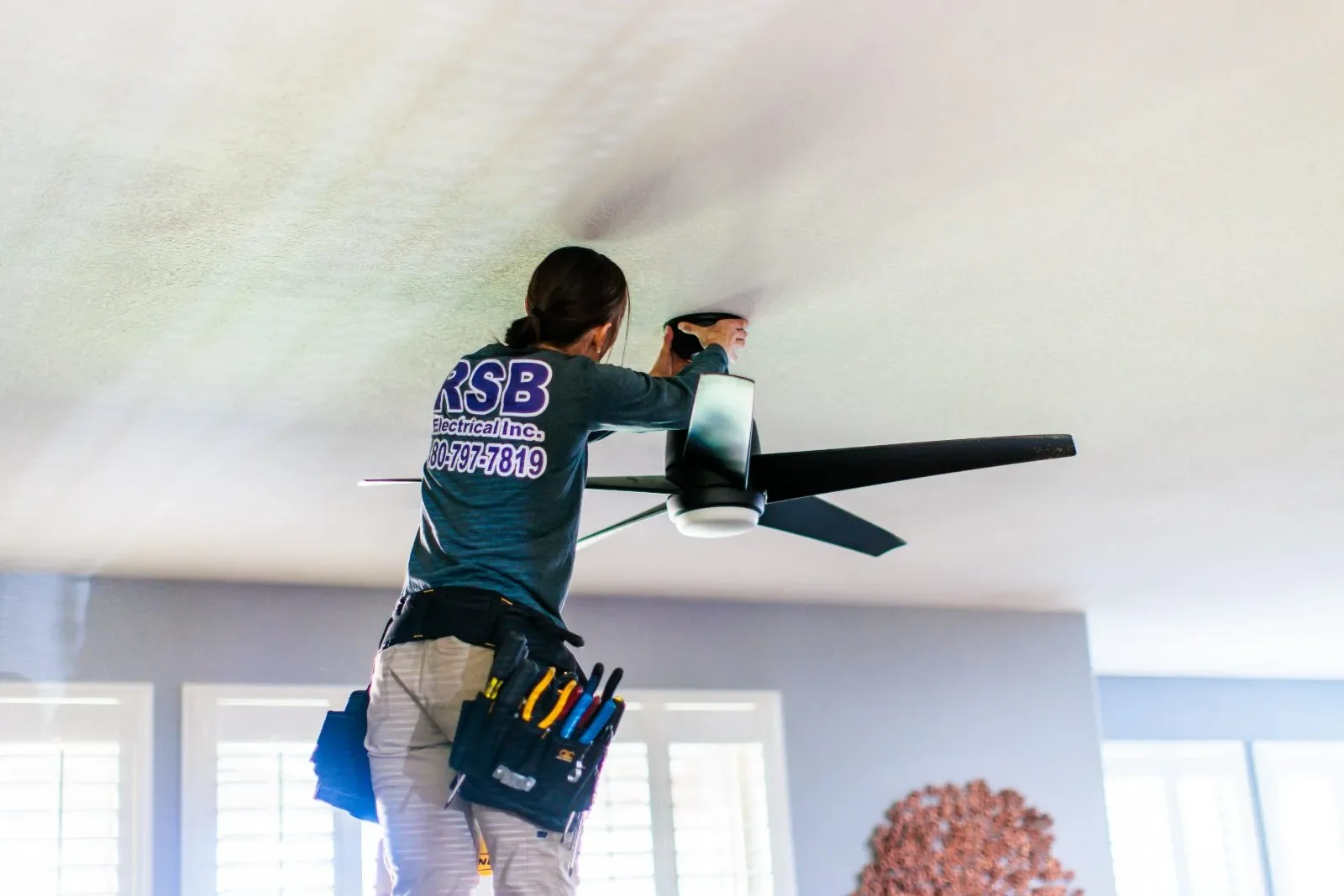
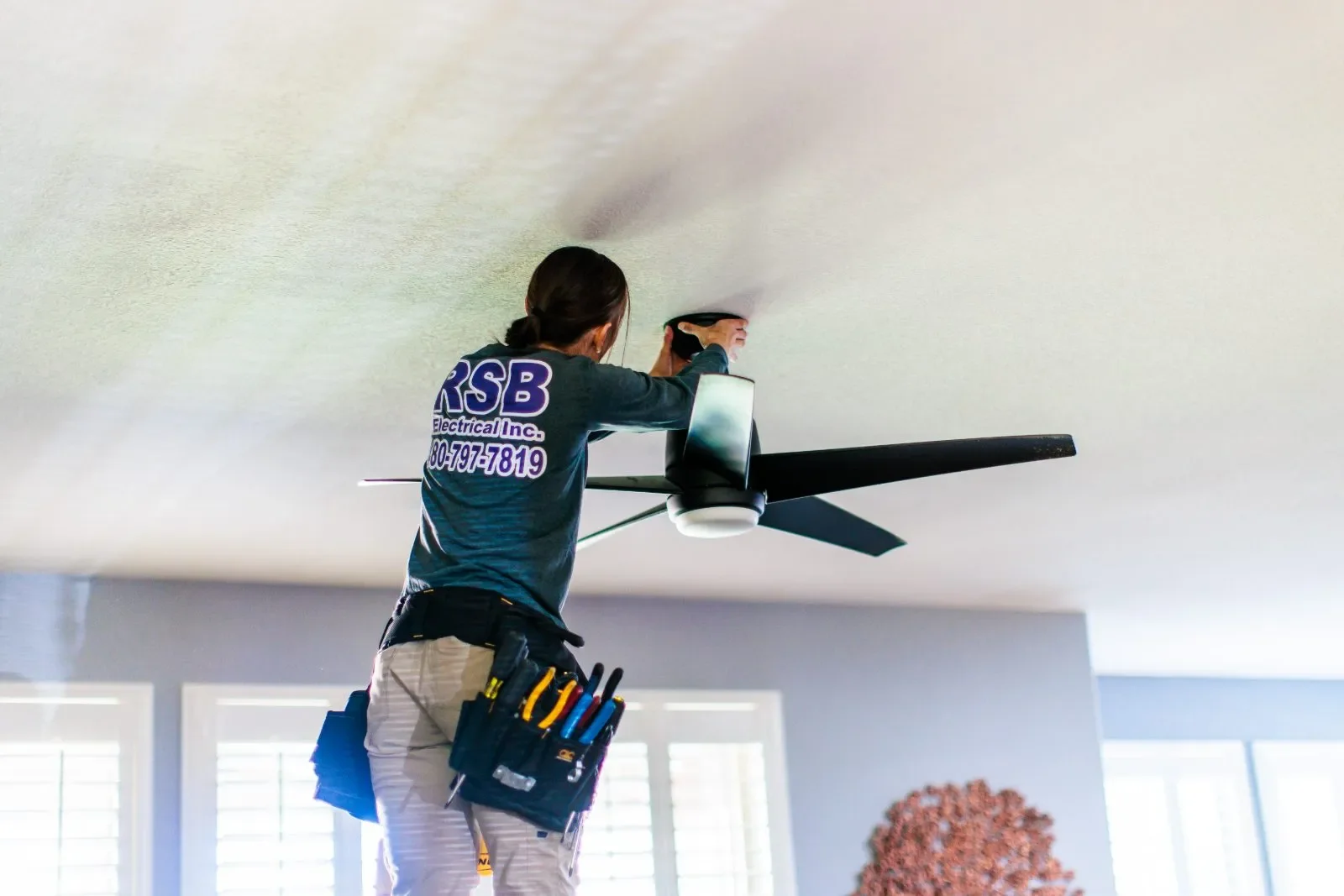
Told straight, the case is still good: a Valley attic bakes far above the outdoor temperature, and pulling that peak down protects the roof deck, the ductwork carrying your expensive cooled air, and everything you store up there, while giving your AC a gentler ceiling to fight through. RSB Electrical has wired attic fans across the Valley since 2001, and we size, mount, and control them for the desert they actually work in.
We install whole-house fans, too, a different machine for a different season, and we will tell you plainly which one your goal actually calls for.
Why the Valley Vents With RSB



Customers, In Their Own Words
Public Google reviews from real RSB customers, quoted as written.
RSB vs. the bargain fan install
Ventilation Expertise: What Moving Air Well Requires
The details that separate an install from a liability hanging over your bed.
The intake rule that decides everything
An exhaust fan does not create air; it borrows it, and it borrows from the easiest source available. With generous soffit intake, that source is outside air sweeping the attic, which is the whole point. Without it, the fan depressurizes the attic and pulls your conditioned air up through every ceiling penetration, cooling the attic with the most expensive air in the house. Checking intake first is not a nicety; it is the difference between a machine and a leak.
Why the thermostat never wins in summer
Attic fan thermostats trip in the range a Valley attic passes on its way to breakfast and does not revisit until night. That is the mechanical truth behind the never-shuts-off summer, and it reframes the buying decision: you are not buying a fan that cycles; you are buying a small machine that works a double shift for four months. Motor bearings, winding quality, and thermal protection stop being spec-sheet trivia and become the whole purchase.
Sizing to the attic, not the aisle
Fan capacity should match the attic’s volume and intake reality: too small does little, and comically oversized just makes the intake problem worse. We size from the house’s actual geometry, and when two smaller fans beat one big one, gable plus gable, that is what we propose.
Gable versus roof mount, the Valley calculus
Gable mounts skip the roof penetration entirely, service easily, and suit the Valley’s tile-roof stock; roof mounts win when the attic geometry or venting layout demands them. The choice is architecture-driven, and the honest quote names why yours went the way it did.
Whole-house fans are a windows discipline
A whole-house fan is a system with a user manual: windows open before it runs, enough opening to feed it, and never against a closed house. Part of our installation is teaching the routine because the fan delights only those who use it as physics intended.
Controls that match the machine
Attic fans want a thermostat set for the desert, not the factory’s Midwest default. Whole-house fans want timers and multi-speed switching so the evening flush runs itself. Garage fans want a switch where the sweaty human actually stands. Small choices make the most difference.
The wiring is the part that outlives the fan
Motors get replaced; the circuit stays. We run attic wiring rated and routed for sustained heat, protected from the workspace’s abuse, and generous enough that the next fan, and the one after it, inherit infrastructure instead of problems.
Fan Questions, Answered Straight
1.How much does attic fan installation cost?
We do not publish prices; mounting style, wiring run, and unit class write the quote. Free estimate, written quote honored for 30 days.
2.Do attic fans actually work in Arizona?
They do the job honestly described: knock the attic’s brutal peak down, protect the roof deck and the ducts, and ease what your AC fights through. They do not make the attic cool, and anyone promising dramatic bill cuts is selling. We will tell you what your attic, specifically, stands to gain.
3.My attic fan runs all day. Is it broken?
In summer, almost certainly not: Valley attics sit above the thermostat’s trip point from morning to sunset, so continuous running is the design working. If it is running in December or not running in July, that is when to call us.
4.What is the difference between an attic fan and a whole-house fan?
An attic fan ventilates only the attic, year-round, automatically. A whole-house fan pulls air through your open windows and living space to flush the whole home, and in the Valley, it is a fall-through-spring machine. Different goals, different equipment, and we will match you to the right one.
5.Will an attic fan cut my cooling bill?
Modestly and indirectly at best, mostly by easing duct losses, and we refuse to promise numbers. The stronger case is protection: roof materials, duct efficiency, and whatever you store up there all age more slowly in a cooler attic.
6.What about solar attic fans?
We wire and service hardwired attic fans; solar-powered units come with their own trade-offs in output and duty. Ask when you call, and we will give you the straight comparison for your situation.
7.I have a tile roof. Does that complicate things?
It steers us toward gable mounting, which skips the roof penetration entirely. When a roof mount is truly the right answer on tile, the quote says so plainly, and the penetration gets proper roofing treatment, not a hole and a hope.
8.Can you ventilate my garage gym?
Enthusiastically. A properly sized exhaust fan on its own switching, sometimes with a dedicated circuit, buys a west-facing garage months of usability. It is one of our favorite small jobs.
9.When can I actually use a whole-house fan here?
Roughly October through April, on evenings cooler than the house, with windows open to feed it. Sit out dusty monsoon nights. Inside that season, it cools the house for pennies, and outside, physics says no.
10.What is the warranty?
One year on labor and materials from completion, invoice as proof, plus the fan manufacturer’s own warranty on the unit.