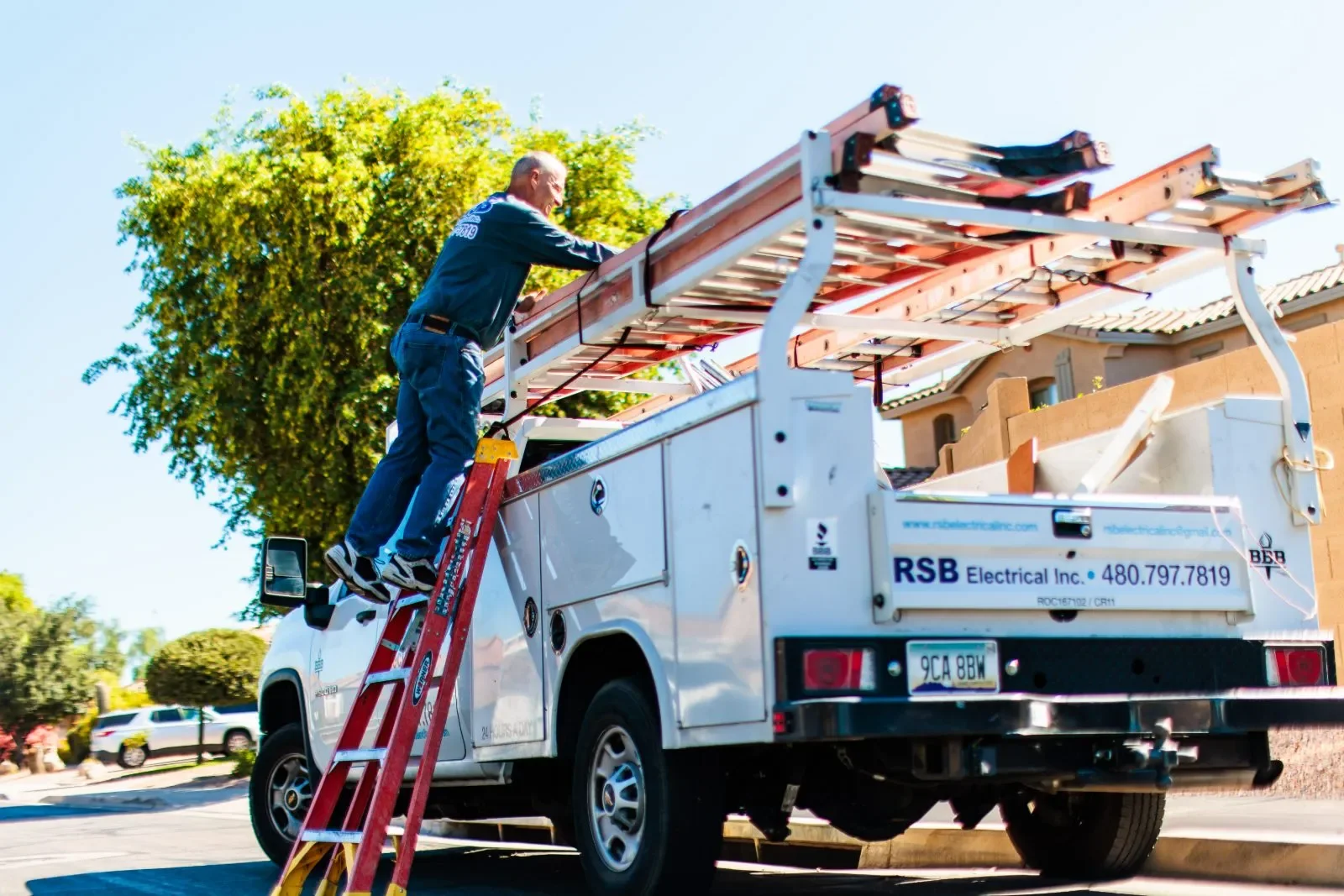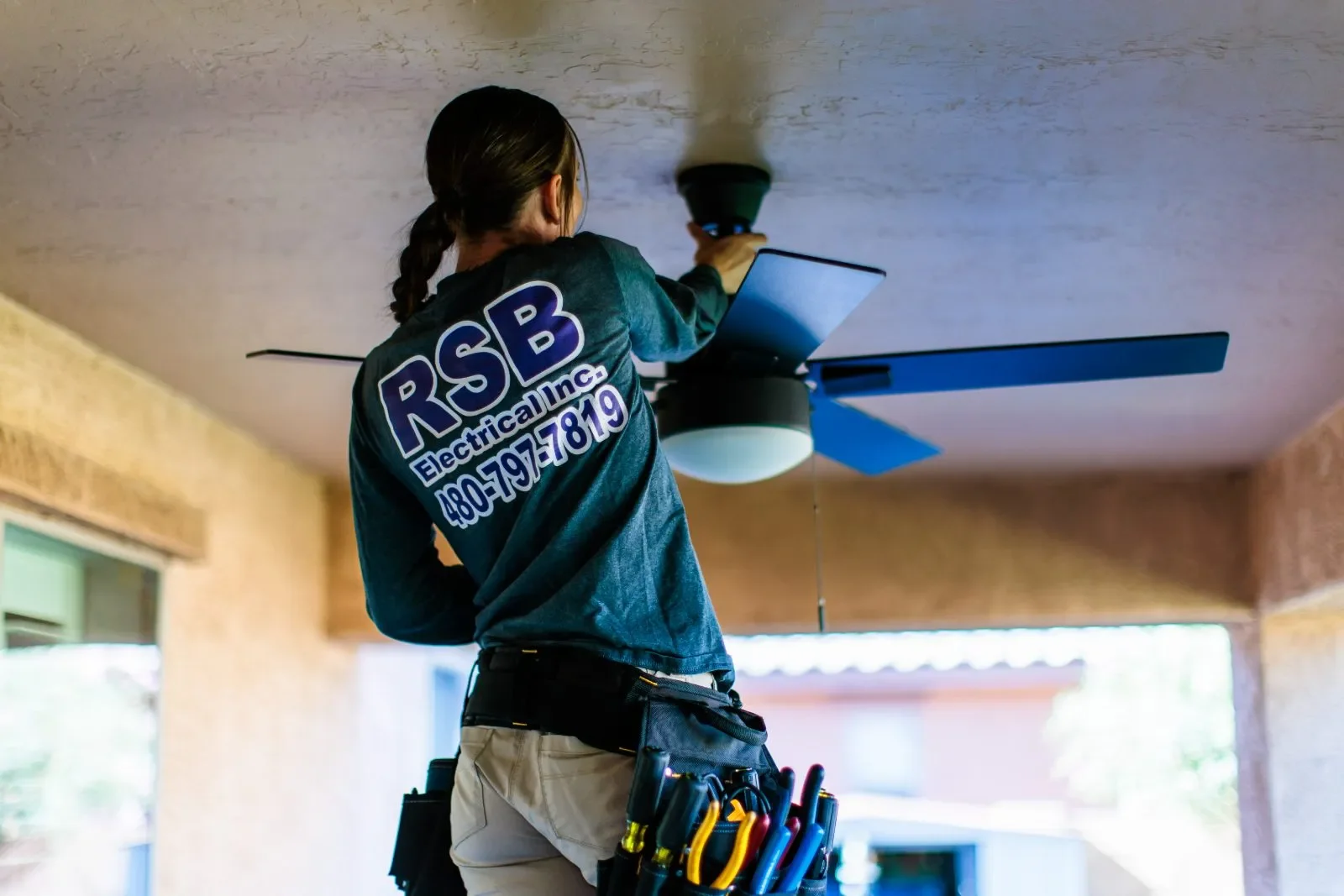
That answer is sometimes ‘we are on our way,’ and for true emergencies, we are typically on site within two hours across the East Valley core of our map. But it is just as often ‘this can safely wait until morning,’ which saves you an overtime bill for a problem that was never dangerous. Half the house dark, a buzzing panel, a burning smell: those are tonight’s problems, and we treat them that way. A single dead outlet feels urgent at midnight, but it is not, and we would rather tell you the truth than sell you a 2 a.m. truck roll.
Businesses get the same promise. When a restaurant kitchen, a storefront, or a commercial property loses power, every dark hour costs you money, and we respond when the call comes in.
What Real 24/7 Looks Like at RSB
Real After-Hours Calls, In Customers’ Own Words
Public Google reviews from real RSB customers, quoted as written.
RSB vs. the chains, at 2 a.m.
Emergency Expertise: What Four Decades of Night Calls Teach
Emergency electrical work rewards discipline over speed. Here is some of what happens behind the scenes on a night call.
Verify, trace, and test before touching anything
The fire we still talk about started when a contractor working next door pulled conductors from a shared service without verifying what they fed. A few minutes of investigation prevents thousands of dollars in damage, so our rule is absolute: identify every conductor, trace what it serves, and test before disconnecting or removing anything, no matter how obvious the situation looks at 1 a.m.
Reading a half-dead house
Half the house out usually means a lost service leg, and the diagnostic question is where: the utility connection, the meter, the main, or the panel. Each has a different fix and a different owner. We isolate which side of the service point failed before anyone starts replacing parts, because guessing wrong wastes your night and your money.
What a buzzing panel is actually saying
A healthy panel is silent. Buzzing under load is usually a loose or failing connection arcing microscopically, and arcing generates heat, carbon, and eventually fire. The volume and rhythm of the buzz, and whether it changes when large loads cycle, tell an experienced ear a lot before the cover ever comes off.
The burning smell hierarchy
Hot plastic, hot dust, and burning insulation smell different, and where the smell is strongest matters as much as what it smells like. An odor localized to one outlet is a device-level failure. The same smell at the panel, or one you cannot locate at all, raises the stakes immediately. We ask about smell on every triage call for exactly this reason.
Broken risers and who owns what
Storm damage to the service mast sits on the awkward boundary between your equipment and the utility equipment. As a rule of thumb, the riser, mast, weatherhead, and meter base belong to the homeowner; the wires from the pole and the meter itself belong to SRP or APS. Emergency riser repair means making it safe, permitting the repair, and scheduling the utility reconnect, and we run all three so the outage is as short as possible.
Backfeed and the dangers you cannot see
Outages bring out extension cords and improvised power, and improvised power kills linemen and homeowners alike. Power flowing backward into circuits that should be dead is one of the first things we check for on any outage call. It is also why surge events from grid switching, the moment power comes back, damage so much equipment: the restore is often rougher than the outage.
Make safe first, repair right second
The emergency standard is not fix everything tonight. It is nothing dangerous stays energized tonight. Sometimes those are the same thing; when they are not, we isolate the hazard, restore what can safely run, and finish the repair in daylight with the right parts and permits. A rushed 3 a.m. repair that has to be redone is not a repair. It is a second bill.
Emergency Electrician Questions, Answered Straight
1.What counts as a real electrical emergency?
No power to your home, half the house dark, no power to your AC in summer or heat in winter, a buzzing or hot panel, a burning smell, sparking, storm damage to your service, or a business that cannot operate. When in doubt, call: the triage is free and honest.
2.Is a dead outlet an emergency?
Rarely. If one outlet is dead and everything else works, we will schedule you for next-day service rather than charge you overtime for something that can safely wait. If that same outlet is warm, discolored, or smells hot, that is a different story: call now.
3.How fast can you actually get here?
For true emergencies, typically within two hours across our East Valley core, day or night. The reviews on this page are not hand-picked exceptions; fast response is the operating standard.
4.Do you charge more at night and on weekends?
Yes, and we tell you so before we dispatch. Overtime rates apply after 5 p.m. and on Saturdays and Sundays. What we never do is surprise you: rates are explained on the phone, the repair is quoted before work begins, and there are never hidden fees.
5.What should I do while I wait for you?
Do not touch anything. Leave the panel, the outlet, and anything buzzing or hot alone, and keep family and pets away from it. If smoke or fire appears, get everyone out and call the fire department first. We will take it from there when we arrive.
6.Can you talk me through it over the phone instead?
If it is safe and simple, yes, and we do it for free. Tripped breakers and GFCI resets get walked through on the phone all the time; some of our best reviews are from people who never paid us a dime that night.
7.A storm broke the pipe where power enters my house. You or the utility?
Both in sequence, and we manage it. The riser, mast, and meter base are typically the homeowner equipment, which we repair under permit. The lines from the pole and the meter belong to SRP or APS, and we schedule their disconnect and reconnect around our repair so your outage is as short as possible.
8.Do you handle commercial emergencies?
Yes. Commercial customers who need to keep their businesses running are a core part of our after-hours work, from restaurant kitchens to property-management portfolios, under the same CR-11 license as our residential work.
9.Will the repair be quoted before you start?
Yes. Even at night, you approve a price before work begins. If the full repair has to wait for parts or a utility window, we quote the make-safe work and the completion separately so you always know where you stand.
10.Is emergency work warrantied like regular work?
Identically. One year on labor and materials from completion, with your invoice as proof. Midnight does not lower our standard.
24-Hour Emergency Electricians by City
Response time is a function of distance and traffic, and the Valley is wide. What a night call looks like — how fast we roll, and what we will honestly tell you can wait until morning — depends on where you are.