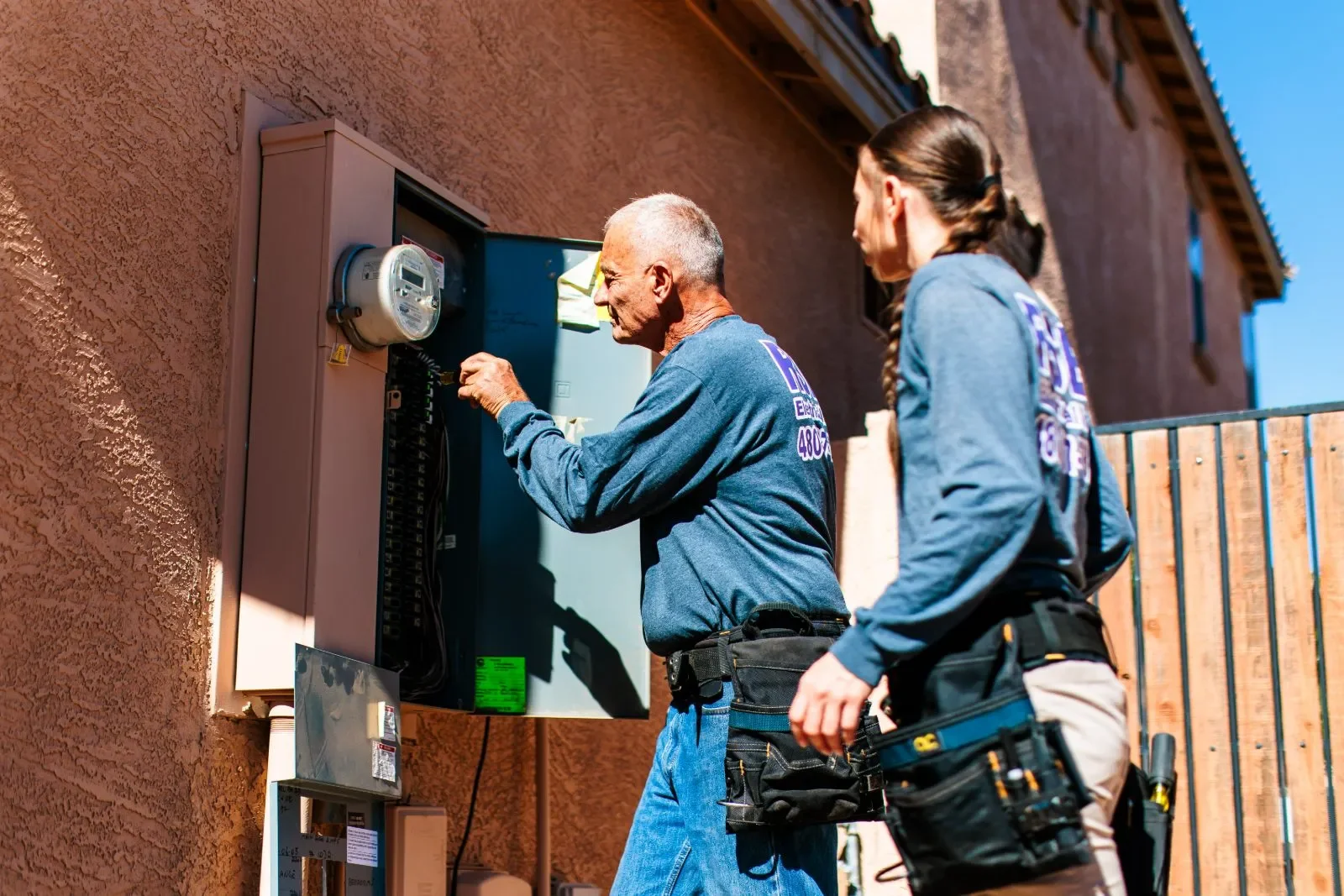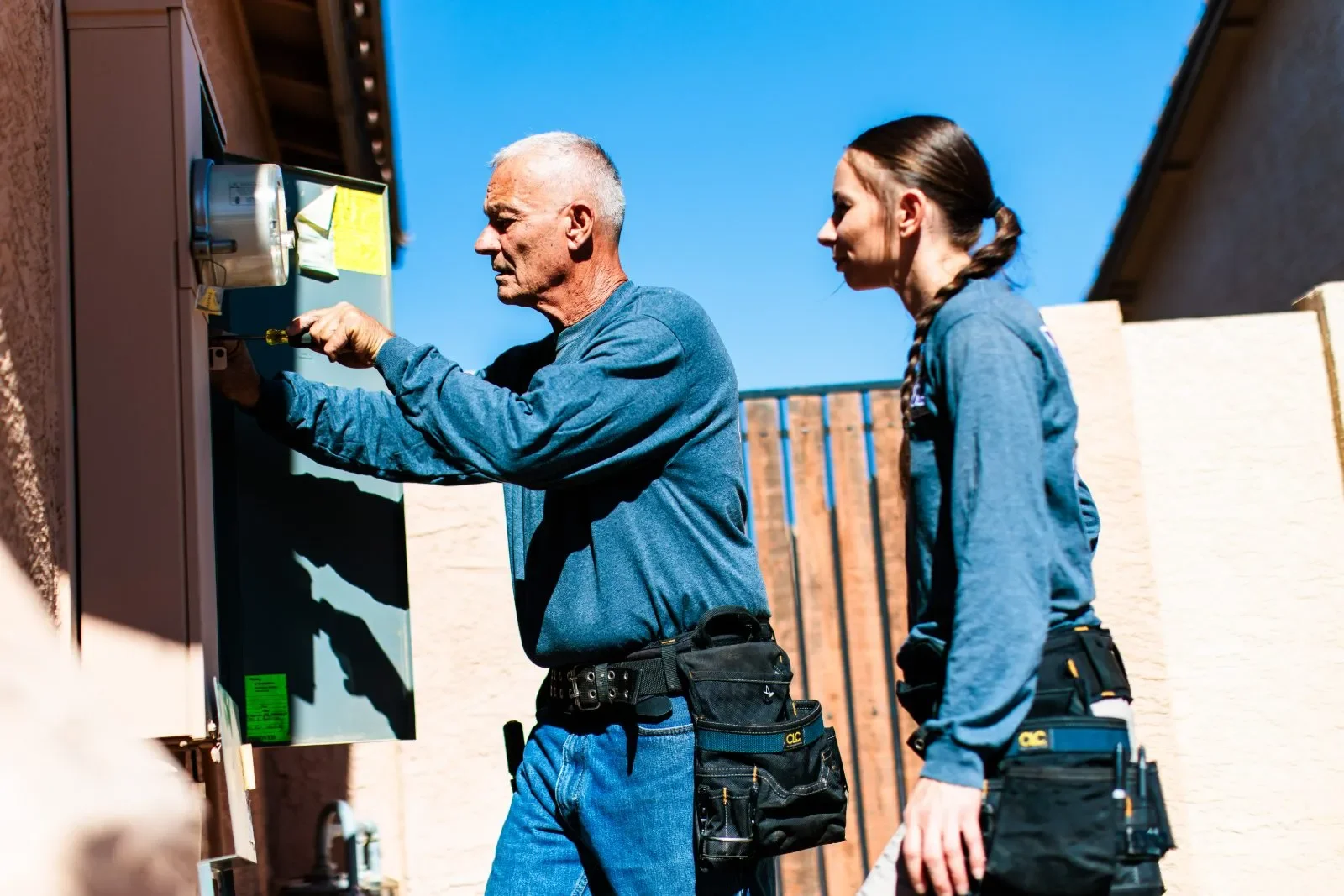
RSB Electrical has installed panel-level surge protection across the Valley since the days when a power strip was considered high technology.
We will tell you plainly what a quality unit stops, including the grid backfeed and switching surges that follow every outage and restore, and what nothing can fully stop, like a direct lightning strike. Then we match the right device to your specific panel, verify your grounding actually works, and install it under our one-year warranty.
The damage we see most is not dramatic: it is the fried control board in an appliance that suddenly will not start after a stormy night. By the time you have replaced one of those, the surge protector would have paid for itself.
Why Valley Homes Add Surge Protection With RSB

Protection-First Work, In Customers’ Own Words
Public Google reviews from real RSB customers, quoted as written.
RSB vs. the chains, on surge protection
Surge Protection Expertise: How the Device Actually Works
How the device actually works, and what it honestly cannot do.
What happens inside the box
A surge protective device watches the voltage on your service conductors. When a spike exceeds its clamping threshold, internal components shunt the excess energy to ground in a fraction of a second, then reset for the next event. It is not a fuse and not a breaker: it does not interrupt power, it skims the dangerous peaks off the top, thousands of times over its life if it has to.
Why the ground path is everything
Shunting energy to ground only works if the path to ground is real: a sound grounding electrode, intact bonding, and tight connections. A perfect device on a corroded ground is a theater. This is the single most common weakness we find on surge calls, especially in older East Valley homes, and it is why we verify the grounding system before installing anything.
Device quality is not marketing
The answer we give customers is blunt: whether a surge protector stops the utility’s backfeed depends on the quality of the device. Clamping voltage, energy-handling capacity, response behavior, and build quality vary enormously across units that look identical in a catalog. We install equipment we would put on our own panels, matched to your panel manufacturer, because the bargain unit that fails silently is worse than none at all.
Panel-level plus point-of-use: the layering logic
The panel device takes the big external hits at the service entrance, but transients generated inside the house, and the residue of big events, still travel the branch circuits. Quality point-of-use protectors for your most sensitive equipment catch that remainder. Panel-level protects the load behind it; point-of-use finishes the job at the electronics that matter most. Two inexpensive layers beat one heroic one.
Sacrifice is the job description
Surge protectors are consumable by design: every major event they absorb spends some of their protective capacity. Quality devices carry indicator lights that report their status, and a unit that has thrown itself on a big enough grenade will tell you so. Checking those lights after a serious storm and replacing a spent device is the entire maintenance manual, and we cover it in every walkthrough.
What surge protection cannot do
A direct lightning strike to your home or service delivers energy beyond what any residential device can fully absorb; nothing an electrician installs makes that event safe, and anyone who implies otherwise is selling. What protection absolutely does is turn the common events, nearby strikes, grid switching, restore transients, and daily motor chatter, from equipment-killers into non-events. That is the honest promise, and it is worth having.
Power strips are not surge protection
The average strip behind a Valley TV is an extension cord with a switch. A real point-of-use protector states its ratings and, like its panel-level cousin, wears out with use. If your protection plan is a strip you bought a decade ago, your plan is hope, and we say that with love.
Surge Protection Questions, Answered Straight
1.What does a whole-house surge protector actually protect against?
Nearby lightning, the grid’s own switching and restore surges, including backfeed from utility events, and the accumulated wear of daily internal surges from cycling motors. In plain terms, it protects the circuit boards in everything you own.
2.Will it save my AC?
It dramatically improves the odds. AC control boards are among the most expensive surge casualties in Valley homes, and the compressor’s own cycling contributes to the wear. Panel-level protection shields the AC along with everything else behind the panel.
3.Is my power strip enough?
Almost certainly not. Power strips as a category provide no meaningful surge protection, and even real point-of-use protectors only guard what is plugged into them. Your AC, oven, washer, and garage opener are not plugged into a strip. The panel device covers the whole house; strips are the second layer, not the plan.
4.How much does it cost?
We do not publish prices because the right device depends on your panel, but this sits among the most affordable protective work we do, and well below the cost of one replaced appliance board. Free estimate, written quote the next day, honored 30 days.
5.When is the best time to install one?
Honestly, any time. Monsoon season is when people think of it, but grid surges and AC cycling run all year. If you are already having panel work done, that is the most convenient moment, since the panel is open anyway.
6.How long does a surge protector last?
Years in normal service, but they are sacrificial by design: major events spend their capacity. The indicator lights report the device’s health, and after a severe storm, it is worth a glance. We show you exactly what to look for at the install walkthrough.
7.A big storm just hit. How do I know if my protector did its job?
Check the indicator lights against what we showed you at the walkthrough. If they have changed, the device likely absorbed a serious hit and may need replacement, which is the system working as designed: the device dies, so your appliances do not. Call us, and we will check it properly.
8.My home is older. Does that change anything?
Often, yes. Homes from the 1960s through the 1980s frequently need grounding attention before a surge protector can perform, and we check that first at the free estimate. If grounding work is needed, it is quoted as its own line so you see the real picture.
9.What brands do you install?
Quality devices matched to your panel’s manufacturer and breaker style, from established manufacturers like Eaton and the major panel brands’ own protective lines. What we will not install is the bargain unit whose protection exists mainly in the packaging.
10.Do you install backup generators too?
No. RSB no longer takes on generator work of any kind, standby units, interlock kits, or transfer switches, and we say so plainly rather than learn it together mid-project. Surge protection, panel health, and solid grounding are the power-quality work we do, and for a standby generator, we will point you to a specialist who lives in that world.
11.Does homeowners’ insurance cover surge damage?
Coverage varies widely by policy, and we are electricians, not insurance advisers. What we can do is document what we find after a surge event, photos, and a written account of the damage and its likely cause, so you have something real to hand your carrier when you ask.
12.What is the warranty?
Our labor and materials carry RSB’s standard one-year warranty from completion, with your invoice as proof. The device itself also carries its manufacturer’s product warranty, and we register the paperwork trail properly at install.