
Wiring a Home That Predates the Grid It Runs On
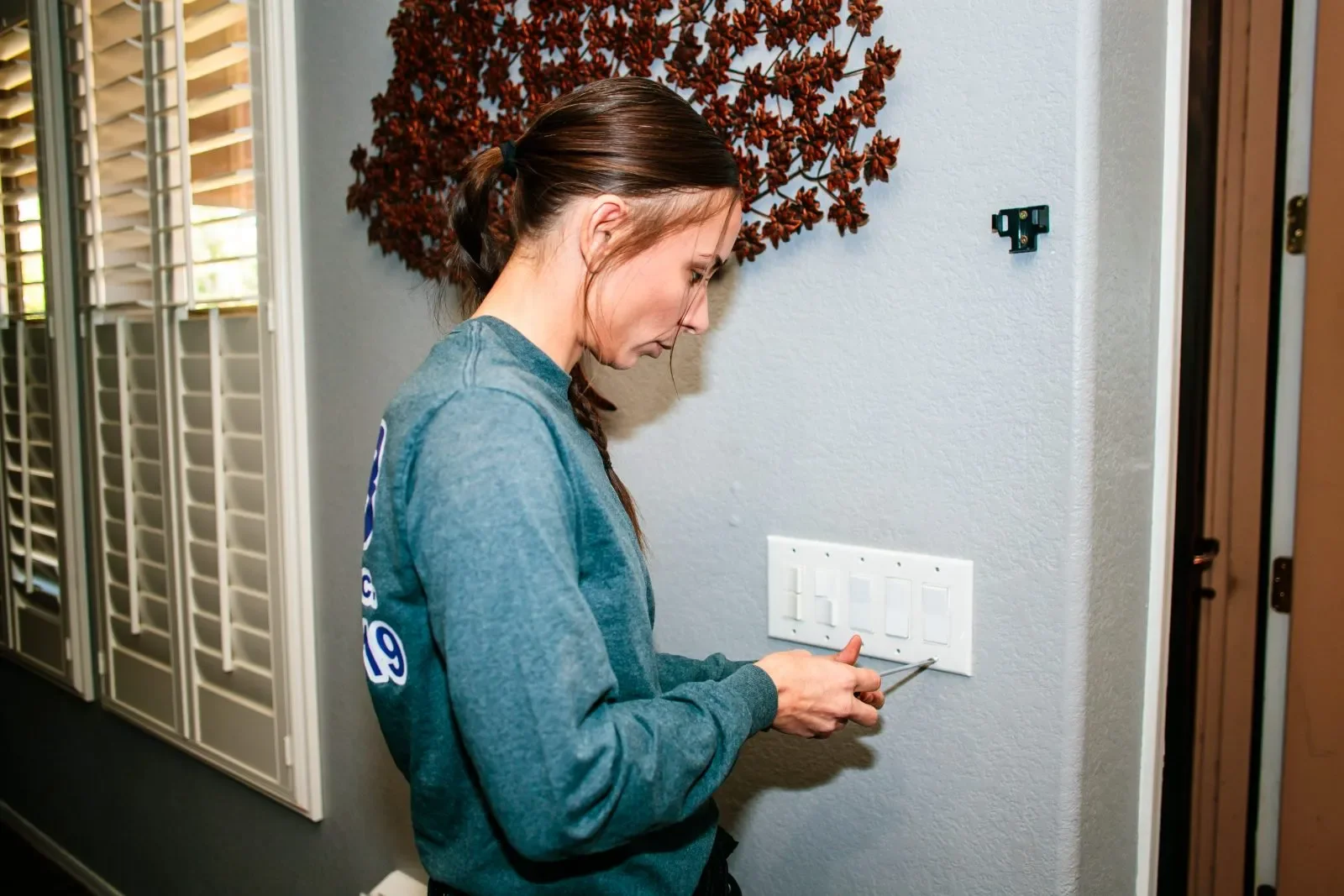
The Craftsman-era homes around Catlin Court were built between roughly 1917 and 1930, and electrical work in them is preservation work: plaster walls that punish carelessness, original fixtures worth saving, and wiring that may span a century of amendments, sometimes with remnants of the earliest methods still in place. Our approach is surgical: assess what the walls actually hold, stabilize what is unsafe, and modernize in ways a future owner will thank rather than curse.

A Century-Old Downtown Deserves a Verifiable Contractor
Anyone can describe themselves well on their own website. The reviews below are the parts we do not write: Google’s live feed, in full, updated to see whether the latest entry flatters us. Read it before you call, not after.
RSB vs. the Franchise Dispatch in Glendale
From the Historic Core Outward
The trucks cover all of Glendale: the Catlin Court district and the historic downtown blocks, the postwar neighborhoods that ring them, and the newer subdivisions pushing north and west. Commercial calls run from old-town storefronts to the corridors serving the entertainment district.
Whatever the era, the method holds: era-appropriate assessment, straight verdicts, and work that would pass inspection twice.

What It Costs, Honestly
Glendale Questions, Answered Straight
Old houses and historic wiring, storefront commercial, scheduling from Mesa, EV panels, GFCI, inspections, and the warranty.
1.Do you have experience with genuinely old houses?
Yes. Reno has been opening walls since 1983, and the pre-war homes around the Valley’s historic districts are exactly where that experience pays. Assessment first, preservation-minded methods, phased plans.
2.Is there knob-and-tube in Glendale’s old homes?
Sometimes, usually as remnants behind later work. We do not assume it, and we do not dramatize it; we open, look, and tell you what your specific walls hold.
3.Do you serve Glendale businesses?
Yes. Storefronts, restaurants, offices, and light retail all fit inside our CR-11 commercial scope, and after-hours scheduling is available for spaces that cannot close early.
4.You are based in Mesa. Will scheduling be a problem?
No. West Valley days are planned in advance, your window holds, and if the drive ever affects timing, we say so up front.
5.What about emergencies in Glendale?
The line reaches a person, and the first thing you get is triage, not a sales pitch: what is unsafe right now, what can hold until morning, and what we can realistically commit to across the Valley tonight.
6.Can you upgrade my panel for an EV charger?
Yes. Load calculation first, then the honest answer: sometimes the charger fits the panel you own, sometimes the panel needs to grow first. Both numbers come in writing.
7.Will you work with my remodel contractor?
Happily. We coordinate rough-in and finish schedules, pull the permits, and keep the electrical off your critical path.
8.My old fixtures are original. Can they stay?
Often, yes, after inspection and sometimes a rebuild of the wiring. We tell you which pieces can serve another generation and which have earned display-only retirement.
9.Do you do safety inspections before a home purchase?
Yes, hourly and checklist-driven, and in the historic districts we consider it money extremely well spent. Findings arrive in writing with nothing for sale stapled to them.
10.Can you add GFCI protection to an older kitchen or bath?
Yes, and in pre-GFCI housing stock it is the highest-value safety work on the menu: wet-room circuits protected to current standards without waiting for a remodel to justify it.
11.What is the warranty?
One year on labor and materials, invoice as proof, the same on a bungalow as on a brand-new build.
