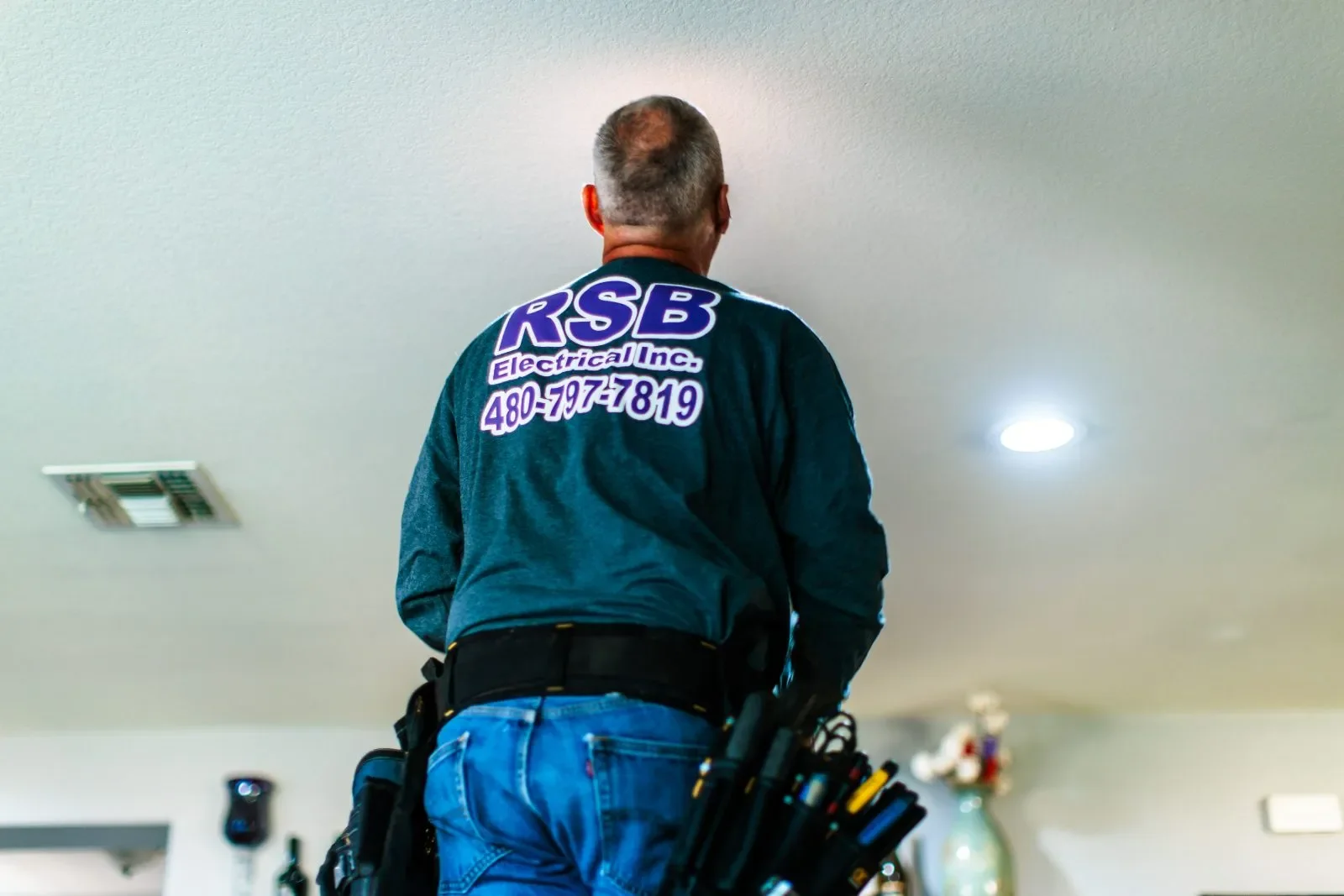
The right answer depends on your home’s year, because detector wiring does: newer Valley homes carry hardwired, interconnected systems worth maintaining properly, while older homes often have no detector wiring at all, and for those we highly recommend 10-year sealed-battery smoke alarms, a decade of protection with no ladder trips and no battery drawer. We install BRK units we trust, in the locations that actually protect sleeping families, and we test the whole system before we leave.
And yes: the detector chirping at 3 a.m. counts as a real call here. We answer those with sympathy, because we own detectors too.
Why Valley Homes Trust RSB With Their Detectors

Careful Work, In Customers’ Own Words
Public Google reviews from real RSB customers, quoted as written.
RSB vs. the hardware-store trip
Detector Expertise: The Details Behind Reliable Protection
The difference between a detector on the ceiling and a system that works at 3 a.m. lies in the details most customers never see.
Ionization, photoelectric, and why combo sensing exists
The two smoke-sensing technologies catch different fires: one responds faster to flaming fires, the other to smoldering ones, and neither is complete alone. Modern dual-sensor and combination units close the gap, and our placement puts the right sensing where each fire type is likeliest to start, which is a longer conversation than the shelf tag offers.
Interconnect is the whole point
A fire discovered by one alarm at the far end of the house needs to wake people at the other end, tonight. Hardwired interconnects do that when their wiring is healthy; wireless interconnect units now do it for homes that never had the wiring. Either way, the standard is the same, and we test to it: one sound, all sound.
The case for the sealed 10-year unit
For homes without detector wiring, the sealed 10-year battery unit is the honest engineering answer: a decade of protection, no battery door to raid for the TV remote, no annual ladder ritual, and an end date printed where everyone can read it. It is our standing recommendation for wiring-free homes.
Why do we install BRK
Brand matters in equipment that must work once, years from now, at 3 a.m. We install BRK units because their reliability record has earned a spot in our own homes, and because consistency across a house makes interconnect, maintenance, and replacement simpler for the decade ahead.
CO placement is its own science
Carbon monoxide mixes with air rather than rising like smoke, so CO protection belongs near sleeping areas and on each level, positioned by the gas appliances and attached garage that produce the risk, and not so close to a gas appliance that normal startup fools it. The instructions on the box are generic; the placement in your house should not be.
Reading the chirp like a diagnostic
Chirp cadence is a language: the single periodic chirp of a dying battery, the different rhythm of end-of-life, the post-outage complaints of hardwired units. We listen, read dates, check the circuit, and end the noise by fixing its cause, which is why our chirp calls do not repeat next month.
Date discipline
Every unit we install gets its date written where the next person can find it, and every visit reads the dates already up there. Detector safety is mostly calendar management, and we run the calendar so the ceiling never quietly ages out of its job.
Detector Questions, Answered Straight
1.How many detectors does my home need, and where?
The working rule: smoke protection in every bedroom, outside sleeping areas, and on every level, with CO coverage near sleeping areas and on each level of homes with gas appliances or attached garages. Your home’s year and layout tune the answer, and the visit maps it exactly.
2.Hardwired or battery: which should I have?
Whichever your home supports, done properly, hardwired interconnected systems are worth maintaining where the wiring exists, and sealed 10-year battery units are our plain recommendation where they do not. What we do not recommend is a battery unit screwed over healthy detector wiring; that is, downgrading for no reason.
3.My older home has no detector wiring at all. Now what?
Then you are exactly who the 10-year sealed-battery recommendation is for: full coverage, modern wireless interconnect if you want one-sounds-all-sound, and no wiring project required. If a rewire or remodel is ever in your future, a hardwired interconnect can ride along at its cheapest moment.
4.Why does the detector always chirp at 3 a.m.?
Because battery chemistry weakens at night’s cooler temperatures, the low-battery threshold trips in the small hours. It feels personal; it is physics. Either way, we diagnose whether it is a battery, end-of-life, or a power problem, and we end it.
5.Do detectors really expire?
Yes: sensors age out regardless of batteries, roughly a decade for smoke alarms and often less for CO. The manufacture date is printed on the back, the test button does not test the sensor, and reading those dates is the single most useful detector habit a household can have. We read them on every visit.
6.Our home is all-electric. Do we still need CO detectors?
The risk drops without gas appliances, and an attached garage keeps some of it: one idling car changes the math. CO units are inexpensive enough that most all-electric households with garages choose the coverage anyway, and we will give you the honest read for your exact house.
7.We are selling our home. What do detectors have to do with it?
Buyer inspections flag missing, expired, and misplaced detectors reliably, and sellers who bring the property up to current safety requirements beforehand clear the item on their own schedule. A pre-listing detector package is quick, inexpensive, and one less negotiation handle.
8.Can you stop the false alarms without removing the detector?
Usually, yes: dust, placement near kitchens or baths, and plain sensor age cause most of them, and each has a fix better than the unplugged-detector solution half the Valley has chosen. An alarm nobody trusts protects nobody; we restore the trust.
9.What brand do you install?
BRK, the units we trust in our own homes, in smoke, CO, and combination versions, hardwired and sealed-battery both. Consistency across the house keeps the next decade simple.
10.What is the warranty?
One year on our labor and materials from completion, invoice as proof, with the manufacturer’s own warranty on the units besides.