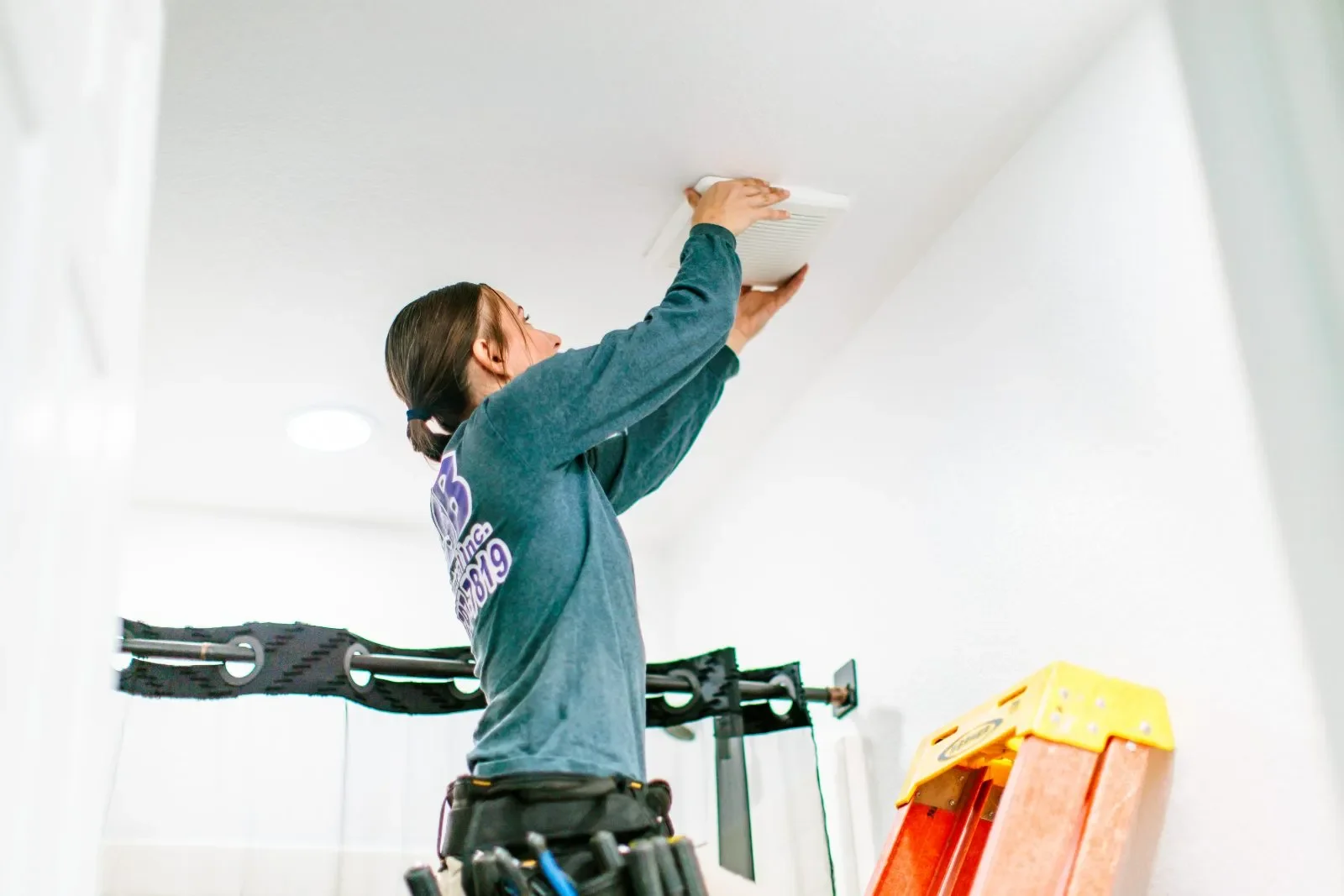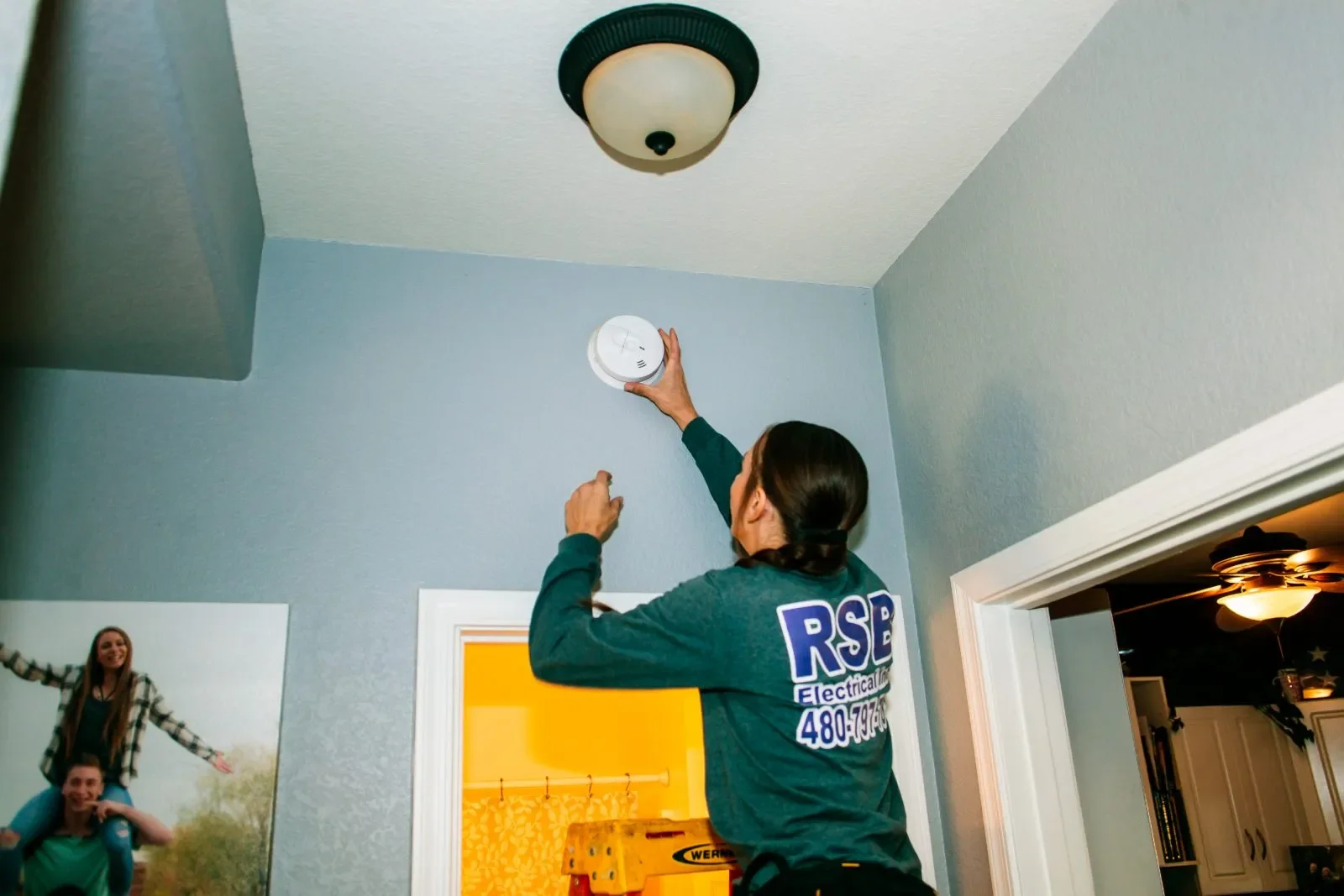
Our rule above 20 feet is not negotiable, and you should want it that way: two electricians, proper scaffolding, never a wobbling ladder with a hundred-dollar fixture, let alone a five-thousand-dollar one, swinging from one hand. Below that height, the same care applies at friendlier altitudes: weight-rated bracing in the ceiling, patient assembly of the fixture itself, hang height set to the room, and dimming that lets the centerpiece behave like one.
Bought the fixture already? Perfect. Send us a photo of it and the space, and we will bring the muscle, the scaffolding, and the patience.
Why the Valley Trusts RSB With the Centerpiece
Customers, In Their Own Words
These are public Google reviews from real RSB customers, quoted as written.
RSB vs. the handyman with a tall ladder
Chandelier Expertise: What Hanging Weight Well Requires
What separates a chandelier that hangs beautifully for decades from one that leans.
The box rating problem nobody checks
The plastic box behind most ceiling fixtures is rated for a modest fixture, not for fifty pounds of iron and crystal. Weight-rated boxes and brace bars exist exactly for chandeliers, and verifying or installing them is the non-negotiable first act of every install we do, because the failure mode of skipping it is a chandelier on the floor.
Why 20 feet changes everything
At 20 feet, a ladder stops being equipment and starts being a gamble: one person cannot control a heavy fixture, a connection, and their own balance at once. Our threshold is bright-line: past 20 feet, it is two electricians and scaffolding, period. The fixtures that live at 26 feet get there safely or not at all.
Hang height is a set of rules, not a guess
Over a table, the fixture wants proportion and conversation-height clearance; in a foyer, it wants to float in the window line without crowding the door; over stairs, it must clear the climb by a safe margin. We set the height with the room’s geometry and your eye together, then cut the chain once.
Assembly is half the labor
A tiered crystal fixture can carry hours of assembly in its crate: arms seated, tiers ordered, crystals hung strand by strand. Doing it on padding, on the floor, with the diagram, is why our installs look like the showroom photo, and why we quote assembly honestly instead of discovering it on your invoice.
Candelabra LEDs and the dimmer question
Chandeliers multiplied by LED candles are the flicker capital of modern lighting: a dozen small lamps on a dimmer chosen for none of them. Pairing the dimmer to the lamp load, then trimming the low end, is the same discipline we bring to recessed work, applied to the room’s most visible fixture.
Sloped ceilings need geometry, not force
Vaulted Valley ceilings meet chandeliers through sloped-ceiling adapters and properly angled canopies, so the fixture hangs plumb while the mount sits flush. Forcing a flat canopy onto a sloped surface is the most common DIY tell we correct, right after the under-rated box.
The two-man protocol, in practice
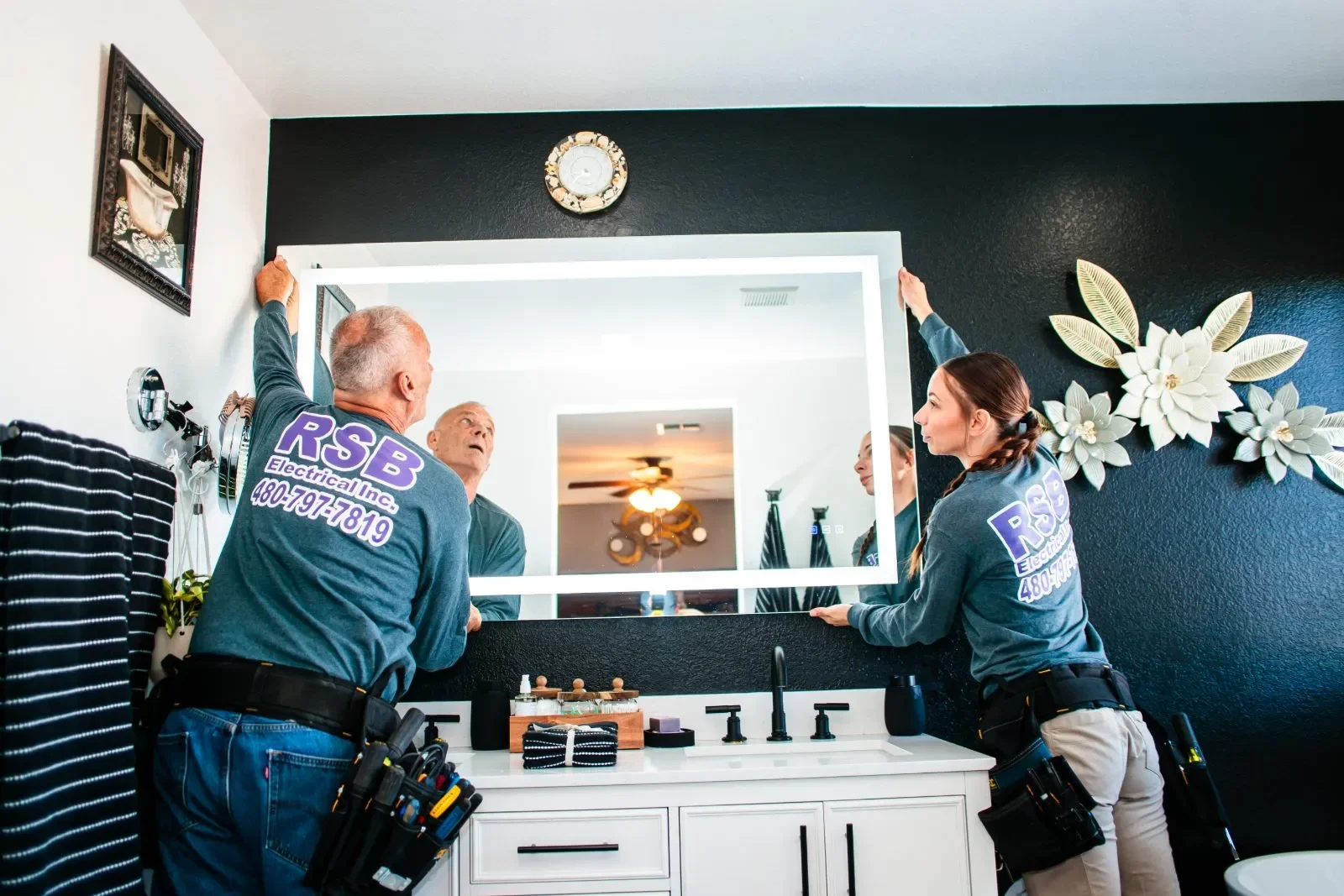
High installs run like a small choreography: scaffold set and leveled, fixture staged and lifted in stages, one electrician bearing weight while the other makes connections, and nobody’s hands doing two jobs at once. It is slower than a ladder. That is the point.
Chandelier Questions, Answered Straight
1.How much does chandelier installation cost?
We do not publish prices because height, weight, and assembly write each quote. Send photos of the fixture and the space for a free estimate; the written quote is honored for 30 days.
2.How high can you actually install?
Up to 26 feet, which covers the Valley’s two-story foyers, stairwells, and great rooms. Past 20 feet, the job automatically gets two electricians and scaffolding.
3.My chandelier goes over open stairs. Can you reach it?
Yes, that is precisely what scaffolding is for: a stable platform built over the stair geometry, not a ladder balanced on treads. Stair fixtures are routine for us and terrifying for ladders, as they should be.
4.Can my ceiling hold the fixture I bought?
The honest answer is: it can after we look. Standard boxes carry standard fixtures; chandeliers often need weight-rated bracing, and verifying or upgrading the box is built into every install we quote.
5.Is assembly included, or do I have to build it first?
Included, and please do not build it first: assembly on padding with the diagram is where showroom looks come from, and we would rather deliver that than inherit a mystery.
6.You installed it, but can you also take down the old one?
Removal is part of the quote whenever there is an existing fixture, including high ones. We do not leave homeowners holding the retirement problem.
7.Can you swap my ceiling fan for a chandelier?
Yes, in either direction. The wiring cooperates; the mounting is what changes, since fans and heavy chandeliers each have their own box requirements, and we bring the right hardware for the destination fixture.
8.What about my vaulted or sloped ceiling?
Sloped-ceiling adapters and angled canopies make the fixture hang plumb from an angled surface. It is standard work when done with the right parts and a common repair when it was not.
9.Will it dim without flickering?
With the dimmer matched to the lamps and trimmed at the low end, yes, smoothly. A dozen candelabra LEDs on the wrong dimmer is the most common flicker call we get, and one of the most satisfying to fix.
10.What is the warranty?
One year on labor and materials from completion, invoice as proof. Customer-supplied fixtures carry our labor warranty, and the manufacturer’s warranty besides.