
Why This Is Worth a Licensed Look
What Actually Causes Half a House to Go Dark
Nearly every partial outage we diagnose comes back to one of four things, and they are not equally urgent.
1. A lost service leg
2. A failing or open neutral
3. A failed main breaker or panel termination
4. A tripped shared-neutral circuit
What Makes This Fault Worse in a Valley Home
Two things decide how this fault shows up here, and what it has already cost by the time you notice.
The air conditioner tells you first
Elsewhere a lost service leg can go unnoticed for days and surface as odd appliance behavior. Here it surfaces at once, because the heaviest 240-volt load in a Valley home runs close to continuously for five months of the year. When a leg goes, the air conditioning stops, and in July that turns an electrical fault into a heat problem inside a couple of hours. It also means the fault surfaces under the heaviest load the house ever sees, which is the condition most likely to finish off a marginal connection.
Manufactured homes put the weak point outdoors, in a pedestal
The east side of the Valley has a very large manufactured and mobile home population, and those homes do not lose power the way a stick-built house does. The service arrives at a pedestal out in the weather, the feeder runs from that pedestal under the home, and both of those are exposed to sun, dust and whatever has been living under the skirting. A pedestal lug that has worked loose, or a feeder neutral that has corroded where nobody can see it, produces exactly the half-dark house this page is about, and it is a common source of exactly that fault. This is work we take rather than refer out, which is worth saying because not every electrician will open a pedestal. If you are in a manufactured home and half your power is gone, start there rather than at the breakers inside.

Every Repair Starts With the Same Two Questions
Which utility serves the address, and whether the service runs overhead or underground. Get those right and the rest of the job follows.
The Distinction That Decides the Whole Diagnosis
A lost leg and an open neutral are opposites, and they look the same
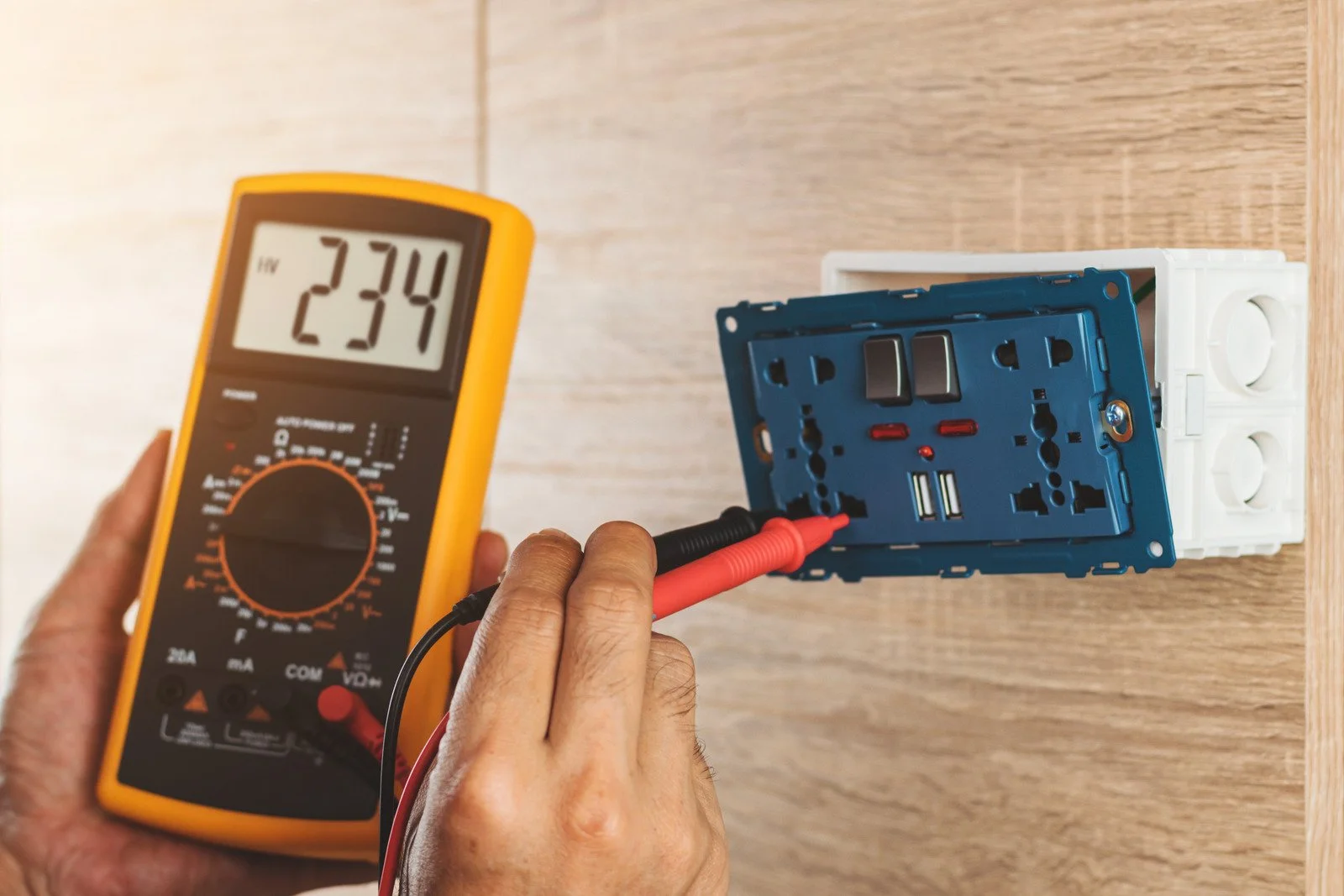
Both leave you with a house that is partly working. Electrically they are near opposites. A lost leg means a set of circuits has no supply at all, so those rooms are simply dead and the rest behave normally. A failing neutral means the supply is still there but the return path is compromised, so voltage redistributes between the two halves of the house: one side runs high, the other low, and the balance shifts every time a large appliance cycles. That is why the open neutral is the more dangerous of the two for your equipment, even though the lost leg is the one that feels like an emergency. The test is a voltage reading under load at the right points, not a look at the breaker panel, and the reading is what tells us whether we are working on your equipment or calling the utility.
Why resetting the main repeatedly makes it worse
When half the house goes dark, the instinct is to cycle the main breaker, and people often cycle it many times. If the cause is a fatigued connection or a failing main, each reset arcs across the damaged contact and takes a little more metal with it. We have arrived at houses where a problem that started as a loose termination had become a scorched bus bar over a weekend of resetting, turning a repair into a panel replacement. One reset to confirm it will not hold is reasonable. After that, the useful thing is to stop, leave the panel alone, and let someone read what is actually happening before more damage accumulates.
Partial Outage Questions, Answered Straight
1.Should I keep trying to reset the main breaker?
One attempt to see whether it holds is reasonable. After that, leave it off. The reason is in the section above: repeated resetting damages the contact you are trying to use.
2.Is this an emergency, or can it wait until morning?
It usually should not wait, and the reason is the half that still works rather than the half that does not: depending on the cause, those circuits can be running outside the range they were built for, so the exposure is to your equipment as well as your comfort. In an Arizona summer, the air conditioning sitting on the dead half makes it a safety question too. Call and we will tell you straight which it is.
3.What should I check before I call?
Three things, and they genuinely shorten the visit: which rooms are dead and which are fine, whether the 240-volt appliances still work, and whether any lights are unusually bright or dim. Those answers narrow four causes to one or two before anyone arrives.
Half the House Out? Let Us Read It Before Anything Gets Replaced.
We will not guess at a number over the phone, because the four causes carry four different repairs. What we will tell you is the order things happen in: questions on the phone first, a real diagnosis on site, then the repair priced before any work begins. Overtime rates apply after 5 p.m. and on weekends, and you hear that before we dispatch, never on the invoice.