
Why Valley Homeowners Call RSB for Service Equipment
Service Entrance Work We Handle
Everything between the utility's drop and your main breaker, plus the paperwork and scheduling that come with it.
At the mast, riser and weatherhead
At the meter base
Permits, utility coordination and inspections
What the Valley Does to Service Equipment
Before anyone can quote this work, two questions about your house have to be answered.
Which utility you are on changes how the job runs
The Phoenix metro is not served by one utility. It is a patchwork, and SRP and APS territory can change within a few streets of each other across the East Valley. For most electrical work that is irrelevant. For service entrance work it is the main scheduling variable, because the two run their own separate processes for taking a service down and putting it back, with their own forms, their own lead times and their own ideas about what has to be in place first. An electrician who mostly works one utility's territory learns one of those processes. We have worked both since 2001, and what that buys you is undramatic: knowing which utility wants what, and in which order, is the difference between a repair that takes the time we quoted and one that stalls waiting for a crew nobody booked.
Overhead or underground decides what the repair actually is
Where your service comes in depends on when your street was built, and in the Valley the split is sharp. Neighborhoods laid out through the 1960s, 1970s and 1980s are mostly overhead: a mast through the roofline, a drop from a pole, everything exposed and everything reachable. Subdivisions built from the 1990s onward are mostly underground, with the service arriving at a pedestal or a below-grade lateral. The failures are not the same and neither are the repairs. Overhead services fail at the top, from weather and from sun on exposed steel, and the fix is usually visible from the driveway. Underground services fail out of sight, at a termination or a splice, and finding the fault is most of the work before any of it gets replaced. The first thing we establish on the phone is which of the two you have, because the honest answer to almost every other question depends on it.
Every Repair Starts With the Same Two Questions
Which utility serves the address, and whether the service runs overhead or underground. Get those right and the rest of the job follows.
What Makes Service Work Different From Every Other Electrical Job
Why this job runs on three calendars instead of one
Almost every frustration on a service entrance job traces back to the same thing: it is the only residential electrical work that cannot be finished by an electrician alone. The city has to issue a permit and then inspect. The utility has to pull the connection before anyone can work and come back to restore it afterwards, on their own scheduling. We have to be there between those two visits. Three organizations, three calendars, and the order cannot be changed. Which is why we book all three up front, and why a single-day turnaround is not something we will promise you on this kind of work.
Why a meter base replacement is rarely just a meter base
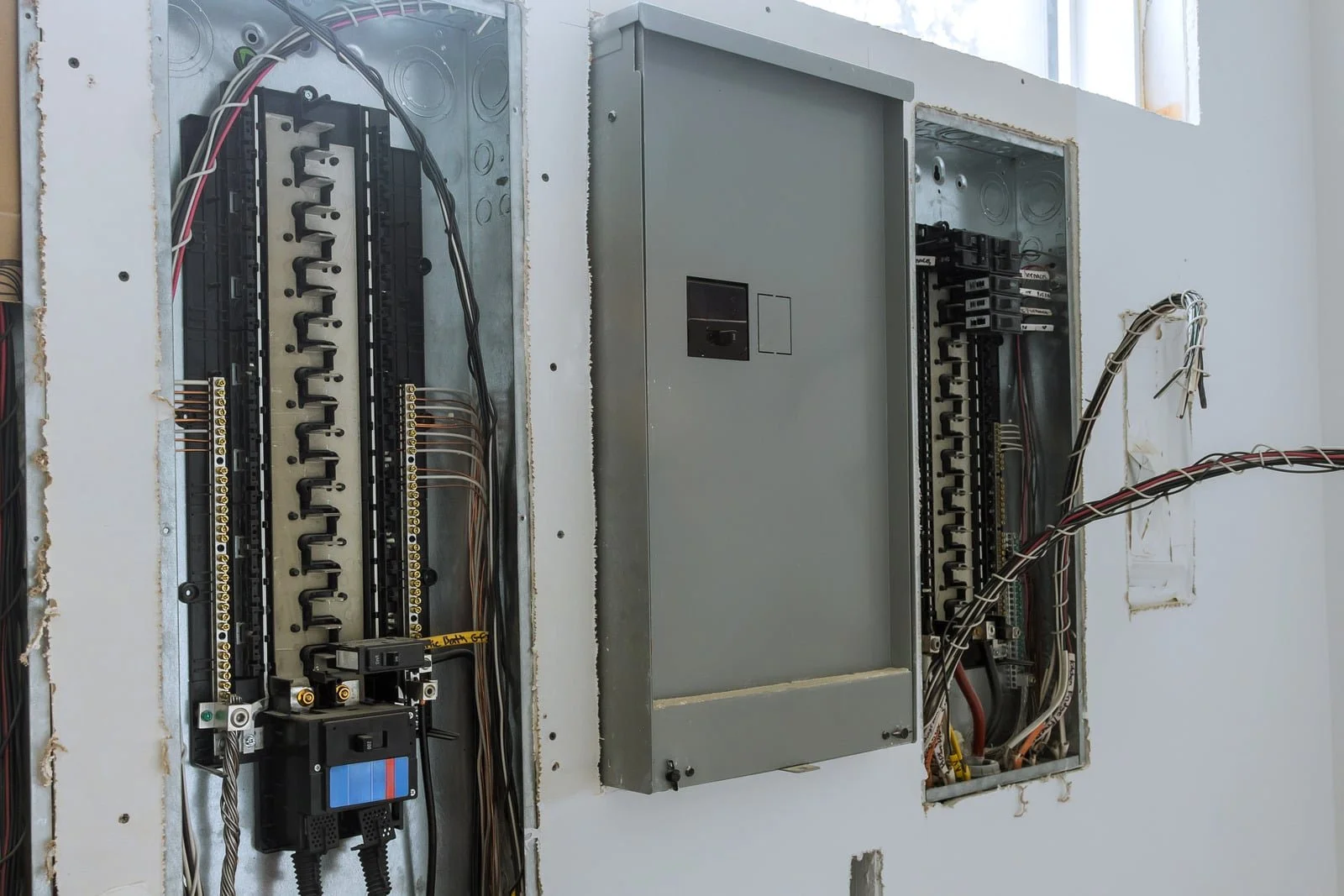
When an enclosure has rusted through or a lug has burned, the enclosure is the symptom and not usually the whole story. Heat that scorched a lug has been in those conductors too, and insulation that has been cooked does not recover. A corroded enclosure means water has been sitting somewhere it should not, and water travels down conduit. So the honest scope on a meter base job depends on what the conductors and the conduit look like once the cover is off, which is exactly why we quote it only after seeing it. Putting a new enclosure on tired conductors is how the same repair gets paid for twice.
Service Entrance Questions, Answered Straight
1.An inspector or my utility left a note about my service equipment. What happens now?
This is how most of our service entrance work starts. Bring us the note. We look at what was actually flagged, tell you whether it is a repair or a replacement, and quote it in writing. If the finding is on equipment that turns out to be the utility's rather than yours, we will say so and you will not get a bill from us for looking.
2.Do I need a permit for service entrance work?
Yes, in the Valley jurisdictions we work in, and on this job the permit is not just paperwork: on an overhead service the utility will not restore your connection until the inspection has cleared, so the permit sits on the critical path rather than beside it. We pull it and meet the inspector, which is why we book the utility around the inspection date.
3.Will my power be off, and for how long?
Yes, the utility has to disconnect before this work can be done safely. We schedule the disconnect and the reconnect around our repair so the window is as short as the utility's own scheduling allows, and we walk you through how the day is likely to run before we start rather than after.
4.I have no power at all. Is this an emergency?
Yes. No power to the whole home, or a drop hanging low enough to reach, is a call-now situation at any hour. An on-call electrician answers, and for true emergencies in our East Valley core we are typically on site within two hours. Overtime rates apply after 5 p.m. and on weekends, and we tell you that before we dispatch.
Mast Down? Meter Box Rusted Through? Call RSB.
We do not publish prices on service work, because what the conductors and the conduit look like under the cover changes the job. The estimate is free. The written quote follows the next day, once we have had the cover off and know what is behind it, and that number stands for 30 days.