
Why Your Bathroom Exhaust Fan Is So Loud, and What the Noise Means
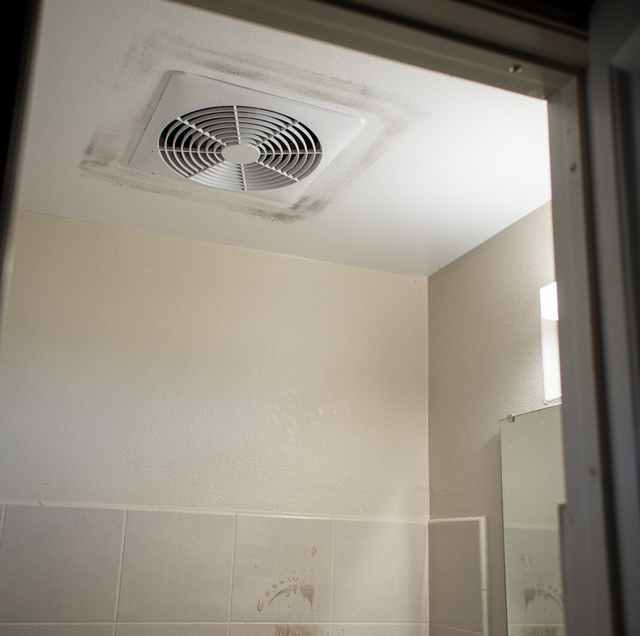
Your bath fan has one volume, and it ends your argument with it. It goes on with the light, it drones through your shower, and it goes off the second that you are dry, which is the moment your room is at its wettest.
That roar is not a personality trait. Every part of a bath fan that can wear, loosen, or clog makes its own sound when it goes, and the sounds are not interchangeable. A fan you have never liked is a different machine from the one you liked until last spring, and both differ from the one that rattles when the wind gets up. What you hear from your own doorway narrows your field before anyone opens anything.
Noise Is the Reason a Bathroom Fan Stops Doing Its Job
A bath fan ventilates only while it is running, which sounds obvious until you count the minutes yours actually runs. On with the light, off with the light, and the room gets ninety seconds of airflow against twenty minutes of steam already condensed onto the drywall. A unit nobody can stand to leave on delivers a fraction of the airflow it was rated for.
Treating the noise as a fault gets you further than treating it as a quirk, because every failure inside the machine has its own signature. A dry bearing does not sound like a loaded blower wheel, and neither sounds like a damper flap slapping in a breeze. Work out which of those you own before you shop for a quieter unit.
A Sone Rating Puts a Number on the Roar
Fan loudness is measured in sones, a scale based on how loud something sounds to a listener, so a fan rated at 2 sones sounds to you twice as loud as one rated at 1 sone. Industry guidance for bathroom exhaust fans puts the target plainly: quiet bathroom ventilation calls for a fan rated at 1.0 sones or less. A national certification program sets a ceiling on the same scale, allowing a maximum of 2.0 sones for certified bathroom and utility room fans rated from 10 to 200 CFM, and 3.0 sones for fans rated from 201 to 500 CFM at maximum speed.
Both numbers describe a unit sitting alone on a laboratory bench. Neither accounts for the duct the unit will be joined to in your ceiling, or for the framing it will be screwed into.
That makes a sone figure a fitness test, not a comfort preference. A fan you will leave running for the twenty minutes after a shower moves twenty minutes of air, and a fan that gets switched off at the door on the way out moves whatever it managed while you dried your hands. Quiet buys the runtime, and runtime is the whole product.
The Motor and the Blower Wheel Wear in Ways You Can Hear
The motor in a bath fan spins a squirrel-cage blower wheel on small bearings, and both parts fail out loud. Bearings that have run dry give a rising whine or a dry growl that shifts pitch as the motor warms. A wheel loaded with lint and dust goes out of balance, and an unbalanced wheel puts a low thrum into the housing and from there into the ceiling framing, which is why a whole ceiling can seem to carry the sound.
Both faults worsen under load, so a unit that sounds tolerable in the first minute and unbearable after ten is usually a motor problem. Neither needs the housing opened to identify. From the doorway you can hear whether the sound is steady, rising with warmth, or coming and going, and that alone separates a worn motor from something loose. The wiring behind the grille is your electrician's responsibility.
The wiring behind a bath fan grille is at a live junction, and the housing is in a hot attic at the top of a ladder, so the grille, the duct run, and everything behind them go to your electrician.
The Duct Is Half the Machine and Half the Noise
Air leaving the blower has to get out of the building, and everything it meets on the way back-pressures the wheel. Flexible duct has a corrugated wall that tumbles the airflow along its whole length. A run that sags between joists collects the low spots, a run crushed into a tight elbow at the housing chokes the outlet where the air moves fastest, and a long run costs pressure by the foot. The wheel keeps spinning at its rated speed, moves less air than the laboratory measured, and turns the difference into turbulence you can hear.
How much a restriction costs is not a guess. A national testing standard for certified ventilation fans requires that certified models deliver a tested airflow at 0.25 in. w.g. static pressure equal to at least 70% of the airflow delivered at 0.1 in. w.g. static pressure, as measured by industry-standard testing. Turned around, that figure is a certification program conceding that a fan gives up close to a third of its airflow once your run gets harder to push against.
A good run is short in the description and rare in the field: short, straight, smooth-walled, sealed at every joint, and sloped so nothing pools in it. Rigid pipe beats flex where there is room for it, one gentle sweep beats two tight elbows, and your run should finish at a cap on the roof or the wall with a damper that opens under airflow and closes when the fan stops. Any one of those five can go later without you noticing.
Is the Fan Sized for the Room or for the Shelf?
Industry sizing guidance runs at eight air changes per hour, which, for most bathrooms, works out to one CFM per square foot of floor area. Below 50 square feet, 50 CFM is the accepted minimum, and above 100 square feet, sizing moves to a fixture count: 50 CFM each for the toilet, the shower, and the tub, and 100 for a jetted tub.
Undersized units run and run and never quite win. Oversized ones whistle at your door gap and drag the conditioned air out of the rest of your house at a speed your room never asked for.
Dampers, Grilles and Mounts Account for Most of the Rattles
The backdraft damper is a light flap sitting at the fan outlet, at the termination, or at both. It opens with airflow and closes when the blower stops, and it is the most common source of a rattle unrelated to the motor. Wind loading the duct lifts and drops a loose flap in a steady clatter, and a flap propped open by lint never closes at all, which turns your duct into an open pipe from the roof down.
A grille loads the same way, and dust mats the blades behind it. A spinning fan is not a working fan: worn motors, clogged grilles, disconnected ducts and stuck dampers all let the wheel turn while the air goes nowhere. A partly blocked grille raises the velocity through whatever opening is left, and you hear that as a hiss.
Air has to get into the room before the fan can get it out. Standard guidance calls for at least three-quarters of an inch of clearance under the door so makeup air has a way in, and a fan starved of intake pulls what it can from the gaps around your door in a thin whistle. A housing screwed tight to solid framing keeps its vibration to itself, and one hanging on two loose screws hands it to the drywall.
Attic Heat Ages a Room-Rated Motor Long Before Its Time
The part of the fan that has to survive is not in your bathroom. The housing, the motor, and the wheel sit above the ceiling in air that runs far hotter than the room below for the long half of the year, and heat ages a motor: winding insulation and bearing grease both break down faster the hotter they run. A motor whose internal materials are all chosen for room-temperature duty gets loud early up there, which is why heat-rated units are worth specifying.
So your loud fan is a question about location: which part of the run gave out, and where along it. The humid stretch of the year adds runtime where the hot months add heat, and longer runtimes on a tired bearing sound exactly like what they are. An electrician working outward from the grille can name the sound in a single visit, and the same heat rating question returns on attic fans, a different machine on a different circuit.
Frequently Asked Questions
A motor fault climbs as the unit warms up and loads, so it varies over the first few minutes. A duct restriction is there from the first second and holds steady. Close your bathroom door with the fan running and listen: if the noise rises, your run is starved, and you have a restriction.
Three things change at once in your bathroom. Hard tile and glass replace soft surfaces and reflect the sound they used to absorb, your relocated fan gains duct length and an extra elbow, and a new door hung tight to a new floor loses the undercut your old one had.
More than you would guess, because dust never lands evenly. A mat of lint across half your grille restricts airflow and adds weight to one side of the blower wheel, causing an unbalanced wheel that your whole ceiling picks up as mechanical noise.
Not by itself, since the control doesn't touch anything on the blower. What it changes is when the fan runs and for how long, which is often the complaint: the unit finishes the job after you leave and shuts itself off. Pair one with a variable-speed fan, and you get a quiet setting for your late showers.
Only after someone measures it. A replacement rated higher than the original often carries a larger outlet collar, and squeezing a 6-inch outlet into your existing 4-inch run through a reducer hands back the airflow your bigger unit was bought for, and you will hear the difference. Matching the duct to your new collar is part of the job from the start.
More often than owners expect, your run terminates above the ceiling instead of outdoors, because a builder shortcut, a handyman install, or a popped joint left it pointing into framing. Your fan pumps shower air into your insulation, where your damp batts lose loft, and trade guidance warns that long-term exposure to excess moisture and humidity can crack and peel paint and wallpaper, ruin wallboard, warp doors and rust cabinets and fixtures, and that without control, it can even cause deterioration of joists and framing above the bathroom.
Booking a diagnosis for a bath fan that has gone loud — a technician follows the noise back through the grille, the blower wheel, the damper and the duct run, then names the part that gave out and what a quiet replacement would involve. RSB Electrical Inc. serves Mesa and the Phoenix Valley. ROC 167102. Call (480) 485-4284.
