
Multiple Outlets Dead at Once? What's Wired Together
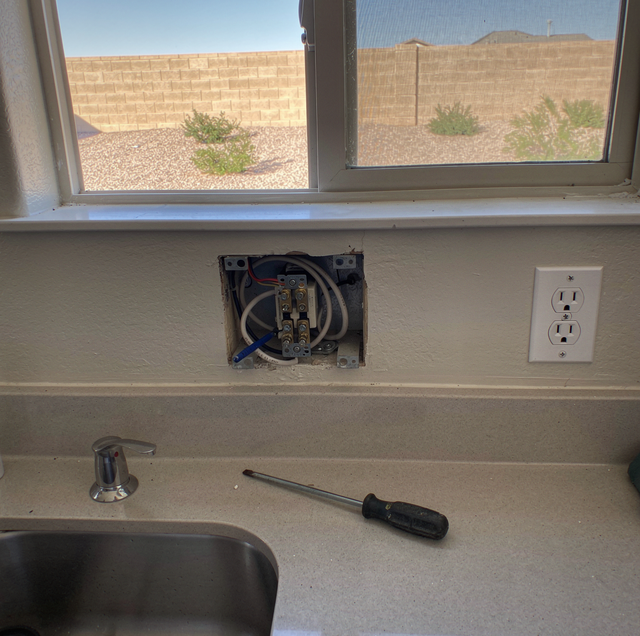
A lamp, a phone charger, and a hallway nightlight all go dark within the same minute, in three spots that don't seem to have anything in common. The instinct is to check each outlet on its own, but outlets rarely fail as isolated, unrelated events. They fail in patterns, and the pattern usually points straight to the cause.
Outlets Are Wired in a Chain, Not Independently
Inside most homes, outlets on the same circuit are wired in a series, sometimes called a daisy chain: power comes into the first outlet's box from the panel, and a second set of wires carries that same power onward to the next outlet, and the next, using the receptacle's feed-through terminals. That means every outlet after the first one in that chain depends on a solid connection at every outlet before it. A single failed connection partway down the chain cuts power to everything wired after it, while the outlets before that point keep working normally.
This is also why outlets in different rooms can share a circuit, while two outlets in the same room can't: circuits are wired by the physical routing path an electrician took through the walls and floor joists when the home was built, not by room boundaries. A hallway outlet and a bedroom outlet on opposite sides of a shared wall may be on the same run; two outlets on opposite walls of the same room may not be.
Quick Reference: Matching the Pattern to the Cause
| What you're seeing | Likely cause | What to check first |
|---|---|---|
| Outlets in one room or area dead, breaker feels normal | A GFCI outlet upstream has tripped | Look for a GFCI receptacle (test/reset buttons) in that room, a nearby bathroom, garage, or exterior wall |
| A whole section of the house dead at once | A breaker has tripped or failed | Check the panel for a breaker sitting slightly off-center between on and off |
| Outlets dead in random spots across different rooms | Those outlets share a wiring run, not a room | Trace which outlets are on the same breaker; the pattern follows the wiring path, not the floor plan |
| Outlets dead, but lights on the same wall still work | A failed feed-through connection at the first outlet in that specific chain | The first outlet in the affected run, particularly a push-in style connection |
Why a Single Outlet Can Take Down an Entire Chain
The feed-through terminals on a standard receptacle consist of just two screws (or push-in connections) that pass incoming power to the next device. If that connection loosens, oxidizes, or burns slightly due to a poor original connection, the outlet itself may still work fine when something is plugged directly into it, while everything wired downstream of it goes dead. This is one of the more counterintuitive parts of outlet troubleshooting: the outlet that looks and tests fine can be the actual point of failure for everything after it.
The GFCI Factor
A single GFCI (ground-fault circuit interrupter) outlet is commonly wired to protect several standard outlets downstream on the same circuit, most often in kitchens, bathrooms, garages, and exterior locations where ground-fault protection is typically required. When that GFCI trips, only the GFCI outlet itself shows the tripped indicator; every "load side" outlet it protects simply goes dead, with no visible sign at the dead outlet. Pressing "reset" on the GFCI restores power to the whole protected group at once, assuming the fault has cleared. If the reset won't hold or trips again immediately, the ground fault is still present somewhere in the downstream wiring or in a device plugged into it.
Shared-Neutral Wiring Adds Another Wrinkle
Some older homes use a multiwire branch circuit: two separate hot wires share a single neutral conductor between the panel and a junction point, then split into two separate circuits. This was a common way to run two circuits through less cable than two fully separate runs would need. The catch is that the shared neutral depends on a solid connection at that junction; if the neutral connection loosens or a wire nut at that splice fails, both circuits sharing it can act strangely at once, including one circuit dimming or flickering when the other is under load, well before either one fully drops out. This pattern (two seemingly unrelated circuits both acting slightly off at the same time) is one of the clues pointing toward a shared-neutral setup rather than two independent problems, and it's a distinction worth flagging for whoever diagnoses it, since it changes where the fix actually needs to happen.
Tracing the Break Without Opening Every Box
A non-contact voltage tester (a pen-style tool that beeps near a live wire without direct contact) lets you check for power at a device without removing the cover plate, which is a faster way to work down a suspected chain than pulling every outlet to inspect its terminals. Starting at the last outlet that still works and checking the next one in sequence narrows down the failed connection to a specific box before any cover plate comes off, which matters because the actual fix (retightening or replacing a feed-through connection) only needs to happen at that one point, not at every outlet along the run.
Breakers That Won't Reset
A tripped breaker that resets and holds is usually an overload: too many devices drawing power on one circuit at once. A breaker that trips again immediately, or won't reset at all, points to an actual short circuit or a sustained overload downstream, and repeatedly flipping it back on doesn't fix the underlying wiring issue causing it to trip.
What Actually Needs a Panel Cover Off
Checking outlets with a voltage tester, pressing GFCI reset buttons, and looking at breaker positions from outside the panel door are all things a homeowner can reasonably do without removing anything. Once the trail points to a connection that needs to be opened, retightened, or replaced, whether that's a feed-through terminal inside an outlet box, a splice at a shared-neutral junction, or a breaker itself, that's where it shifts to work behind a cover plate or inside the panel, which is where a licensed electrician's tools and experience actually earn their keep. Skipping straight to guesswork at the panel, rather than tracing the pattern first, is usually what turns a five-minute fix into a longer troubleshooting session.
Frequently Asked Questions
Circuits follow the physical wiring path used during construction, often looping from box to box along a wall cavity or floor joist bay in the order that was most efficient for running cable, rather than being grouped by room. Two outlets separated by a wall may share a run for exactly that reason. It's also why a breaker labeled "bedroom" on the panel schedule can't always be trusted at face value; that same breaker may feed part of the hallway or even a corner of an adjacent room, which is why tracing a specific outlet's breaker with a plug-in circuit tracer is more reliable than reading the label.
Check kitchens, bathrooms, garages, and exterior outlets first, since those locations commonly carry GFCI protection for a group of outlets. Pressing the test button should cut power to itself and everything downstream; pressing reset should restore all of them at once if the fault has cleared. If no GFCI outlet turns up in any of those spots, the protection may be built into the breaker itself rather than into an outlet, since some homes use a GFCI breaker in the panel to protect an entire circuit instead of a GFCI receptacle out at the point of use.
Yes. The feed-through terminals that pass power to the next outlet in the chain are the failure point, and a receptacle with a damaged or loosened feed-through connection can look completely normal when tested directly while still cutting power to every device wired after it. In the period before it fails, that same loosening connection can also show up as a flicker or brief dimming on the outlets and lights in the chain before it, whenever something heavy cycles on, since the added resistance briefly pulls down the voltage across the whole run before the connection finally gives out.
Generally, yes. A breaker that holds after resetting often responds to a temporary overload, while one that trips again immediately or refuses to reset usually indicates an active short or sustained fault and shouldn't be reset repeatedly as a workaround. An AFCI (arc-fault) breaker complicates this a little further, since it can trip repeatedly from a loose or arcing connection even when the load on the circuit is well within normal range, which is a different trigger than the overload or short a standard breaker is reacting to.
Often, yes. Push-in connections rely on a small spring clip gripping the wire rather than a screw terminal's mechanical clamping force, and they're more prone to loosening over time from normal heat cycling, especially on older or lower-cost devices.
Not necessarily. Once the specific failed connection is located and corrected, the rest of the chain typically returns to normal operation. Full replacement of every device on that run is only needed if several show signs of heat damage or repeated failure.
Think of a dead outlet less like a broken switch and more like a broken link in a chain. Find the one connection that actually failed, and every outlet wired after it in that run comes back on its own — there's no need to test, tighten, or replace anything further down the chain once that single point is fixed.
Book a dead-circuit diagnosis — trace the real connection point behind outlets that quit together. RSB Electrical Inc. serves Mesa and the Phoenix Valley. ROC 167102. Call (480) 485-4284.
