
Standby vs. Portable Generator: Which Fits Your Home
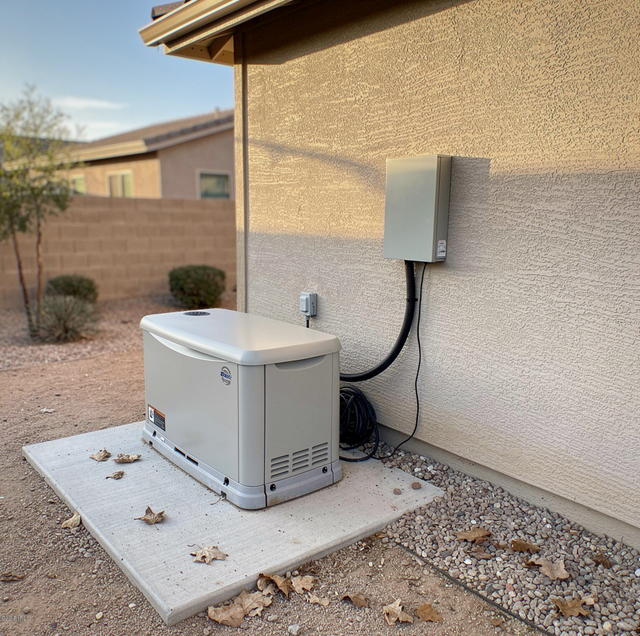
Ask ten homeowners why they bought a generator and most will describe the same night: the power went out, and it stayed out long enough to matter. What splits them into two very different camps afterward is what they bought next — a machine they wheel out and plug in when it happens again, or one that's already bolted to a pad in the yard, waiting for the moment before anyone even notices the lights are gone. Both standby and portable generators solve the same basic problem, but they do it through completely different mechanisms, and that difference matters more than the price tag most people focus on first.
How Each System Actually Connects to Your Home
A portable generator sits outside during an outage, gets manually started, and connects to your home's wiring one of two ways: through a manual transfer switch installed by a licensed electrician (a small panel that lets you select which circuits draw from the generator instead of the utility line), or through an interlock kit, also installed by a licensed electrician, that physically prevents the main breaker and a dedicated generator breaker from being on at the same time. Running extension cords through a window to power individual appliances is not a safe substitute for either method, since it bypasses the safeguards that keep generator power from backfeeding into utility lines.
A standby generator is permanently installed outside on a concrete or composite pad, wired to an automatic transfer switch that constantly monitors incoming utility power. The moment utility power drops, the transfer switch senses the loss, signals the generator to start, and switches the home's load over to generator power, typically within about 10 to 20 seconds, all without anyone touching a switch.
Power Capacity: What Each One Actually Covers
This is where expectations tend to get ahead of reality. A portable generator's output is limited by its engine size, and that output must be split among the circuits wired to the transfer switch or interlock. Most portable setups are sized to run a defined list of priorities: refrigerator, some lighting circuits, a well pump if the home has one, and maybe a window AC unit, not the entire electrical panel at once.
A standby generator's capacity is matched to the home during installation, and larger units can power an entire panel, including central air conditioning, simultaneously. Sizing that correctly depends on the home's total connected load and which appliances need to run at the same time, which is a conversation worth having with an electrician rather than guessing from a generator's advertised wattage rating alone.
Fuel Source and Run Time
A portable generator runs on gasoline (some models run on propane or accept a dual-fuel conversion) and uses a tank that needs refilling every several hours of run time, depending on load. That means monitoring the fuel level during an extended outage and storing gasoline safely between uses, since stored gasoline degrades over time if left untreated.
A standby generator ties into a continuous fuel source: either the home's existing natural gas line, which supplies fuel indefinitely as long as the gas utility is intact, or a dedicated propane tank refilled by a supplier. Neither requires the homeowner to store gasoline or interrupt the outage to refuel.
Placement, Noise, and Carbon Monoxide
Both types produce carbon monoxide and must be operated outdoors, away from windows, doors, and vents, but their operating mechanisms differ. A portable generator is repositioned each time there's an outage, which means someone has to remember the correct placement every time, often in bad weather, at night, or in a hurry. A standby generator's placement is fixed and inspected once at installation, removing that decision from the equation during an actual event.
Noise levels vary by unit size for both types, though standby generators are typically installed in a sound-attenuated enclosure since they're expected to run for extended, unattended periods near a home.
Why the Connection Method Matters as Much as the Generator Itself
The generator itself is only half of what makes either system safe. Without a transfer switch or interlock kit, plugging a generator into the home's wiring risks backfeeding power out through the meter and onto the utility lines outside, which can injure a lineworker restoring power under the assumption that those lines are dead. A manual transfer switch or a properly installed interlock kit physically prevents the home's circuits from being connected to both the utility and the generator simultaneously, eliminating that risk entirely. This is also why a portable generator's setup cost includes more than just the unit: the switch or interlock is what makes the whole arrangement usable and safe in the first place, not an optional add-on.
A standby generator's automatic transfer switch performs the same isolating function, just without anyone needing to flip anything by hand. It disconnects the home from the utility feed the instant it senses an outage, starts the generator, and only then connects the generator's output to the home's wiring, in that order, every time.
What an Extended Outage Actually Looks Like With Each
A short outage of an hour or two barely tests the difference between the two systems. A multi-day outage does. With a portable generator, someone has to track fuel level, shut the unit down periodically to refuel safely (never while it's running), and manage engine oil changes if the outage stretches past the manufacturer's recommended run-hours between changes, all while everything else in a storm-affected area competes for the same gasoline supply at local stations. With a standby generator tied to natural gas, none of that applies: the unit keeps running on the same fuel source it started on, with no fuel logistics for the homeowner to manage at all. A propane-fed standby unit has more fuel on hand than a portable's tank, but still depends on the tank being sized and filled ahead of time rather than during the event itself.
Installation Considerations Worth Understanding Upfront
A portable generator setup requires deciding, before any outage occurs, which circuits are important enough to wire into the transfer switch or interlock, since that list can't be changed on the fly once the storm hits. A standby generator's capacity gets matched to the home's electrical load during the design process, which is why an electrician typically walks through which appliances need to run together, particularly whether central air conditioning is expected to run on generator power, since that single appliance often drives the sizing decision more than anything else in the house.
Maintenance and Long-Term Reliability
A portable generator's engine sits idle most of the year, and stored fuel and stale oil are the two most common reasons a portable unit fails to start when it's actually needed. Running it periodically and treating stored fuel with a stabilizer both help, but both depend on the homeowner remembering to do it.
A standby generator runs a brief self-test cycle automatically on a set schedule (commonly weekly) to exercise the engine and confirm the unit is ready, and typically gets a professional service visit annually to check the battery, coolant, and fuel connections. That built-in exercise cycle is a mechanical safeguard against the exact failure mode that catches portable generator owners off guard.
Comparison at a Glance
| Factor | Portable Generator | Standby Generator |
|---|---|---|
| Startup | Manual: retrieve, position, fuel, start, connect | Automatic transfer switch starts it within seconds |
| Circuits covered | Limited, selected circuits via transfer switch/interlock | Can cover the full panel depending on sizing |
| Fuel | Gasoline (or propane), stored and refilled manually | Natural gas or propane, continuous supply |
| Placement | Repositioned outdoors during every outage | Permanently installed on a pad |
| Self-testing | None built in | Automatic weekly exercise cycle |
| Best fit | Occasional outages, selected essential circuits | Frequent outages, whole-home coverage, hands-off operation |
Frequently Asked Questions
Not through a standard connection. A manual transfer switch or interlock kit is sized for a limited set of circuits selected in advance, since a portable engine's output can't realistically meet a full panel's demand. Large towable or trailer-mounted portable units exist that approach whole-house output, but they require heavier cabling and a transfer setup sized accordingly, which puts them beyond what a typical manual transfer switch or interlock kit is built to handle. For a standard home setup, whole-home coverage from generator power is really the standby generator's role.
The automatic transfer switch continuously monitors utility voltage, and once it detects a loss, it signals the generator to start and completes the transfer, typically in the 10-to-20-second range, restoring power before most refrigerated food has time to warm up. That window can run a few seconds longer in cold weather, since the engine needs a moment to reach normal operating temperature before it can accept the full household load.
Sizing is based on the total connected electrical load and the appliances that need to run simultaneously during an outage, particularly central air conditioning if it's expected to run. This is a load calculation an electrician performs during a site visit rather than a number you can pull off a spec sheet alone. Planned future additions matter too: a home that expects to add an EV charger or pool equipment down the road is often sized with some headroom above today's load, rather than exactly to the panel's current draw.
No. Carbon monoxide from a running engine can accumulate in and around a garage, even with the door open, and portable generators are designed to operate outdoors, at a distance from doors, windows, and vents, not in partially sheltered locations.
Not if tied to natural gas, which draws directly from the utility's gas line for as long as that supply is intact. A propane-fed standby unit uses a dedicated tank that a supplier refills, and that tank is typically sized to cover several days of expected run time rather than just a single outage, so it's rarely running near empty when a storm rolls through. Neither setup requires the homeowner to keep gasoline on hand.
Beyond its automatic weekly self-test, most standby units benefit from an annual service visit to check the battery, coolant level, and fuel supply connections, along with an oil and air filter change on the engine itself, similar in spirit to servicing a vehicle that otherwise sits unused most of the year.
The circuits selected for a manual transfer switch or interlock don't carry over automatically; a standby system involves its own automatic transfer switch, its own fuel connection, and its own sizing based on the home's full load, so it's generally treated as a separate installation rather than an upgrade path from portable equipment already in place.
Permit and inspection requirements vary by city and utility, which is one more reason a standby generator installation is handled by a licensed electrician rather than tackled as a DIY project: the gas or propane connection and the automatic transfer switch wiring both need to be done by someone who already knows what a given jurisdiction expects, rather than a homeowner finding out partway through.
Deciding between the two really comes down to two questions worth answering before a storm hits, not after: how long do outages typically run in your area, and how much of the house needs to stay powered when one does. Whichever generator ends up in the driveway or bolted to the side yard, the honest answer to those two questions will have picked it, not a spec sheet's advertised wattage.
Get a generator sizing consultation — find out what standby or portable setup actually fits your home's load. RSB Electrical Inc. serves Mesa and the Phoenix Valley. ROC 167102. Call (480) 485-4284.
