
Level 1 vs. Level 2 EV Charging: Which Fits Your Drive
Quick Answer: If you drive fewer than 40 miles a day and park overnight, a standard 120V outlet (Level 1) often keeps up. Drive more, own a full battery-electric car, or share one charger between two cars, and a 240V circuit (Level 2) is worth the wiring, provided your panel has the room for it.
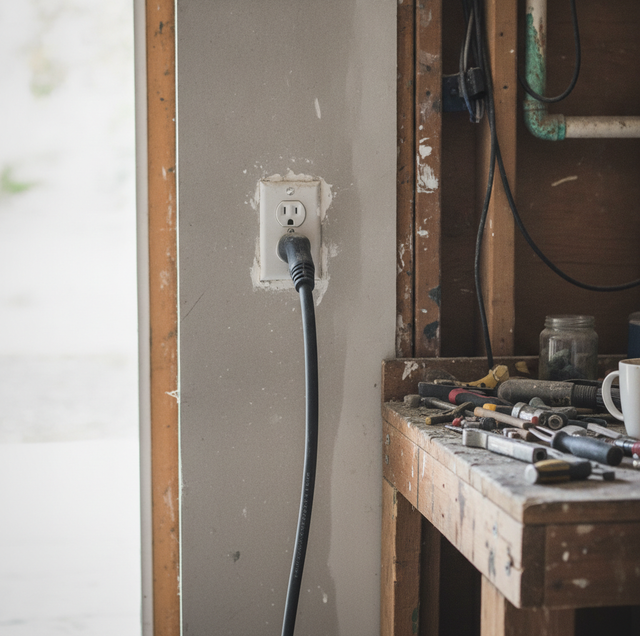
The new car sits in the garage, and the plug that came in the trunk reaches the outlet by the workbench. You plug in overnight, and by morning, the app says you gained about thirty miles. For a short commute, that is fine. But you start doing the math on a weekend road trip, and thirty miles a night suddenly feels thin. That gap (between what a wall outlet gives you and what you actually drive) is the whole Level 1 versus Level 2 decision.
Neither one is automatically right. The answer depends on your miles, your car's battery, how long it sits parked, and one thing most people don't think about until an electrician brings it up: what your electrical panel can actually handle.
What Level 1 Charging Actually Is
Level 1 is the plug that ships with the car. It runs on a standard 120V household outlet, the same kind that powers a lamp or a phone charger. No new circuit, no electrician, nothing to install. You unwind the cord and plug in.
The trade-off is speed. A Level 1 setup pulls roughly 1 to 1.4 kilowatts, which works out to about 3 to 5 miles of range added per hour of charging. Leave the car plugged in for 12 hours overnight, and you've recovered somewhere between 40 and 55 miles. That number moves with the car, the outlet, and even the temperature, so treat it as a ballpark rather than a promise.
One caution that gets overlooked: that outlet should be on its own circuit, not shared with a freezer, a bank of garage lights, and a table saw. A car draws its full amperage for hours at a stretch, far longer than a power tool ever does. On a tired, overloaded circuit, that steady pull is what warms up connections and trips breakers.
What Level 2 Charging Actually Is
Level 2 uses a 240V circuit, the same voltage that feeds an electric dryer or a range. Instead of the small trickle a wall outlet allows, you get a dedicated circuit built for the load, typically rated at 40 to 60 amps and delivering somewhere around 7 to 11 kilowatts, sometimes more.
In range terms, that's roughly 20 to 40-plus miles added per hour, depending heavily on the vehicle. A car that pulls the full power can refill most of a day's driving in an hour or two. Plug in at dinner, and the car is full long before you're awake.
This is where a distinction matters. The box on your wall is the EVSE, technically the "charger" in conversation, though the actual charger lives inside the car. That onboard charger sets a ceiling on how fast the car will accept power. If your car's onboard charger tops out at 7.7 kW, a 60-amp EVSE won't push it past that. You'd be paying for the capacity the car can't use. More on that below.
The Real Decision Drivers
Forget the marketing for a second and look at your own week.
Daily miles: Add up a normal day: commute, errands, kid pickups. Under 30 to 40 miles, and Level 1's overnight recovery usually keeps your battery where you need it. Push past that regularly, and you start each morning a little further behind than the night before.
Dwell time: How many hours does the car actually sit plugged in? A vehicle parked from 6 p.m. to 7 a.m. has thirteen hours to soak up charge. A car that leaves again at 9 p.m. for a second shift has far less runway, and slow charging can't make up the difference.
One car or two: A single Level 2 circuit shared between two EVs means one waits while the other charges, or you need a smarter setup. Two cars usually tip the scale toward Level 2, and sometimes toward a load-management device that lets them share safely.
Plug-in hybrid versus full battery-electric: This one is decisive. A plug-in hybrid carries a small battery (often 10 to 20 kWh) and Level 1 frequently refills it overnight with room to spare. A full battery-electric car with a 60, 80, or 100-kWh pack is a different animal; Level 1 may never quite catch up if you drive it hard.
Level 1 vs Level 2 at a Glance
| Factor | Level 1 (120V) | Level 2 (240V) |
|---|---|---|
| Outlet/circuit | Standard household outlet | Dedicated 240V circuit (dryer/range class) |
| Typical power | ~1–1.4 kW | ~7–11+ kW |
| Range added per hour | ~3–5 miles | ~20–40+ miles |
| New wiring needed | None | Yes, new circuit, often a panel check |
| Best for | Short commutes, plug-in hybrids, and long overnight parking | Full battery-electric cars, high daily miles, two-car homes |
| Gating question | Is there a free outlet nearby? | Does the panel have spare capacity? |
Your Panel Is the Real Gatekeeper
Here's where a lot of Level 2 plans stall, not at the charger, but at the panel.
Adding a 40-to-60-amp circuit is a meaningful chunk of capacity. Before anything gets wired, an electrician runs a load calculation: adding up your existing loads against the panel's rating to see whether there's honest headroom left for a car. It's less about how many empty breaker slots you have and more about the total amperage the panel is rated to carry.
Older and undersized panels are common in many homes, and they change the plan. A 100-amp panel already feeding a couple of AC units, an electric range, and a pool pump may have little left to give. When the numbers don't leave room, the options are a panel upgrade to a higher-amperage service, or a load-management device (sometimes called a smart splitter) that lets the EV charger share an existing circuit and automatically backs off when the dryer or oven fires up.
Think of the panel like the water main to a house. You can add another faucet, but if everything runs at once, pressure drops everywhere, and pushing past the main's capacity is where things fail. A load calculation is how an electrician checks the pressure before opening a new tap.
There's a local wrinkle worth naming. Summer heat runs hard on electrical systems: connections warm, panels sit under sustained air-conditioning load for months, and an older panel already near its limit has the least margin left when you add a car charging every night. That combination (an undersized panel, months of heavy cooling demand, and a new steady EV load) is exactly the setup that deserves a load calculation before, not after, the charger goes in.
Hardwired or Plug-In: How the EVSE Connects
A Level 2 EVSE connects in one of two ways. A plug-in unit uses a NEMA 14-50 receptacle (the same style outlet many ranges use) so the charger cord simply plugs in, and the unit can come off the wall if you move. A hardwired unit is wired directly into the circuit with no plug at all, which some people prefer for a cleaner, more permanent install.
The choice isn't purely taste. Higher-current units (those drawing more than 48 amps continuous) must be hardwired; there's no plug rated to carry that load safely for hours. And a plug-in install on a NEMA 14-50 needs the right protection on the circuit, which shapes both the receptacle and the breaker your electrician specifies. It's a decision to make with the installer, not after.
Frequently Asked Questions
Sometimes, but rarely as simply as it sounds. A dryer outlet is a 240V receptacle, so the voltage matches, but the circuit was sized for a dryer's short, intermittent cycles, not a car pulling steady current for hours. Sharing it means only one appliance runs at a time, and many chargers plugged into a 30-amp dryer circuit must be derated to draw well below their rated output. If the wire gauge or breaker isn't sized for a continuous EV load, the safe move is a dedicated circuit rather than a splitter on the laundry line.
For a Level 2 install, almost always yes. Adding a new 240V circuit is permitted electrical work in most jurisdictions, and that means an inspection after the wiring is done. Level 1 usually needs nothing because you're using an existing outlet as-is. A licensed electrician pulls the permit and schedules the inspection as part of the job; skipping it can surface later during a home sale or an insurance claim, when unpermitted electrical work becomes a problem you inherit.
More than its charging rate, because continuous loads get a built-in safety margin. Electrical practice sizes the circuit to about 125 percent of the charger's steady draw, which is the flip side of the familiar rule that a charger should pull no more than 80 percent of its circuit's rating. In practice, that means a 40-amp charge rate requires a 50-amp circuit, and a 48-amp rate requires a 60-amp circuit, which is why you can't drop a big charger onto a small breaker. It also means there's little point oversizing the circuit past what your car will accept: running a 60-amp circuit for a vehicle whose onboard charger caps at 32 amps just buries copper the car will never use.
Match it to the amperage and how permanent you want the setup. Any EVSE drawing more than 48 amps continuous must be hardwired, so high-power units make the choice for you. Below that, a plug-in NEMA 14-50 offers flexibility (useful if you rent or expect to move), but it requires GFCI protection on the circuit, which the receptacle-and-breaker combination has to account for. One wrinkle worth knowing: some plug-in chargers carry their own internal ground-fault protection, and pairing that with a GFCI breaker can cause nuisance trips as the two devices react to each other, which is one reason a hardwired unit on a standard breaker sometimes runs more reliably. Hardwiring skips the plug entirely and is often the tidier answer for a fixed, high-output charger.
Usually, yes. Plug-in hybrids carry small batteries (often 10 to 20 kWh) and Level 1's overnight charging frequently refills them completely by morning, with the gas engine covering anything the battery can't. The main exception is short dwell time: if the car only parks for a few hours between trips, even a small battery may not fully recover. For a plug-in hybrid that sits overnight, the free outlet often does the whole job.
Yes, and this catches people off guard. Every EV has an onboard charger that caps how much AC power it will accept, commonly 7.7 to 11.5 kW, though it varies by model. Install a 60-amp EVSE next to a car whose onboard charger tops out at 7.7 kW, and the car still only takes 7.7 kW. The wall unit can offer more, but the car sets the real ceiling. Checking your vehicle's onboard charger rating before sizing an EVSE keeps you from wiring in capacity the car can't use. This ceiling only applies to home AC charging, though: the public DC fast chargers you see on road trips bypass the onboard charger and feed the battery directly, which is why they add range so much faster than any home unit can.
Schedule a load calculation before you buy a charger — so the circuit fits your panel and your car the first time. RSB Electrical Inc. serves Mesa and the Phoenix Valley. ROC 167102. Call (480) 485-4284.